Sequencing Events
Watch this topic in 60 seconds
Free preview · Lesson 1
Sequencing Events (Foundational)
Sequencing Events: Putting Things in Order!
Hi, scientists! Ever wondered how stories work? Or how to explain what you did today? It's all about sequencing events! Sequencing means putting things in the order they happen. It's like creating a timeline!
What is Sequencing?
Sequencing events is simply figuring out the order in which things happen. It's like lining up toys from smallest to largest, or telling a story from beginning to end. We use words like first, next, then, and last to help us!
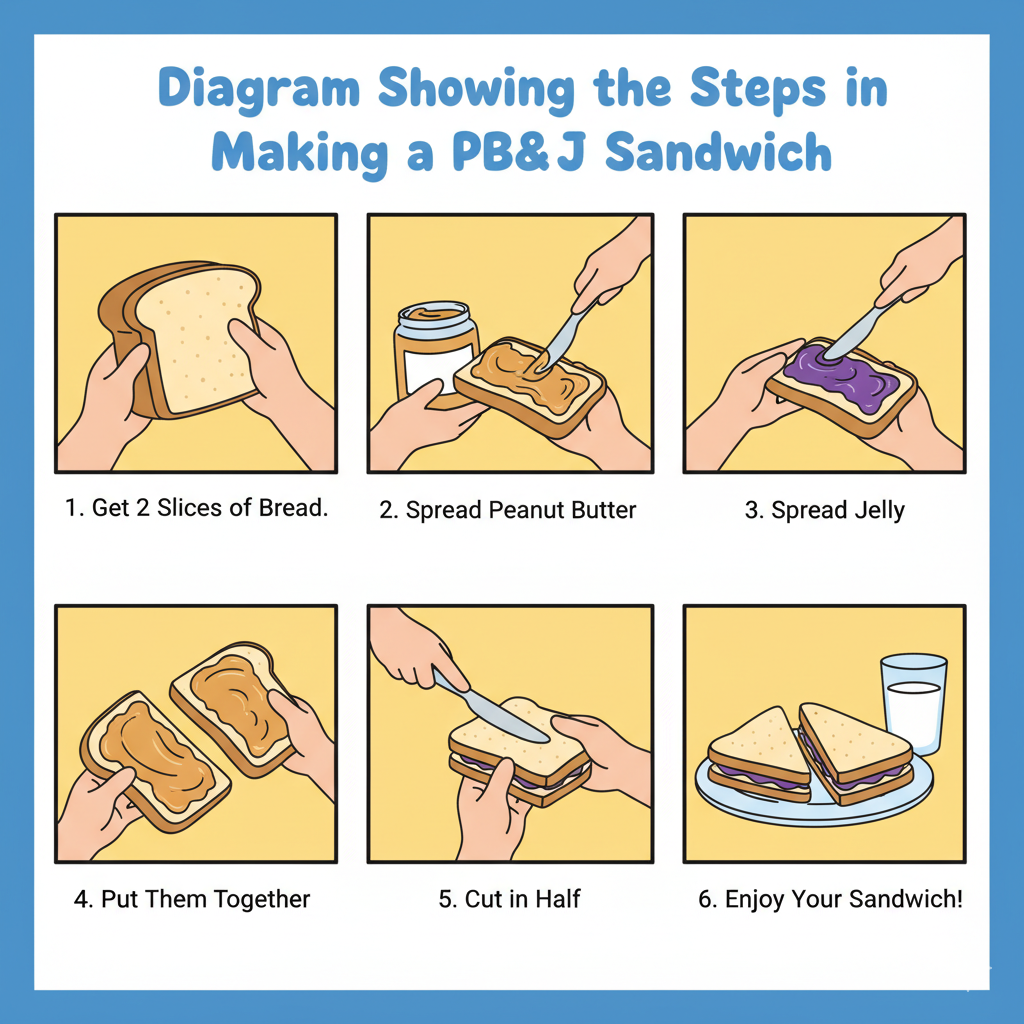
Think about making a peanut butter and jelly sandwich:
- First, you get the bread.
- Next, you spread peanut butter on one slice.
- Then, you spread jelly on the other slice.
- Last, you put the two slices together!
 Why is Sequencing Important?
Sequencing helps us understand stories, instructions, and even our daily routines! It helps us explain things clearly and follow directions carefully. If you didn't sequence the peanut butter and jelly steps correctly, you might end up with jelly on the outside of your sandwich! Yuck!
How to Sequence Events
- Read or listen carefully to what happened.
- Look for clue words like first, next, then, after, and finally.
- Think about what happened at the beginning, middle, and end.
- Put the events in order from what happened first to what happened last.
Sequencing can even help us understand cycles in nature, like how a seed turns into a plant!
Keep learning, free
Create a free Syllabax account to unlock practice questions and games for this topic.
Visual Learning Enhanced! 🚀
To help you master this topic, we use Advanced Syllabax AI to generate detailed diagrams and visual models.
Note on Visuals: The AI sometimes makes spelling errors in image labels. Please refer to the lesson text for the correct terminology.