Area of square & rectangle (using formula) [Area]
Watch this topic in 60 seconds
Free preview · Lesson 1
Understanding Area of square & rectangle (using formula) [Area]
Understanding Area: Squares and Rectangles
Hello super mathematicians! Today, we're going on an exciting adventure to understand something called 'Area'. Imagine you have a garden, or a piece of paper, or even a yummy chocolate bar. Area helps us figure out how much space that thing takes up on a flat surface.
What is Area?
Think of Area as the amount of 'stuff' that can fit inside a flat shape. It's like covering a floor with tiles. The total number of tiles you use to cover the whole floor is the area of the floor!
We measure area in square units. This means we imagine covering our shape with tiny squares, all the same size. We then count how many of these little squares fit inside.
Let's Meet Our Shapes: Squares and Rectangles
We'll focus on two special shapes today: squares and rectangles.
The Square: The Super Symmetrical Shape!
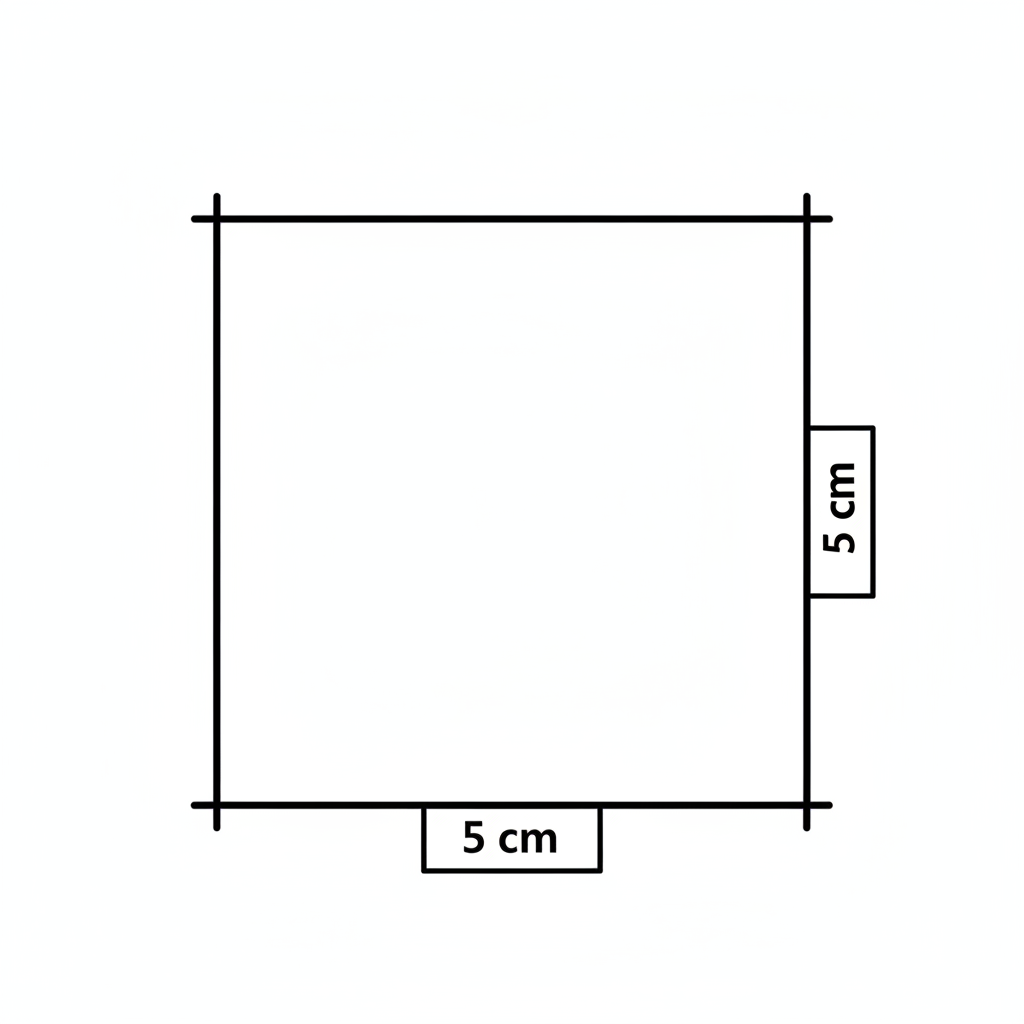
A square is like a perfectly balanced superhero. All four of its sides are exactly the same length. Think of a dice, a checkerboard square, or a slice of cheese cut into a perfect square.
To find the area of a square, we use a special formula, which is like a secret code!
Formula for the Area of a Square:
Area = side × side
Or, we can write it as: Area = s × s
Where 's' stands for the length of one side.
Analogy Time! Imagine you have a square garden that is 5 feet long on each side. To find out how much space you have for planting flowers, you multiply the length of one side by itself: 5 feet × 5 feet = 25 square feet. So, your garden has an area of 25 square feet!
Let's try another one. If a square sticker has a side length of 3 centimeters, its area is 3 cm × 3 cm = 9 square centimeters. Easy peasy!
The Rectangle: The Versatile Friend!
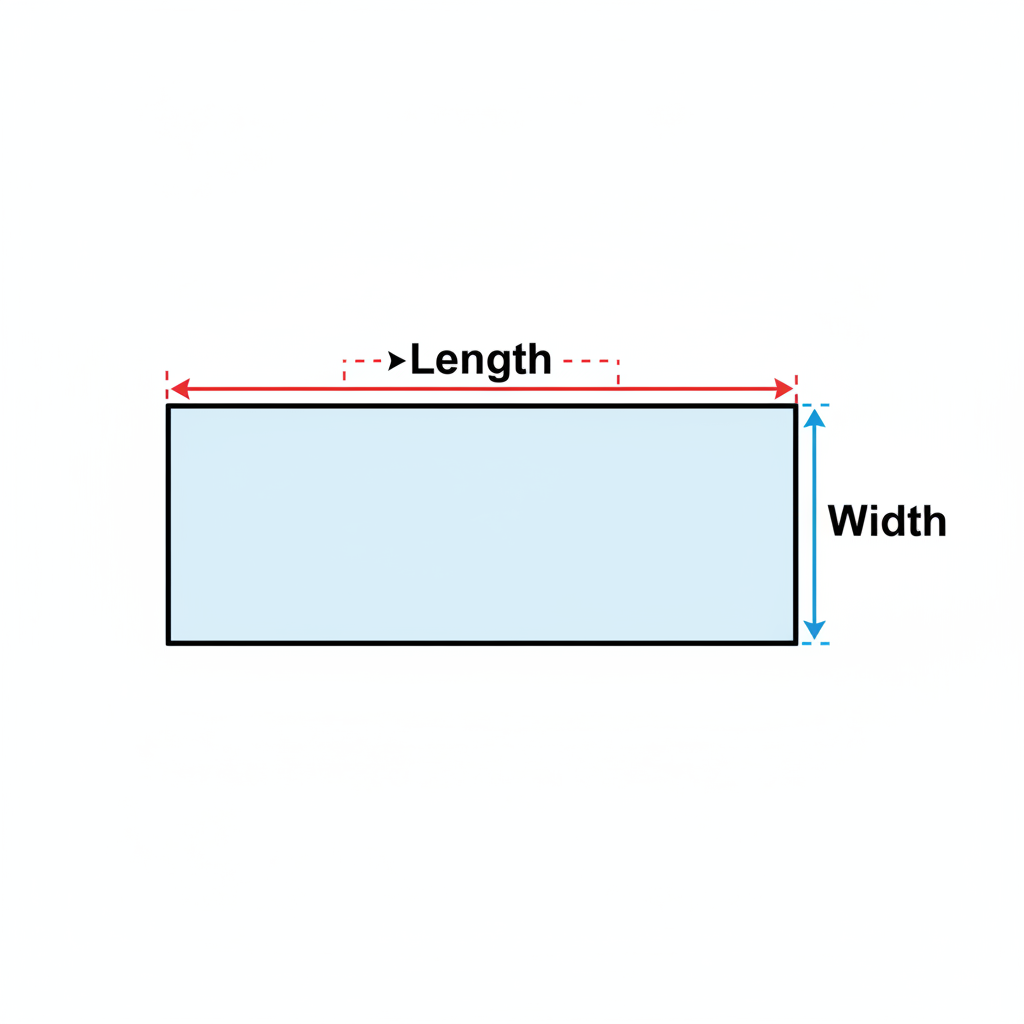
A rectangle is like a slightly more flexible friend than a square. It has four sides too, but only opposite sides are the same length. Think of a book, a door, a TV screen, or a playing card. A rectangle has a length and a width.
To find the area of a rectangle, we also have a simple formula:
Formula for the Area of a Rectangle:
Area = length × width
Or, we can write it as: Area = l × w
Where 'l' stands for the length and 'w' stands for the width.
Analogy Time! Imagine a rectangular swimming pool. The length of the pool is 10 meters, and the width is 4 meters. To find out how much water it can hold (or the space it covers), we multiply the length by the width: 10 meters × 4 meters = 40 square meters. So, the pool has an area of 40 square meters!
Let's consider a rectangular rug that is 7 feet long and 5 feet wide. Its area is 7 feet × 5 feet = 35 square feet. This rug covers 35 square feet of your floor!
 ⚠️ This picture may have spelling mistakes. Trust the words in the lesson.
Why are the Formulas Important?
These formulas are super helpful because they give us a quick way to calculate area without having to draw out and count every single little square unit. They are shortcuts that mathematicians discovered a long time ago!
Units, Units, Units!
Remember, when we talk about area, we always use 'square' units. If the sides of our square or rectangle are measured in centimeters (cm), the area will be in square centimeters (cm²). If they are measured in meters (m), the area will be in square meters (m²). If they are measured in feet (ft), the area will be in square feet (ft²). It's like counting how many of those specific little squares fit inside!
Putting It All Together: A Quick Review
For a Square:
- All sides are equal.
- Area = side × side
For a Rectangle:
- Opposite sides are equal.
- Area = length × width
Keep practicing, and you'll become an area expert in no time! You've got this!
Keep learning, free
Create a free Syllabax account to unlock practice questions and games for this topic.
Visual Learning Enhanced! 🚀
To help you master this topic, we use Advanced Syllabax AI to generate detailed diagrams and visual models.
Note on Visuals: The AI sometimes makes spelling errors in image labels. Please refer to the lesson text for the correct terminology.