United Nations & Its Agencies – World History
Watch this topic in 60 seconds
Free preview · Lesson 1
United Nations & Its Agencies – World History (Foundational)
United Nations & Its Agencies – World History (Foundational)
Welcome to a foundational understanding of the United Nations (UN) and its agencies. This lesson will explain the basic concepts and key definitions of the UN and its role in world history. We will focus on the core ideas to give you a solid starting point for further study.
What is the United Nations?
The United Nations (UN) is an international organization founded in 1945 after World War II. Its purpose is to bring all nations of the world together to work for peace and development, based on the principles of justice, human dignity, and the well-being of all people.
In simpler terms, imagine a club for countries where they can talk, solve problems, and help each other. That club is the UN.
Why was the UN Created?
The UN was created because countries wanted to avoid another large-scale war like World War II. The League of Nations, a similar organization created after World War I, failed to prevent World War II. The UN was designed to be more effective at keeping peace and helping countries work together.
Key Goals of the UN
- Maintaining International Peace and Security: Preventing wars and helping countries resolve conflicts peacefully.
- Developing Friendly Relations among Nations: Promoting cooperation and understanding between countries.
- Achieving International Cooperation: Solving international problems related to economic, social, cultural, and humanitarian issues.
- Being a Centre for Harmonizing the Actions of Nations: Providing a place where countries can coordinate their actions to achieve common goals.
Main UN Organs
The UN has several main parts, called organs. Here are some of the most important ones:
- General Assembly: This is where all member countries meet to discuss and vote on important issues. Think of it as the town hall meeting for the world.
- Security Council: This is responsible for maintaining peace and security. It can authorize peacekeeping operations and impose sanctions. It has 15 members, including 5 permanent members with veto power (China, France, Russia, the United Kingdom, and the United States).
- Economic and Social Council (ECOSOC): This works to promote economic and social progress around the world.
- Secretariat: This carries out the day-to-day work of the UN, led by the Secretary-General.
- International Court of Justice: This is the UN's main court, which settles legal disputes between countries.
UN Agencies
The UN has many specialized agencies that work on specific issues. Here are a few examples:
- World Health Organization (WHO): Focuses on global health issues.
- United Nations Children's Fund (UNICEF): Works to protect children's rights and provide humanitarian assistance.
- United Nations Educational, Scientific and Cultural Organization (UNESCO): Promotes education, science, and culture.
- World Food Programme (WFP): Provides food assistance to people in need.
- United Nations High Commissioner for Refugees (UNHCR): Protects refugees and helps them find solutions to their problems.
The UN in World History
The UN has played a significant role in many historical events, including:
- Peacekeeping Operations: Sending peacekeepers to conflict zones to monitor ceasefires and protect civilians.
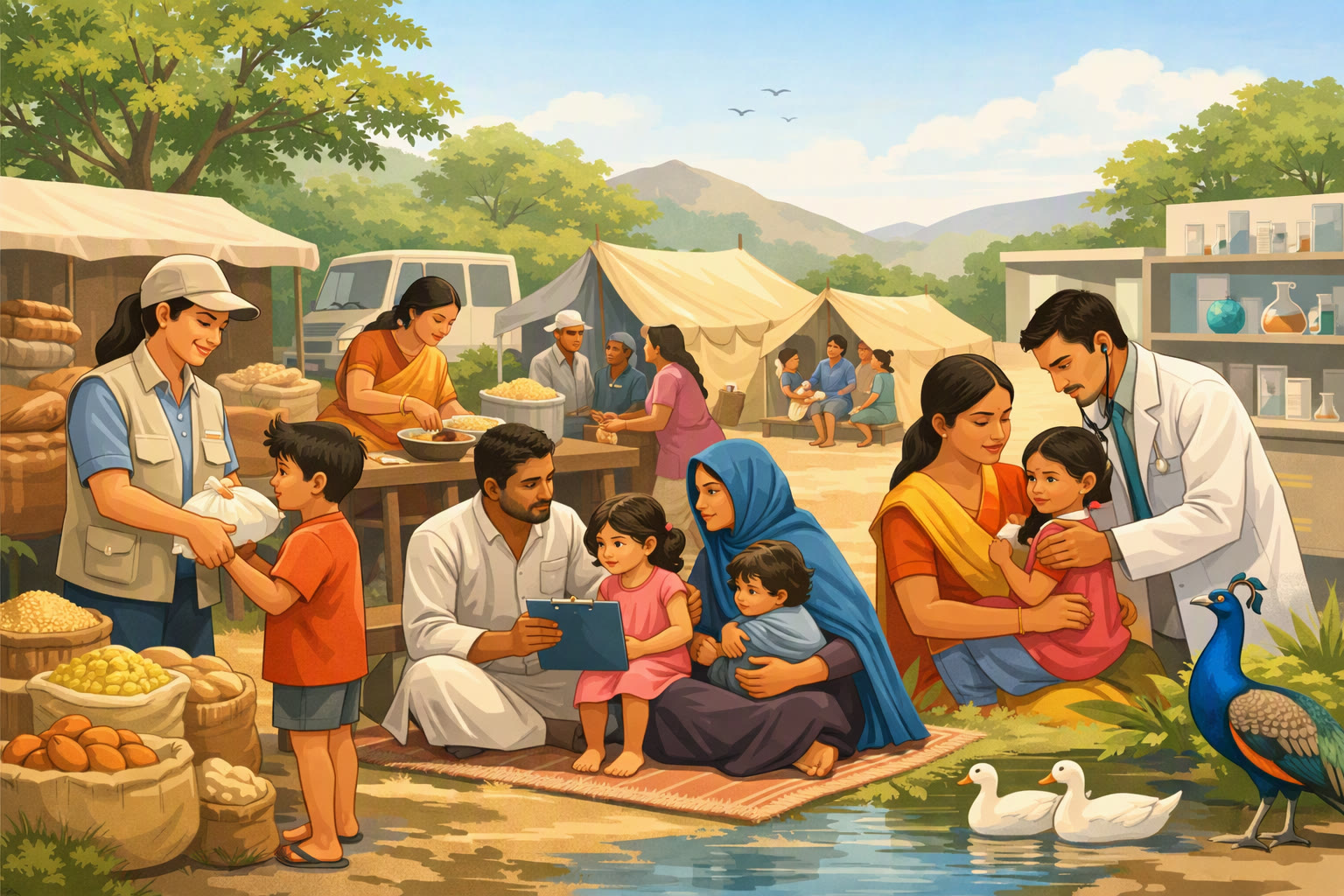
- Humanitarian Aid: Providing food, shelter, and medical assistance to people affected by disasters and conflicts.
- Promoting Human Rights: Working to protect human rights around the world, including the rights of women, children, and minorities.
- International Law: Helping to develop international laws and treaties that govern relations between countries.
Keep learning, free
Create a free Syllabax account to unlock practice questions and games for this topic.
Visual Learning Enhanced! 🚀
To help you master this topic, we use Advanced Syllabax AI to generate detailed diagrams and visual models.
Note on Visuals: The AI sometimes makes spelling errors in image labels. Please refer to the lesson text for the correct terminology.