Learning Journey
Watch this topic in 60 seconds
Free preview · Lesson 1
Water Conservation Methods – Environment & Ecology (Foundational)
Water Conservation Methods – Environment & Ecology (Foundational)
Water is essential for all life on Earth. We use water for drinking, cooking, cleaning, agriculture, and industry. However, the amount of freshwater available is limited, and it's important to conserve it to protect our environment and ensure a sustainable future. This lesson introduces foundational concepts of water conservation.
What is Water Conservation?
Water conservation means using water wisely and reducing its waste. It involves implementing practices and techniques that minimize water use while maximizing its benefits. This includes reducing demand, improving efficiency, and protecting water resources from pollution.
Why is Water Conservation Important?
- Protecting Ecosystems: Conserving water helps maintain healthy rivers, lakes, and wetlands, which are crucial habitats for many plants and animals.
- Ensuring Water Security: As the population grows and climate change intensifies, water scarcity becomes a greater concern. Conservation helps ensure a reliable water supply for future generations.
- Reducing Energy Consumption: Treating and distributing water requires energy. By conserving water, we can reduce the energy needed for these processes, lowering our carbon footprint.
- Saving Money: Using less water means lower water bills for households and businesses.
Simple Water Conservation Methods at Home
- Fix Leaks: A dripping faucet or a leaky toilet can waste significant amounts of water over time. Repairing these leaks promptly can save a lot of water.
- Take Shorter Showers: Reducing shower time by just a few minutes can conserve a substantial amount of water.
- Use Water-Efficient Appliances: When replacing appliances like washing machines and dishwashers, choose models that are designed to use less water.
- Water Your Lawn Wisely: Water your lawn only when necessary and during the cooler parts of the day to reduce evaporation. Consider using drought-tolerant plants.
- Collect Rainwater: Rainwater can be collected and used for watering plants or other non-potable purposes.
Water Conservation in Agriculture
Agriculture is a major consumer of water. Implementing water-efficient irrigation techniques is crucial for sustainable agriculture.
- Drip Irrigation: This method delivers water directly to the roots of plants, minimizing water loss through evaporation.
- Sprinkler Irrigation: Uses sprinklers to distribute water over crops. Ensure proper sprinkler maintenance to prevent water wastage.
- Using drought resistant crops: Choosing crops that don't need as much water is also helpful.
Water Conservation in Industry
Industries can also conserve water through various methods:
- Recycling Water: Industries can treat and reuse wastewater for cooling, cleaning, and other non-potable purposes.
- Implementing Water-Efficient Technologies: Using equipment and processes that minimize water consumption.
- Reducing Water Usage Companies can assess processes to reduce their water needs.
Keep learning, free
Create a free Syllabax account to unlock the other 1 lesson, practice questions and games.
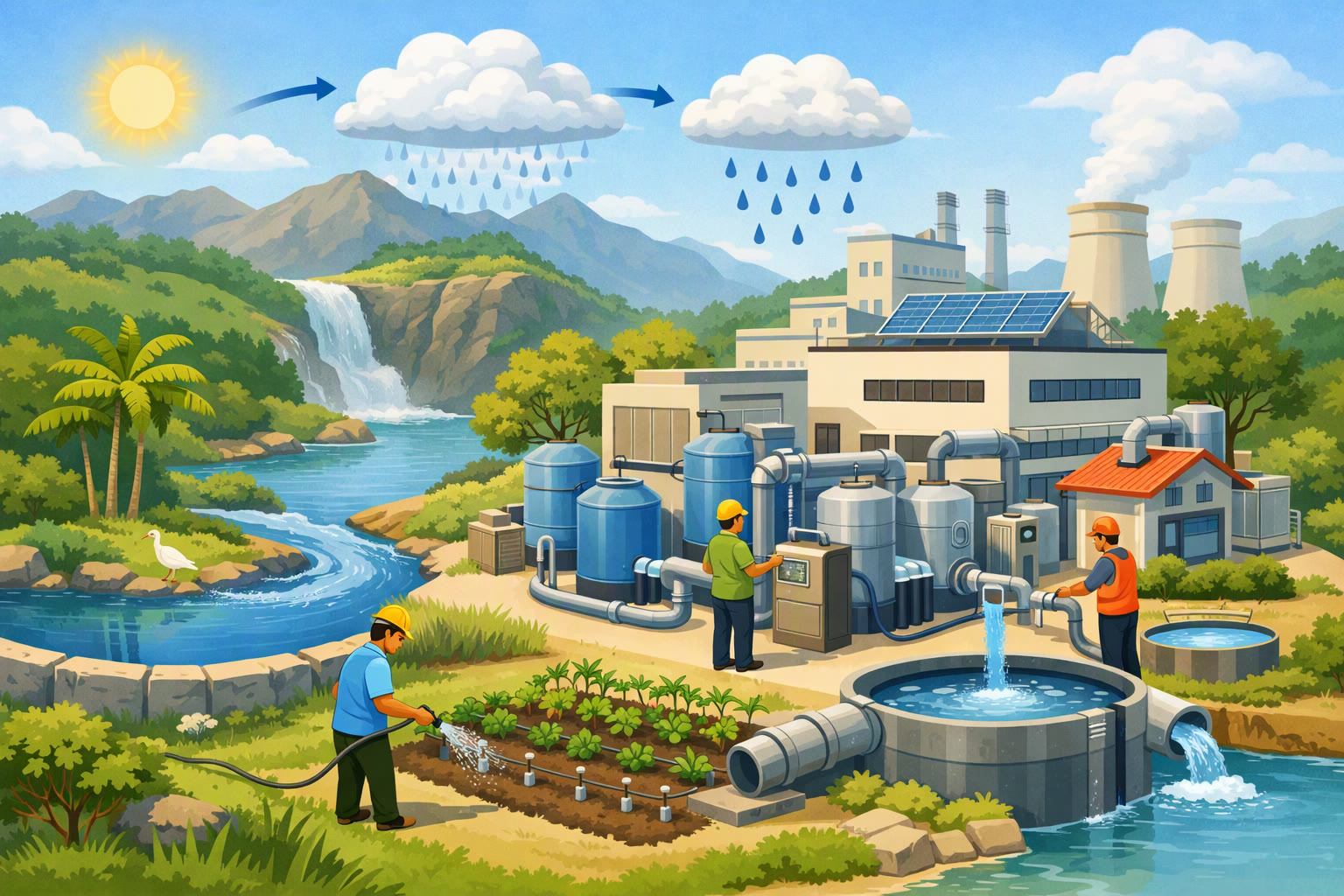
Visual Learning Enhanced! 🚀
To help you master this topic, we use Advanced Syllabax AI to generate detailed diagrams and visual models.
Note on Visuals: The AI sometimes makes spelling errors in image labels. Please refer to the lesson text for the correct terminology.