Pronouns
Watch this topic in 60 seconds
Free preview · Lesson 1
Pronouns (Foundational)
Pronouns: Taking the Place of Names!
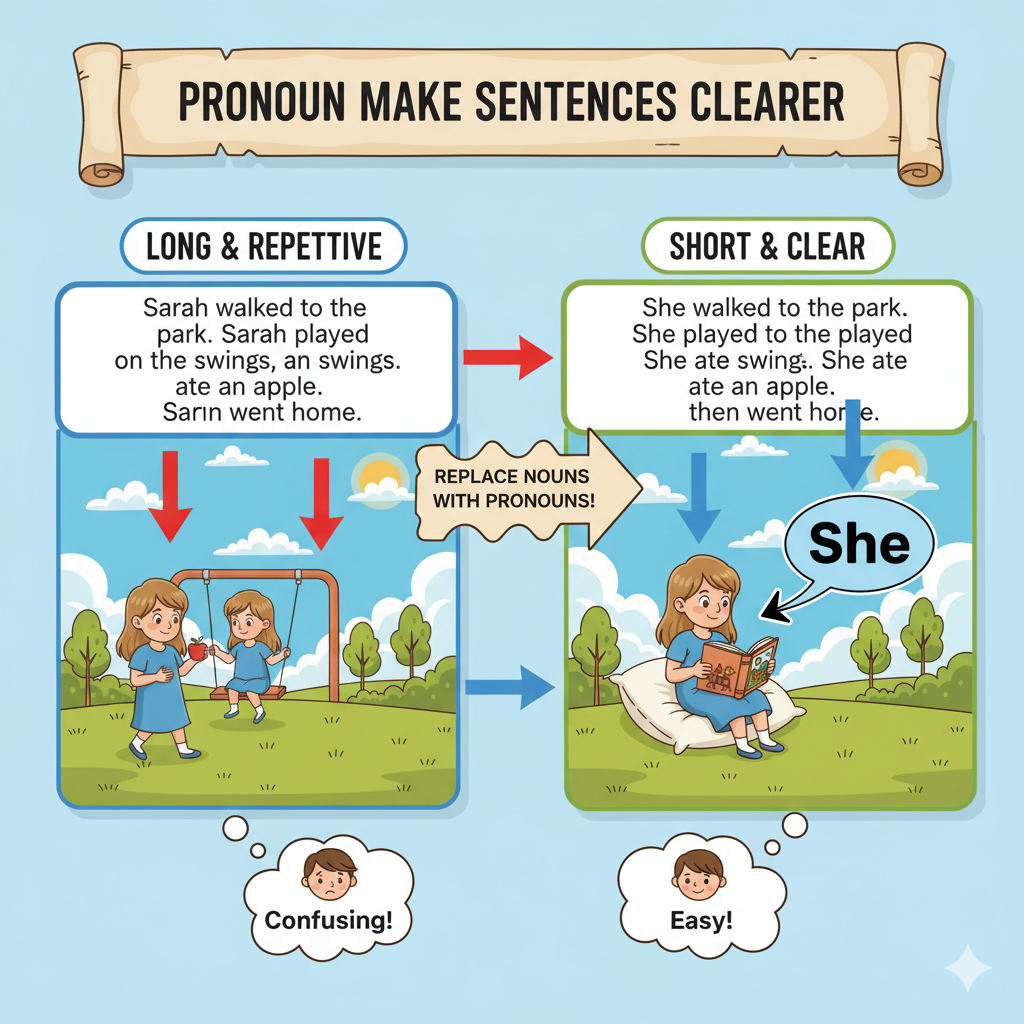
Hello, future word wizards! Today, we're going on an adventure to learn about pronouns. Pronouns are like secret agents – they take the place of nouns (names of people, places, or things) to make our sentences shorter and easier to understand.
What is a Pronoun?
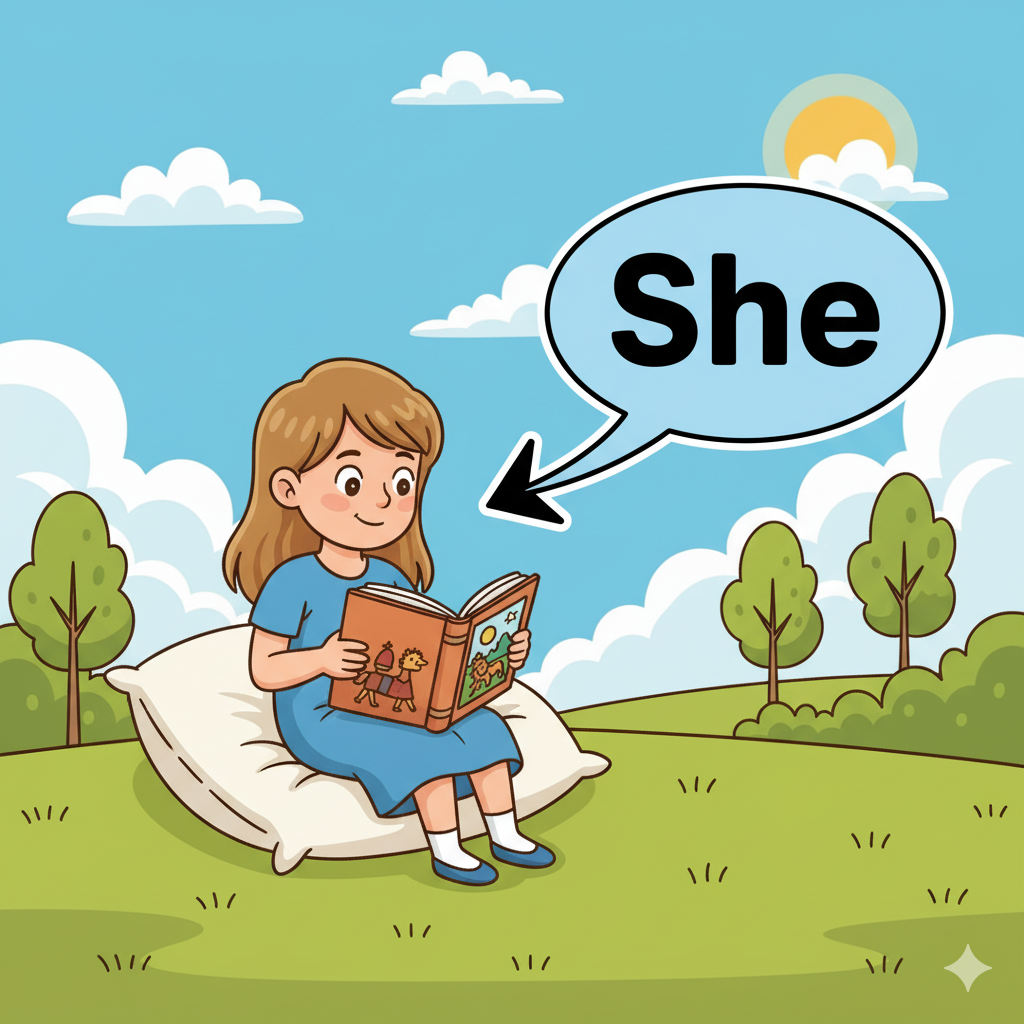
A pronoun is a word that replaces a noun. Instead of saying a person's name over and over, we can use a pronoun like he, she, or they.
- Noun: Sarah likes to read books.
- Pronoun: She likes to read books.
 ⚠️ This picture may have spelling mistakes. Trust the words in the lesson.Types of Pronouns
Let's look at some common types of pronouns:
- Personal Pronouns: These replace specific people or things. Examples: I, you, he, she, it, we, they, me, him, her, us, them.
- Possessive Pronouns: These show ownership. Examples: mine, yours, his, hers, its, ours, theirs.
Examples:
- "John is going to the store." becomes "He is going to the store."
- "This book belongs to Mary." becomes "This book is hers."
Why Use Pronouns?
- Pronouns make our sentences less repetitive.
- They make our writing and speaking flow more smoothly.
- They help us avoid confusion by clearly referring to people or things.
 ⚠️ This picture may have spelling mistakes. Trust the words in the lesson.Keep practicing, and you'll become a pronoun pro in no time! You've got this!
Keep learning, free
Create a free Syllabax account to unlock practice questions and games for this topic.
Visual Learning Enhanced! 🚀
To help you master this topic, we use Advanced Syllabax AI to generate detailed diagrams and visual models.
Note on Visuals: The AI sometimes makes spelling errors in image labels. Please refer to the lesson text for the correct terminology.