Calendar reading (Time)
Watch this topic in 60 seconds
Free preview · Lesson 1
Understanding Calendar reading (Time)
Understanding Our Calendar: A Journey Through Days, Weeks, and Months!
Hello Super Learners! Today, we're going on an exciting adventure to understand something we use every single day: the calendar! Think of a calendar as a special map that helps us keep track of time. It tells us when it's our birthday, when school starts, and when holidays are coming up!
What is a Calendar?
Imagine you have a big box of building blocks, and each block represents a day. A calendar is like a neat way to arrange all those blocks so you can see them easily. It helps us know what day it is today, what day it was yesterday, and what day it will be tomorrow. It also helps us plan for the future – like what we'll do next week or next month!
The Building Blocks of Time: Days
The smallest building block on our calendar is a day. A day is like a single building block. It's a period of 24 hours, from when the sun rises to when it sets, and then through the night until the sun rises again. We have different activities for different days: some days we go to school, some days we play, and some days we rest!
Putting Days Together: Weeks
Now, imagine we take 7 of our building blocks (days) and put them together in a row. That's called a week! A week is like a small train made of 7 days. We have special names for each of these 7 days:
- Sunday
- Monday
- Tuesday
- Wednesday
- Thursday
- Friday
- Saturday
Do you know what day it is today? What day will it be tomorrow? What day was it yesterday? Weeks are super helpful because we often have routines. For example, we go to school on weekdays (Monday to Friday) and have special time for fun and family on the weekend (Saturday and Sunday)! A week is a cycle, meaning it starts over again after Saturday.
Building Bigger Trains: Months
What happens when we put many weeks together? We get a month! A month is like a bigger, longer train made of many weeks and days. Some months have more days than others. It's like some train cars are longer than others!
There are 12 months in a year, and each month has a special name:
- January
- February
- March
- April
- May
- June
- July
- August
- September
- October
- November
- December
It's important to know how many days are in each month. January is like a long train car, with 31 days. February is a bit shorter, usually with 28 days (but sometimes 29!). Other months, like April and June, have 30 days. Knowing the number of days in a month helps us plan for longer events, like vacations!
The Biggest Train of All: The Year
When we put all 12 months together, we get a year! A year is like the longest, most super-duper train ever! It's a whole cycle of seasons and a whole year of learning and playing.
Looking at a Calendar Page
Let's look at a typical calendar page. You'll see the days of the week listed across the top (like Sunday, Monday, Tuesday...). Then, you'll see numbers arranged in rows and columns. Each number represents a day of the month.
Imagine a calendar page is like a grid. The columns are the days of the week, and the rows are like the weeks within the month. You find the number of the day you're looking for, and then you can see what day of the week it falls on!
Why is Reading a Calendar Important?
Reading a calendar is like having a superpower for time! It helps us:
- Know when our birthdays are!
- Remember important dates like holidays.
- Figure out when school starts and ends.
- Plan fun activities with friends and family.
- Understand how much time we have until something special happens.
Think about it: if you have a birthday party next Friday, you need to look at the calendar to know exactly which day that is. You can count the days from today to know how long you have to wait!
Special Days on the Calendar
Calendars show us important events. These can be things like:
- Holidays: Fun days off like Christmas, Hanukkah, or your favorite holidays!
- Birthdays: Your special day to celebrate!
- School Events: Like field trips or special assemblies.
- Appointments: Like going to the doctor or dentist.
When you see a special event marked on a calendar, it's like a little flag saying, "Something important is happening on this day!"
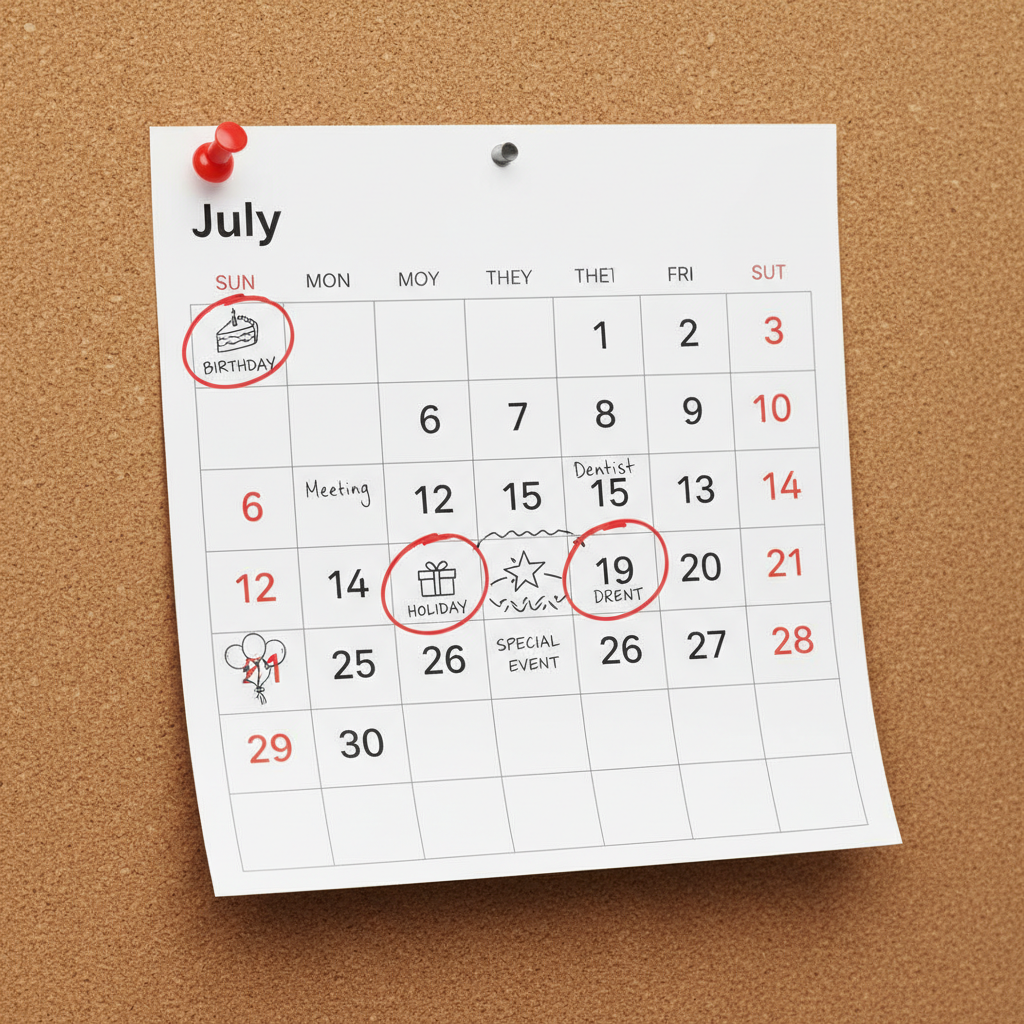 ⚠️ This picture may have spelling mistakes. Trust the words in the lesson.
Practice Time!
Now that we've learned all about calendars, let's test your super calendar-reading skills!
Key Calendar Vocabulary
- Day: The smallest unit of time we usually track on a calendar (24 hours).
- Week: A group of 7 days.
- Month: A group of days that usually make up about 4 weeks.
- Year: A group of 12 months.
Remember, a calendar is our helpful map for time, guiding us through our days, weeks, and months!
Keep learning, free
Create a free Syllabax account to unlock practice questions and games for this topic.
Visual Learning Enhanced! 🚀
To help you master this topic, we use Advanced Syllabax AI to generate detailed diagrams and visual models.
Note on Visuals: The AI sometimes makes spelling errors in image labels. Please refer to the lesson text for the correct terminology.