Evaporation, condensation (Water)
Watch this topic in 60 seconds
Free preview · Lesson 1
Understanding Evaporation, condensation (Water)
The Amazing Journey of Water: Evaporation and Condensation!
Hello, young scientists! Have you ever wondered what happens to puddles after it rains, or why your cold drink glass gets all 'sweaty' on the outside? These are not magic tricks! They are real-life science happening all around us, and they are super important for understanding our planet. Today, we're going to learn about two very special parts of water's journey: Evaporation and Condensation.
Water, Water Everywhere!
First, let's remember what water is. Water is a liquid that we drink, swim in, and see in rivers, lakes, and oceans. It's also in the air all around us, even though we can't always see it! Water is super special because it can change its form, almost like a superhero changing costumes.
- Sometimes it's a liquid (like the water in a glass).
- Sometimes it's a solid (like ice cubes).
- And sometimes it's a gas (we call this water vapor).
Today, we're focusing on how water changes between being a liquid and being a gas (water vapor).
Evaporation: Water's Great Escape!
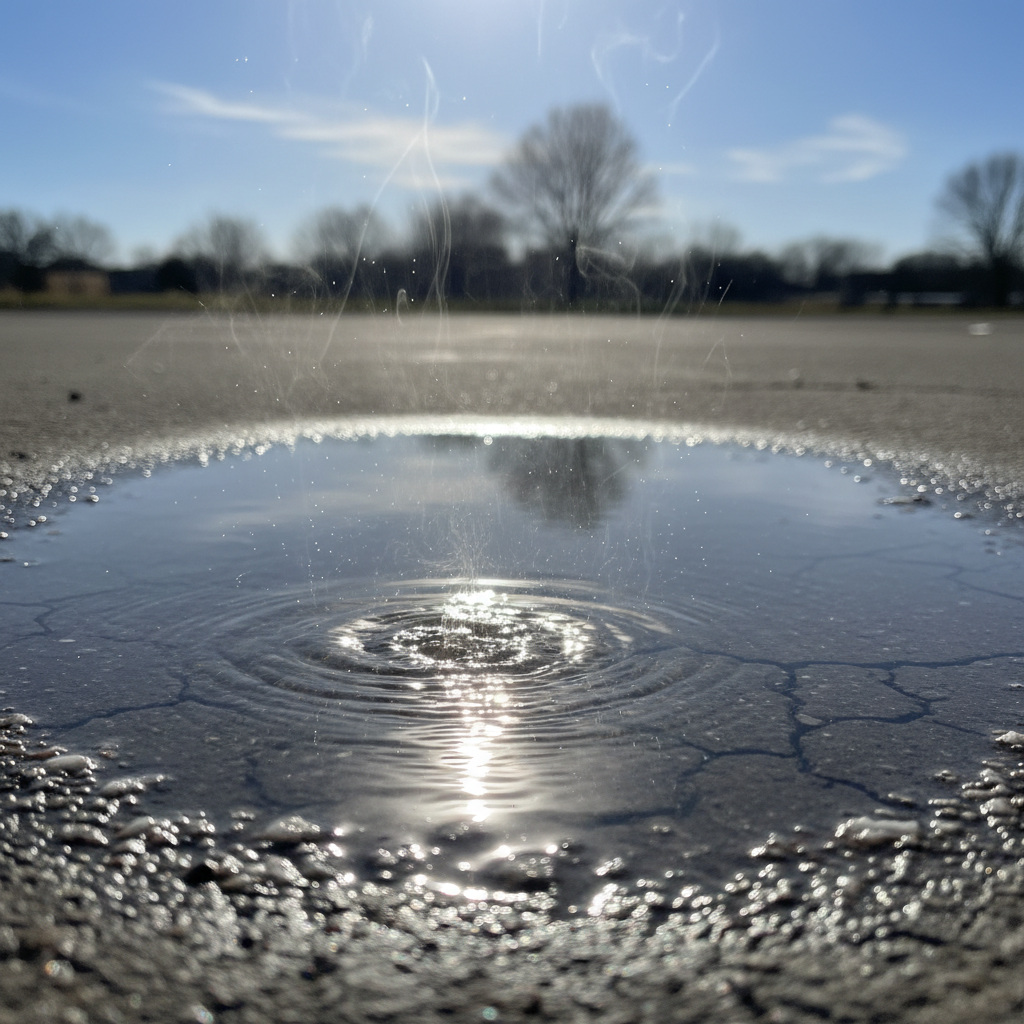
Imagine you have a puddle on the sidewalk after a rain shower. You come back an hour later, and poof! The puddle is gone! Where did it go? Did a giant sidewalk monster drink it? Nope! It evaporated!
What is Evaporation?
Evaporation is when liquid water turns into a gas called water vapor. Think of it like water molecules putting on their 'running shoes' and jumping into the air! They don't just disappear; they become tiny, invisible gas particles that float up into the sky.
How Does Evaporation Happen?
The main ingredient for evaporation is heat. When the sun shines on a puddle, a lake, or even your wet clothes hanging on a line, it gives the water molecules energy. This energy makes the molecules move faster and faster until some of them have enough energy to break away from the other liquid water molecules and float up into the air as water vapor.
Analogy Time!
- The Puddle's Vanishing Act: Think of the puddle as a crowded party of water molecules. When the sun (heat) comes along, it's like turning up the music and giving some molecules a burst of energy to dance their way out of the party and float away as happy, free water vapor particles.
- Drying Clothes: When you hang wet clothes outside, the water in them evaporates. The wind can help carry away the water vapor, and the sun's warmth speeds up the process. It's like the water in your clothes is getting a 'lift' into the sky!
- Steam from a Kettle: When you boil water, you see steam rising. That's super-fast evaporation happening! The heat makes the water change into water vapor so quickly that you can sometimes even see it for a short time before it mixes with the air.
 ⚠️ This picture may have spelling mistakes. Trust the words in the lesson.
So, remember, evaporation is all about water going UP into the air and becoming invisible gas!
Condensation: The Water Vapor's Cozy Reunion!
Now, what happens to all that water vapor that floated up into the sky? It doesn't just stay there forever! Eventually, it needs to come back down, and that's where condensation comes in.
What is Condensation?
Condensation is when water vapor (a gas) cools down and turns back into tiny liquid water droplets. It's the opposite of evaporation! Those tiny, invisible gas particles decide to have a reunion and stick together again.
How Does Condensation Happen?
The main ingredient for condensation is cooling. As water vapor rises higher into the sky, the air up there is much colder than the air closer to the ground. When the warm water vapor hits that cold air, it loses energy, slows down, and starts to clump together. These tiny clumps become visible as clouds, fog, or dew.
Analogy Time!
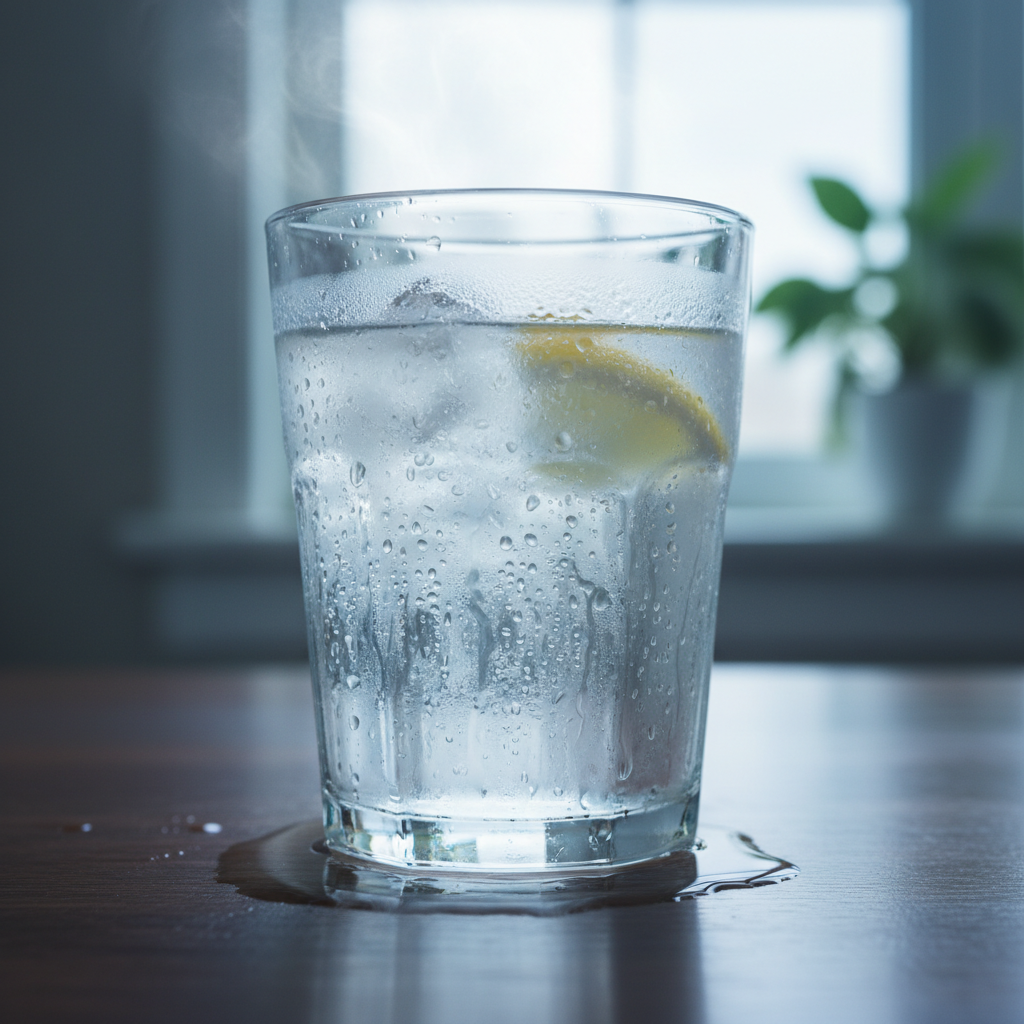
- The 'Sweaty' Glass: Get a cold glass of water on a warm day. After a while, you'll see tiny drops of water on the outside of the glass. Where did they come from? Not from inside the glass! The air around the glass has invisible water vapor in it. When this warm water vapor touches the cold glass, it cools down quickly, condenses, and turns back into liquid water droplets. It's like the air around the glass is having a tiny 'cloud' party on its surface!
- Bathroom Mirror Fog: After a hot shower, the bathroom mirror gets foggy. The warm water vapor from your shower rises and touches the cooler mirror. The vapor condenses on the mirror, turning into tiny water droplets that make it look foggy.
- Clouds in the Sky: Clouds are the biggest and most important example of condensation! High up in the sky, water vapor cools down. It gathers around tiny dust particles (like tiny seats for the water molecules) and forms millions of tiny water droplets or ice crystals. When enough of these droplets come together, we see a cloud! It's like the water vapor molecules are all holding hands and forming a giant floating hug in the sky.
 ⚠️ This picture may have spelling mistakes. Trust the words in the lesson.
So, remember, condensation is all about water vapor cooling DOWN and becoming visible liquid again!
Evaporation and Condensation Together: The Water Cycle!
Evaporation and condensation are like two best friends working together in an endless loop called the Water Cycle. Water evaporates from oceans and lakes, rises into the sky, condenses to form clouds, and then falls back to Earth as rain, snow, or hail (precipitation). This cycle keeps water moving all around our planet!
A Quick Review!
- Evaporation: Liquid water turns into invisible water vapor (a gas) when it gets warm. Think: Puddles disappearing.
- Condensation: Water vapor (a gas) turns back into tiny liquid water droplets when it gets cold. Think: Clouds forming or a 'sweaty' glass.
Now you're an expert on two very important parts of the water's amazing journey! Keep an eye out for evaporation and condensation happening around you every day!
Keep learning, free
Create a free Syllabax account to unlock practice questions and games for this topic.
Visual Learning Enhanced! 🚀
To help you master this topic, we use Advanced Syllabax AI to generate detailed diagrams and visual models.
Note on Visuals: The AI sometimes makes spelling errors in image labels. Please refer to the lesson text for the correct terminology.