Ethanol, ethanoic acid[CHEMISTRY]
Watch this topic in 60 seconds
Free preview · Lesson 1
Understanding Ethanol, ethanoic acid[CHEMISTRY]
Ethanol and Ethanoic Acid: Understanding Two Key Organic Compounds
Welcome to this foundational guide on two very important organic compounds: Ethanol and Ethanoic Acid. These substances are everywhere around us, from the food we eat and the drinks we consume to the fuels that power our vehicles and the disinfectants that keep us safe. In this lesson, we'll explore what they are, how they behave, and why they matter, all in simple terms with lots of analogies!
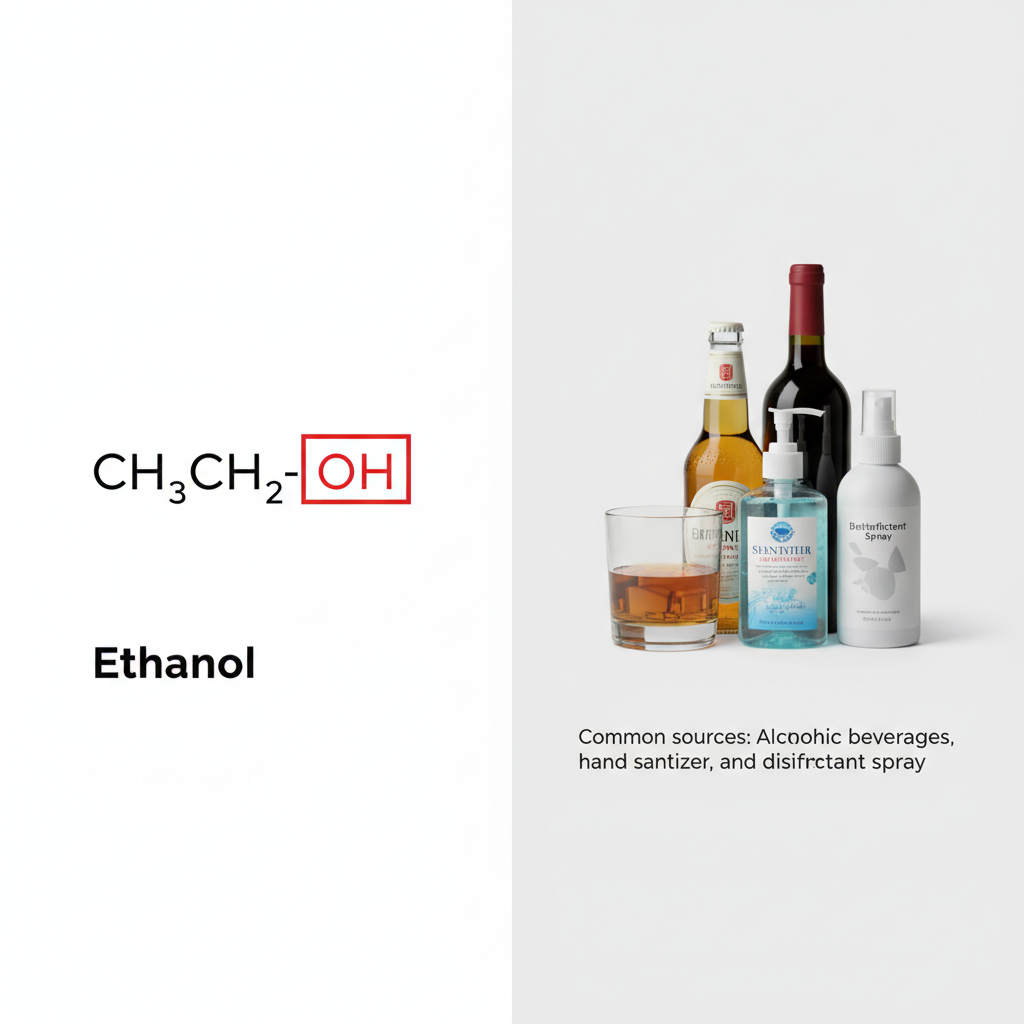 ⚠️ This picture may have spelling mistakes. Trust the words in the lesson.
What are Organic Compounds?
Before we dive into ethanol and ethanoic acid, let's quickly remember what organic compounds are. Think of it like this: if all matter is a huge LEGO set, then carbon atoms are the special connectors that can link up with many other atoms (especially hydrogen, oxygen, and nitrogen) to build incredibly diverse and complex structures. Organic compounds are essentially all those compounds that contain carbon atoms, usually bonded to hydrogen atoms.
1. Ethanol: The 'Alcohol' You Know
What is Ethanol?
Ethanol is an alcohol, and it's probably the most well-known one. When people talk about 'alcohol' in drinks, they are usually referring to ethanol. It's a colorless liquid with a distinctive smell.
The Functional Group: Hydroxyl (-OH)
Every family of organic compounds has a special 'badge' or a 'feature' that gives it specific properties. For alcohols like ethanol, this badge is the hydroxyl group (-OH). This tiny group plays a huge role in how ethanol behaves.
Properties of Ethanol
- Physical State: Colorless liquid at room temperature.
- Smell: Characteristic, slightly sweet, 'alcoholic' smell.
- Solubility: Highly soluble in water. This is why you can mix alcoholic drinks with water or juices.
- Flammability: Highly flammable. It burns with a clean, blue flame, releasing carbon dioxide and water. This property makes it useful as a fuel.
- Boiling Point: Relatively low (78°C), meaning it evaporates easily.
How is Ethanol Produced? (Fermentation)
One of the most common and ancient ways to produce ethanol is through a process called fermentation.
Uses of Ethanol
Ethanol has a wide range of uses beyond alcoholic beverages:
- Alcoholic Beverages: The primary component of drinks like beer, wine, and spirits.
- Solvent: Excellent solvent, meaning it can dissolve many substances that water cannot. It's used in perfumes, varnishes, and as a solvent in many chemical reactions.
- Fuel: Used as a biofuel, often blended with gasoline (e.g., E10, E85) to reduce reliance on fossil fuels and lower emissions.
- Disinfectant/Antiseptic: Used in hand sanitizers and medical wipes because it can kill bacteria and viruses by denaturing their proteins.
- Raw Material: Used to make other chemicals, including ethanoic acid!
Harmful Effects of Ethanol (Important!)
While useful, it's crucial to understand that ethanol, especially in alcoholic beverages, can be harmful:
- Addiction: Can lead to physical and psychological dependence.
- Health Problems: Excessive consumption can damage the liver, brain, and other organs.
- Impairment: Affects judgment, coordination, and reaction time, making activities like driving extremely dangerous.
2. Ethanoic Acid: The 'Sour' Star
What is Ethanoic Acid?
Have you ever tasted vinegar? That sour, pungent liquid in your kitchen cabinet is mostly water with about 4-8% ethanoic acid! It's another crucial organic compound.
Ethanoic acid is also commonly known by its older, more familiar name: acetic acid.
The Functional Group: Carboxyl (-COOH)
Just like alcohols have the hydroxyl group, carboxylic acids have their own special badge: the carboxyl group (-COOH). This group is responsible for the acidic nature of ethanoic acid.
Properties of Ethanoic Acid
- Physical State: Colorless liquid with a strong, pungent smell. At low temperatures (below 16.6°C), it can freeze into an ice-like solid, which is why pure ethanoic acid is sometimes called 'glacial acetic acid'.
- Smell: Sharp, pungent smell, like strong vinegar.
- Taste: Sour (when diluted, as in vinegar).
- Acidity: It is a weak acid. This means it doesn't fully dissociate (break apart into ions) in water, unlike strong acids like hydrochloric acid.
- Corrosivity: Concentrated ethanoic acid is corrosive and can cause burns.
- Solubility: Highly soluble in water.
How is Ethanoic Acid Produced? (Oxidation of Ethanol)
One common way to produce ethanoic acid is by the oxidation of ethanol.
This process is also used industrially and biologically (by acetic acid bacteria).
Uses of Ethanoic Acid
Ethanoic acid also has many important uses:
- Vinegar: The most common use. Vinegar is a dilute solution (typically 4-8%) of ethanoic acid in water, used in cooking, food preservation, and cleaning.
- Food Preservative: Its acidic nature helps inhibit the growth of bacteria and molds, making it useful for pickling vegetables.
- Solvent: Used in the production of paints, lacquers, and plastics.
- Chemical Synthesis: A raw material for producing many other chemicals, such as esters (which give fruits their characteristic smells) and cellulose acetate (used in photographic film and textiles).
- Cleaning Agent: Dilute ethanoic acid (vinegar) is a popular natural cleaning agent due to its mild acidity and ability to dissolve mineral deposits.
The Relationship Between Ethanol and Ethanoic Acid
You might have noticed a connection: ethanol can be converted into ethanoic acid through oxidation. This highlights an important relationship in organic chemistry, where one compound can be transformed into another through specific reactions. They are like two different stages of a chemical journey!
Safety Precautions
Both ethanol and ethanoic acid, especially in concentrated forms, require careful handling:
- Flammability: Ethanol is highly flammable; keep away from open flames.
- Corrosivity: Concentrated ethanoic acid is corrosive and can cause skin and eye irritation/burns. Always wear appropriate safety gear (gloves, eye protection) when handling.
- Ventilation: Work in a well-ventilated area due to their strong smells and potential for respiratory irritation.
Conclusion
Ethanol and ethanoic acid are excellent examples of how simple changes in molecular structure and functional groups can lead to compounds with vastly different properties and uses. From fermentation to fuel, and from preserving food to cleaning, these two compounds demonstrate the incredible versatility and importance of organic chemistry in our daily lives. Understanding their basic properties, production, and uses is a fundamental step in your chemistry journey!
Keep learning, free
Create a free Syllabax account to unlock practice questions and games for this topic.
Visual Learning Enhanced! 🚀
To help you master this topic, we use Advanced Syllabax AI to generate detailed diagrams and visual models.
Note on Visuals: The AI sometimes makes spelling errors in image labels. Please refer to the lesson text for the correct terminology.