Learning Journey
Watch this topic in 60 seconds
Free preview · Lesson 1
Understanding Case-based analytical questions [HOTS (Higher Order Thinking Skills)]
What are Case-Based Analytical Questions?
Imagine you're a detective trying to solve a mystery. You're given clues, like a strange footprint or a missing object, and you have to figure out what happened. Case-based analytical questions are like mini-mysteries for your brain! They give you a short story or a situation (that's the 'case'), and then they ask you to think deeply about it to find answers. They're not just asking you to remember facts; they're asking you to use those facts to understand, explain, and solve a problem.
HOTS stands for Higher Order Thinking Skills. These are special thinking skills that go beyond just remembering things. They include skills like:
- Analyzing: Breaking something down into its parts to understand how they work together. Think of taking apart a toy to see how it's made.
- Evaluating: Making judgments about something based on what you know. Like deciding if a story has a good ending or a bad ending.
- Creating: Coming up with new ideas or solutions. Like drawing a new picture or inventing a new game.
- Applying: Using what you've learned in a new situation. If you learned how to tie your shoes, you can apply that skill to tie other things, like a ribbon.
Case-based analytical questions are designed to make you use these HOTS. They want you to put on your thinking cap and really dig deep!
Why are Case-Based Questions Important?
These questions are like a workout for your brain! They help you:
- Understand things better: Instead of just knowing that plants need water, you might analyze a case where a plant didn't get water and explain *why* it wilted.
- Solve problems: If a character in a story is sad, you can analyze the situation and suggest ways to cheer them up.
- Make smart decisions: You learn to look at different options and choose the best one.
- Become a better learner: You start to ask 'why?' and 'how?' more often, which is the key to learning anything new.
Let's Look at an Example!
Case: Maya loves to read. She borrowed a new book from the library yesterday. Today, she opened her backpack to read during recess, but the book is gone! She remembers putting it in her backpack this morning. She looks inside her lunchbox, under her desk, and asks her friend Leo if he saw it. Leo says he saw a dog sniffing around her backpack earlier.
Question: What is the most likely reason Maya's book is missing?
Now, let's use our HOTS!
- Analyzing: Maya put the book in her backpack. The book is now missing. Leo saw a dog sniffing around.
- Applying what we know: Dogs sometimes like to chew on things or take things.
- Evaluating: Is it possible Maya just lost it? Yes, but Leo's information is important. Is it possible someone else took it? Maybe, but the dog clue is strong.
Possible Answer: It's most likely that the dog took the book from Maya's backpack.
This question didn't just ask 'What did Maya do today?'. It asked you to think about the clues and figure out a possible solution!
More About Analyzing
Analyzing is like being a scientist looking at a puzzle. You look at all the pieces (the facts) and try to see how they fit together to make the whole picture (the answer).
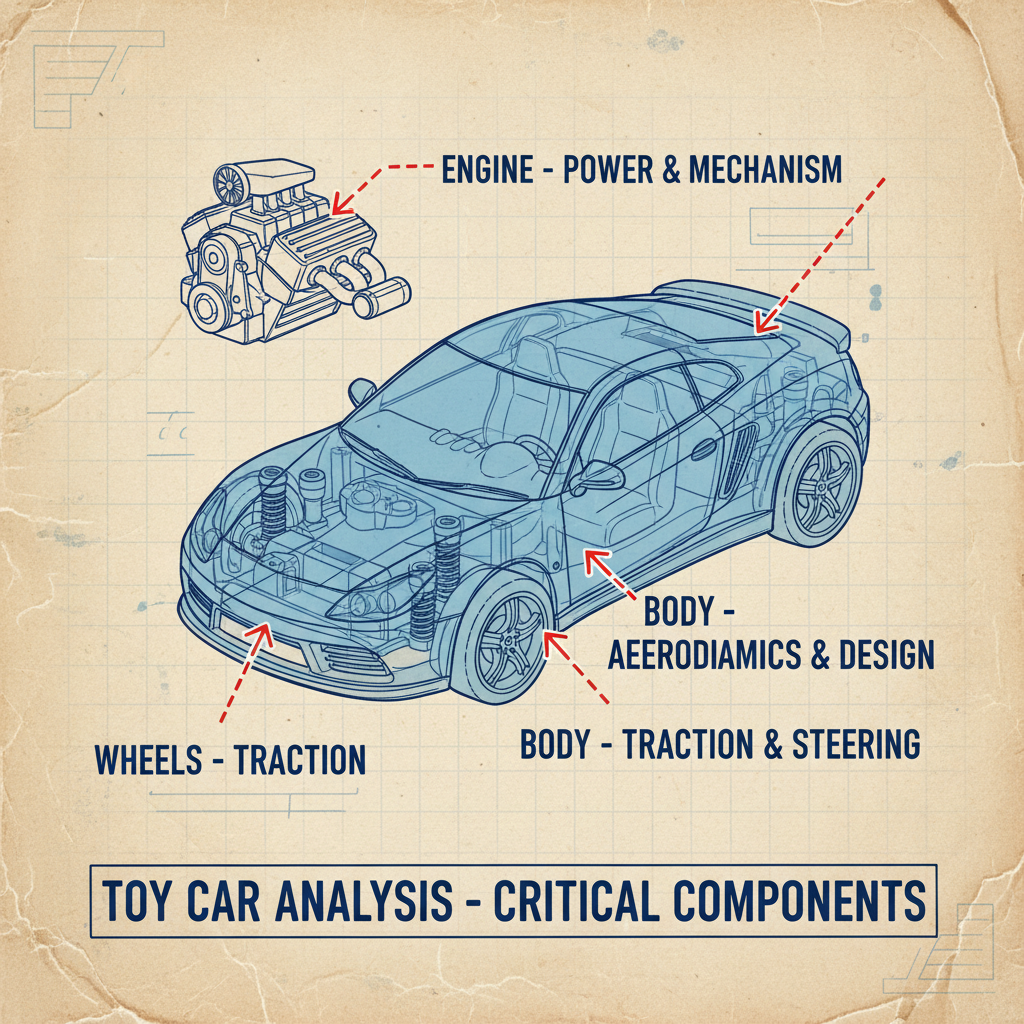
Imagine you have a broken toy car. To analyze why it's broken, you might:
- Look at the wheels: Are they falling off?
- Look at the body: Is there a crack?
- Look at the engine (if it has one): Is something loose inside?
By looking at each part, you can figure out what's wrong with the whole car.
 ⚠️ This picture may have spelling mistakes. Trust the words in the lesson.
More About Applying
Applying is like using a tool you learned about. If you learned how to use scissors to cut paper, you can then apply that skill to cut fabric or playdough.
Let's say you learned that when you mix red and blue paint, you get purple. You can then apply this knowledge when you're painting a picture and want to make a purple sky.
More About Evaluating
Evaluating is like being a judge. You look at something and decide if it's good or bad, right or wrong, or the best option.
Imagine you have two paths to get to your friend's house. One path is shorter but goes past a barking dog. The other path is longer but is very quiet. You have to evaluate which path is better for you to take.
Putting it all Together
Case-based analytical questions often combine these skills. You might need to:
- Analyze the information given in the case.
- Apply what you already know (from class, from life) to the situation.
- Evaluate different possible answers or solutions.
- Create your own explanation or solution based on your thinking.
Think of it like building with LEGOs. You have different bricks (facts). You analyze how they connect, apply your idea of what you want to build, evaluate if it looks good, and then create your amazing LEGO structure!
Remember, these questions are fun challenges. They help you become a super thinker!
Keep learning, free
Create a free Syllabax account to unlock practice questions and games for this topic.
Visual Learning Enhanced! 🚀
To help you master this topic, we use Advanced Syllabax AI to generate detailed diagrams and visual models.
Note on Visuals: The AI sometimes makes spelling errors in image labels. Please refer to the lesson text for the correct terminology.