Basic financial awareness [Real-Life Math]
Watch this topic in 60 seconds
Free preview · Lesson 1
Understanding Basic financial awareness [Real-Life Math]
Welcome to the World of Money!
Hi everyone! Today, we're going on an exciting adventure into the world of money. You might wonder why learning about money is important, especially when you're in 5th grade. Well, think of money like a tool. Just like you need tools to build a treehouse or to bake a cake, you need to understand money to make smart choices about it now and in the future. This is called financial awareness, and it’s like learning the secret code to manage your money!
What is Money?
At its simplest, money is anything that people agree to use as a way to pay for things. Think about it: when you go to the store, you give the cashier some money, and they give you a toy or a snack. That money is their agreement to trade the toy or snack for your money. Before money, people used to trade things directly – maybe you had extra apples, and your neighbor had extra eggs. You could swap! This was called bartering. But bartering could be tricky. What if your neighbor didn't need apples but really needed a new shovel? Money makes it much easier because everyone generally accepts money for goods and services.
Earning Money: Your First Steps
How do people get money in the first place? They earn it! Earning money usually means doing some kind of work. For grown-ups, this might be being a doctor, a teacher, or a firefighter. For kids, earning money can be simpler. Maybe you get an allowance for helping with chores around the house, like cleaning your room or setting the table. Some kids might earn money by doing extra tasks for neighbors, like walking a dog or helping with yard work. Every time you earn money, it’s like you’ve earned a reward for your effort!
Analogy: Think of earning money like collecting points in a video game. When you complete a level or a mission, you get points. When you do a job or a chore, you get money!
Saving Money: Your Money's Future Self
Once you have money, what can you do with it? You can save it! Saving money means setting aside some of your earnings instead of spending it right away. Why would you do this? Because saving helps you buy bigger things later on, or it can help you in case of an emergency. Imagine you want to buy a new video game that costs
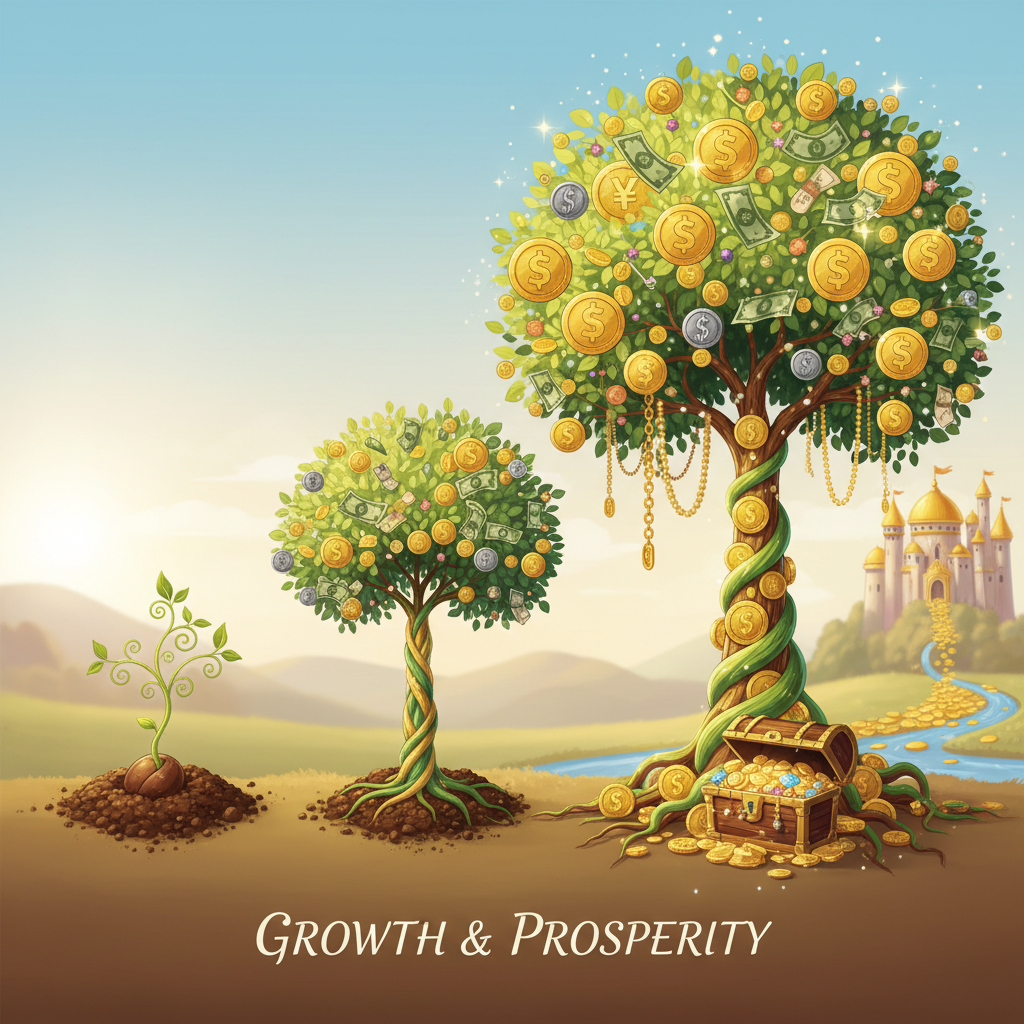
Analogy: Saving money is like planting a seed. You put a little bit into the ground (your savings account), and over time, with a little care (not spending it!), it can grow into something bigger – like a beautiful flower or, in our case, enough money for that video game!
Spending Money: Making Choices
Of course, you also want to enjoy your money! Spending is using your money to buy things or pay for services. This is the fun part where you get to enjoy the fruits of your labor. When you buy that toy, that book, or that ice cream, you are spending money. The key to spending wisely is making choices. You can't buy everything you want because money is limited. So, you have to decide what's most important to you. Is it better to buy a small toy now, or save up for a bigger, cooler toy later? These are the kinds of decisions that financial awareness helps you make.
Analogy: Spending is like choosing your favorite toppings for pizza. You might love pepperoni, mushrooms, and olives, but you can only choose a few because you don't want the whole pizza to be just one topping, and you also have to think about what fits your budget (how much pizza you can afford!). You have to make choices about what you want most.
Needs vs. Wants: The Big Decision
When you're deciding what to spend your money on, it's super helpful to think about the difference between needs and wants.
- Needs are things you absolutely must have to live and be healthy. Think of food, water, a safe place to live (like your home), and clothes to wear. Without these, life would be very difficult.
- Wants are things that are nice to have but not essential for survival. A new video game, a fancy toy, a trip to the amusement park – these are wants. They make life more fun, but you could live without them.
It’s important to make sure you have enough money for your needs before you spend it on your wants. This helps keep your financial life balanced and healthy.
Budgeting: Your Money's Roadmap
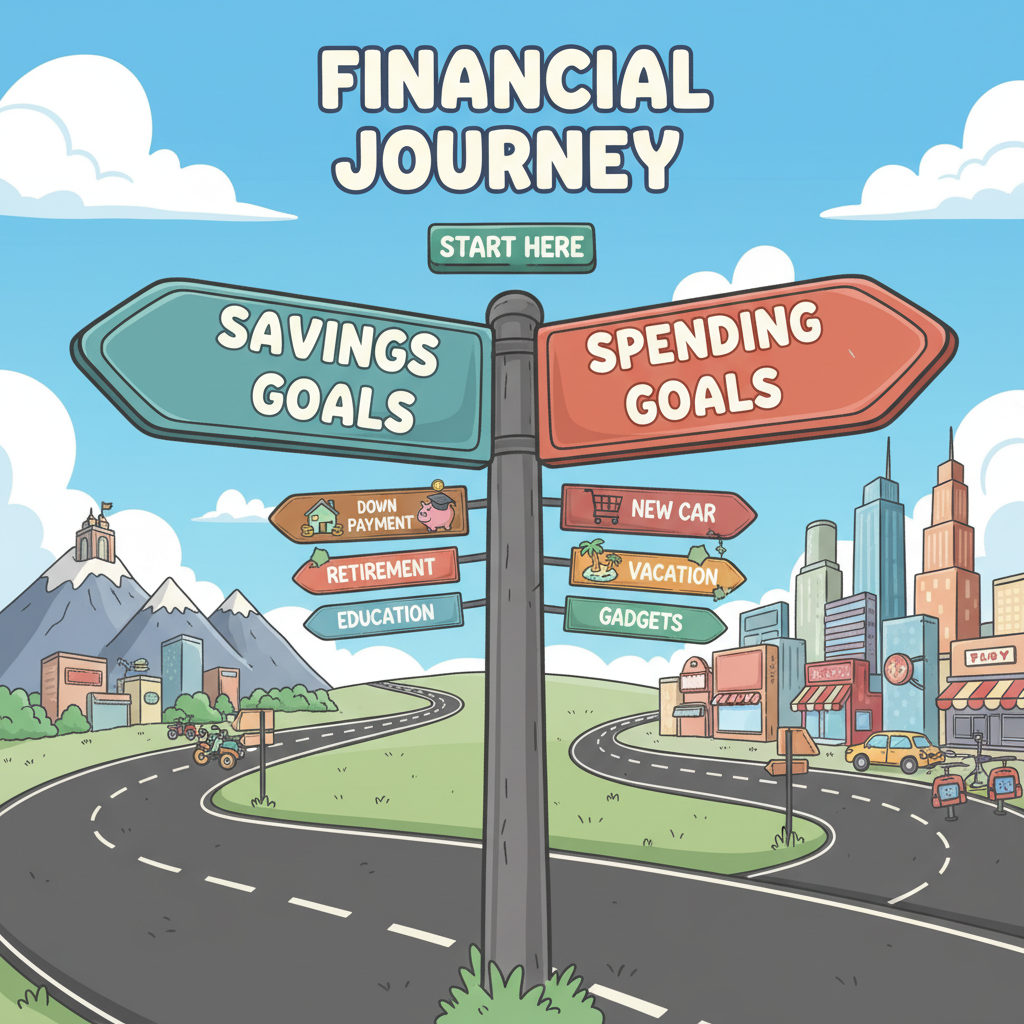
Have you ever heard of a budget? A budget is like a plan for your money. It’s a list that shows how much money you expect to get (your income) and how you plan to use it (your spending and saving). Creating a budget helps you see where your money is going and make sure you’re spending it in ways that align with your goals. For example, if your goal is to save for a bike, your budget will help you decide how much to save each week and how much you can safely spend on other things.
Analogy: A budget is like a roadmap for a road trip. It tells you where you're starting, where you want to go, and the best route to take. Without a roadmap, you might get lost or take much longer to reach your destination. A budget helps you reach your financial goals!
Conclusion
Learning about earning, saving, spending, needs, wants, and budgeting are the first big steps in understanding financial awareness. These skills will help you make smart decisions with your money throughout your life, from buying your first allowance toy to planning for your future. Keep practicing these ideas, and you'll become a money master!
Keep learning, free
Create a free Syllabax account to unlock practice questions and games for this topic.
Visual Learning Enhanced! 🚀
To help you master this topic, we use Advanced Syllabax AI to generate detailed diagrams and visual models.
Note on Visuals: The AI sometimes makes spelling errors in image labels. Please refer to the lesson text for the correct terminology.