Digestion in ruminants[BIOLOGY]
Watch this topic in 60 seconds
Free preview · Lesson 1
Understanding Digestion in ruminants[BIOLOGY]
Digestion in Ruminants: A Cow's Amazing Stomach!
Have you ever wondered how cows, sheep, and other farm animals like to munch on grass all day and seem to get so much energy from it? It's a bit like a magic trick, but it's all thanks to a very special digestive system! Today, we're going to explore the amazing world of digestion in ruminants.
What is a Ruminant?
First things first, what exactly is a ruminant? A ruminant is a type of mammal that has a special stomach with multiple compartments. Think of it like having a super-powered, multi-room stomach! Common ruminants include cows, sheep, goats, deer, and even giraffes.
Why do they need this special stomach? Well, they primarily eat plants, like grass and hay. Plant material is tough to break down because it's full of something called cellulose. Cellulose is like a tough, woody fiber that makes up the cell walls of plants. For animals with a simple stomach (like us humans or a dog), cellulose is very difficult to digest. Ruminants, however, have evolved a brilliant way to get nutrients from these fibrous foods.
The Four-Chambered Stomach: A Food Factory!
Instead of one stomach, a ruminant has four distinct compartments. It's like having four different kitchens, each with a specific job to do in preparing the food! These chambers are:
- Rumen
- Reticulum
- Omasum
- Abomasum
Let's take a closer look at each one.
1. The Rumen: The Big Fermentation Vat
The rumen is the largest compartment, and it's like a giant fermentation vat or a compost bin. Imagine a huge, bustling compost pile where lots of tiny helpers are working. In the rumen, there are billions of tiny microorganisms – bacteria, protozoa, and fungi. These microbes are the real heroes! They are like the tiny workers in our compost pile.
When a ruminant eats grass or hay, it's not fully chewed. The food goes into the rumen, and the microbes get to work. These microbes have a special superpower: they can break down the tough cellulose into simpler substances that the animal can absorb. It's like they're turning tough plant fibers into yummy energy drinks for the cow!
This process is called fermentation. It's similar to how yeast ferments sugar to make bread or alcohol, but here, it's breaking down plants. This fermentation also produces gases (like methane and carbon dioxide), which the animal needs to burp out – that's why cows burp a lot!
2. The Reticulum: The Honeycomb Catcher
The reticulum is connected to the rumen and looks a bit like a honeycomb. Its job is to help sort the food. Think of it as a sieve or a filter. The reticulum traps larger, undigested particles and sends them back up to the mouth for more chewing. This is where the famous "cud" comes from!
What is Cud?
Cud is partially digested plant material that a ruminant regurgitates (brings back up) into its mouth to chew again. This process is called rumination or "chewing the cud."
So, after eating, a cow might rest. Then, it will bring up a ball of partially chewed grass from its rumen and reticulum. It will then chew this cud very thoroughly. This second chewing breaks the plant material down even further, making it easier for the microbes in the rumen to digest it. It's like re-washing your vegetables to get them even cleaner before you cook them!
The reticulum also acts as a trap for anything the animal might have accidentally swallowed that shouldn't be there, like small stones or bits of metal. These items get caught in the honeycomb structure.
3. The Omasum: The Water Absorber
After the food has been fermented in the rumen and reticulum and chewed again as cud, it moves to the omasum. The omasum is sometimes called the "butcher's bible" because its lining has many folds, like the pages of a book. Its main job is to absorb water and some other nutrients from the digested food.
Imagine the omasum as a sponge. It squeezes out as much water as possible from the food mixture before it moves on. This helps to concentrate the nutrients and prepare the food for the final stage of digestion.
4. The Abomasum: The True Stomach
Finally, the food reaches the abomasum. This is the ruminant's "true stomach," similar to our own stomach. Here, digestive juices and enzymes (like acids) are added to break down the food further. These enzymes are like tiny scissors that snip the food into even smaller pieces.
The abomasum works much like a human stomach, digesting the food that has been processed by the rumen and its microbes. It breaks down proteins (which the microbes made) and absorbs the remaining nutrients.
The Whole Process: A Journey Through the Stomach
Let's put it all together:
- Ingestion: The animal eats grass and other plants, swallowing it with only a little chewing.
- Rumen & Reticulum: Food enters the rumen, where microbes start fermentation, breaking down cellulose. Larger particles are sent back to the mouth as cud (via the reticulum).
- Rumination (Chewing the Cud): The animal regurgitates cud and chews it thoroughly, breaking it down further.
- Back to Rumen: The re-chewed cud returns to the rumen for more microbial digestion.
- Omasum: After extensive fermentation and chewing, the food mass moves to the omasum, where water is absorbed.
- Abomasum: The final "true stomach" adds digestive juices and enzymes to break down the food and absorb nutrients.
- Intestines: The remaining digested food moves to the small and large intestines for final absorption of nutrients and water before waste is eliminated.
This complex system allows ruminants to survive and thrive on a diet that would be indigestible for many other animals. They are nature's way of recycling plant material into valuable food sources like milk and meat!
Here's a simple diagram to visualize the path:
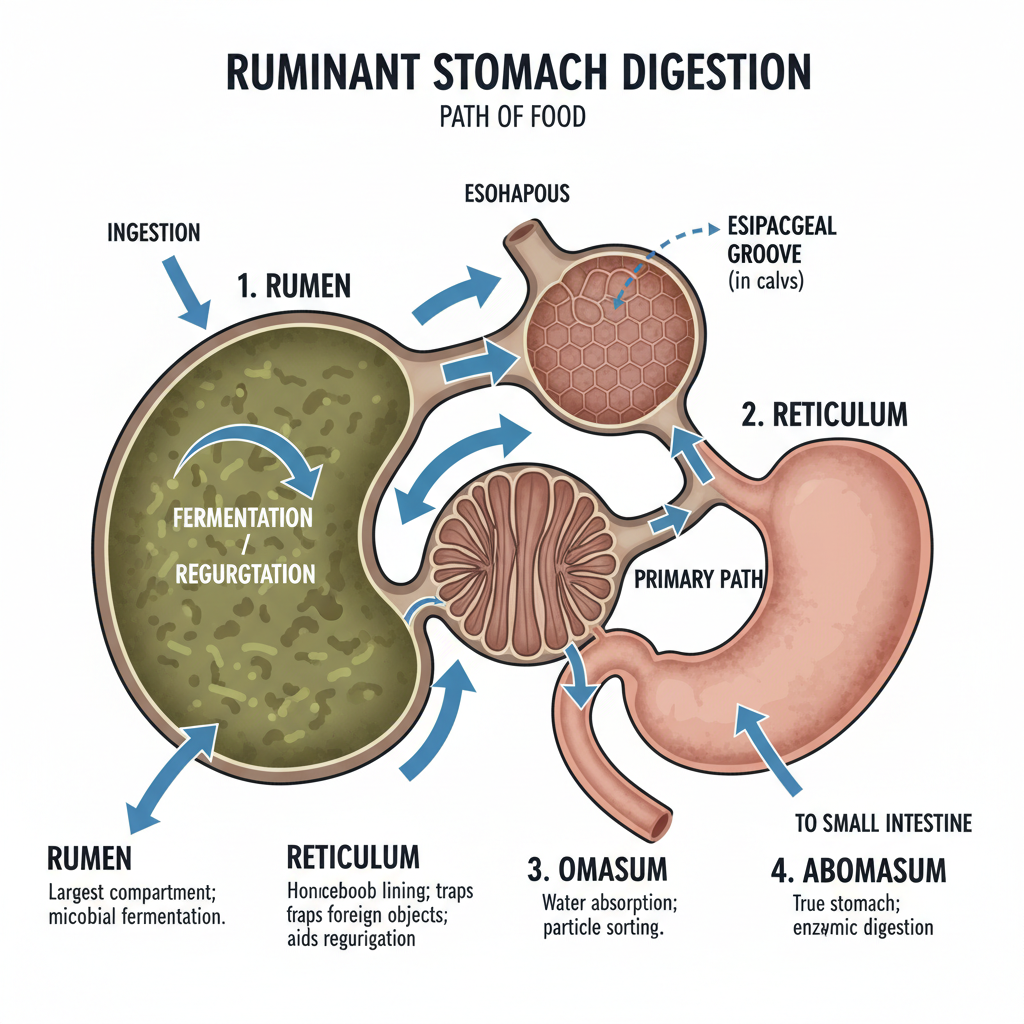 ⚠️ This picture may have spelling mistakes. Trust the words in the lesson.
Key Benefits of Ruminant Digestion
- Digestion of Cellulose: The microbial action in the rumen allows for the breakdown of tough plant fibers.
- Synthesis of Nutrients: Microbes can synthesize essential vitamins (like B vitamins) and high-quality proteins that the animal can use.
- Recycling of Urea: Ruminants can recycle nitrogen from urea back into their rumen, which is important for microbial growth.
So, the next time you see a cow or sheep grazing, remember the incredible digestive journey happening inside its stomach – a true marvel of nature!
Keep learning, free
Create a free Syllabax account to unlock practice questions and games for this topic.
Visual Learning Enhanced! 🚀
To help you master this topic, we use Advanced Syllabax AI to generate detailed diagrams and visual models.
Note on Visuals: The AI sometimes makes spelling errors in image labels. Please refer to the lesson text for the correct terminology.