Wind (simple idea)(Air)
Watch this topic in 60 seconds
Free preview · Lesson 1
Understanding Wind (simple idea)(Air)
Let's Discover Wind: The Invisible Pusher!
Hello, young explorers! Today, we're going on an exciting adventure to learn about something all around us, something we can feel but usually can't see. We're going to talk about wind! Have you ever felt a gentle push on your face when you're outside? Or seen leaves dancing on trees even when no one is touching them? That, my friends, is wind at work!
What is Air? (It's Everywhere!)
Before we talk about wind, let's talk about air. Imagine your room. Is it empty? No! Even when you can't see anything, your room is full of air. Air is like an invisible blanket that covers our whole Earth. We can't see it, we can't smell it, and we can't taste it, but it's always there. Take a deep breath right now. What did you just breathe in? Air! You need air to live, just like plants and animals do.
Analogy Time! Think about a fish in water. The fish lives in water all the time. For us, air is like our water. We live in air all the time! Even when you blow a bubble, you are using air from your lungs.
Feeling Air: How Do We Know It's There?
Even though air is invisible, we can definitely feel it. How? Try these things:
- Breathe In and Out: When you breathe, you feel air moving in and out of your nose and mouth.
- Use a Fan: Turn on a fan. You'll feel a breeze, right? That's the fan pushing the air around.
- Blow on Your Hand: Cup your hand and blow into it. You'll feel the air moving.
- Wave Your Hand: Wave your hand quickly in front of your face. Can you feel a little puff of air?
All these experiments show us that air is real, even if we can't see it with our eyes.
What is Wind? Simply Moving Air!
Now for the big secret: Wind is simply air that is moving! That's it! When air stands still, we don't feel much. But when air starts to rush and push, we call it wind. Imagine all the air molecules (tiny, tiny pieces of air) around you. When they decide to all move in the same direction, like a team running together, that's when we feel the wind.
Analogy Time! Think of children playing in a big open field. When they are all standing still, it's quiet. But when they all start running from one side to the other, you see them moving, and maybe you feel a little gust of air as they pass by. Wind is like that – it's the air 'running' from one place to another!
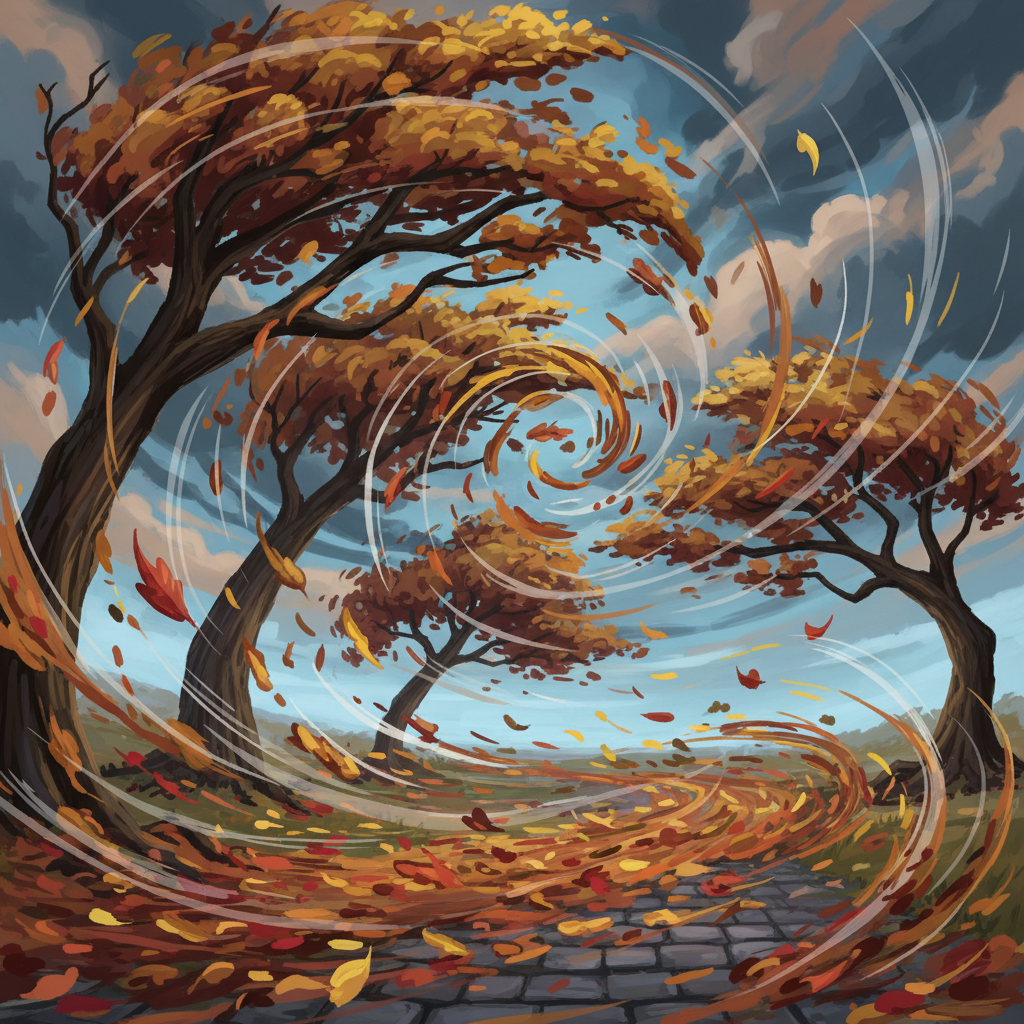
Why Does Air Move? (A Simple Peek!)
Why does air decide to run around and become wind? It's all about temperature!
- Warm Air Likes to Rise: Imagine a hot air balloon. When the air inside the balloon gets warm, it rises up, up, and away! Warm air is lighter than cold air. It's like warm air wants to float up to the sky.
- Cold Air Likes to Sink: On the other hand, cold air is heavier. It likes to sink down and stay close to the ground.
So, when the sun warms up some parts of the Earth more than others, the air above those warm spots heats up and rises. When that warm air rises, it leaves an empty space. What rushes in to fill that space? Colder, heavier air from somewhere else! And when that colder air rushes in, that's the wind you feel!
Analogy Time! Think of a swimming pool. If you have a floaty toy, it stays on top (like warm air). If you have a heavy rock, it sinks to the bottom (like cold air). When you lift the floaty out, the water rushes in to fill its spot. That's a little bit like how cold air rushes in to fill the space left by rising warm air!
What Can Wind Do? (So Many Things!)
Wind is very powerful! Even though it's just moving air, it can do a lot of amazing things:
- Make Things Fly: Wind can lift kites high into the sky, push boats with sails across the water, and even carry seeds from plants to new places so they can grow.
- Make Sounds: Listen carefully on a windy day. You might hear the wind 'howling' or 'whistling' as it rushes past buildings or through trees. It makes leaves rustle and chimes clink!
- Help Us Dry Things: After you wash your clothes, if you hang them outside on a windy day, the wind helps them dry faster by carrying away the wetness.
- Make Electricity: Sometimes, people build tall machines called wind turbines. These look like giant fans. The wind spins their blades, and that spinning helps make electricity for our homes!
- Push Things Around: A strong wind can push branches, make flags wave, and even make you lean into it when you're walking.

Gentle Breezes and Strong Winds
Wind isn't always the same. Sometimes it's a very gentle push, like a soft whisper. We call that a breeze. A breeze feels nice on a warm day. Other times, the wind can be very strong and push with a lot of force. We call that a strong wind, or sometimes even a gust or a gale if it's super strong. A strong wind can make it hard to walk or even fly your hat off!
Playing Safe in the Wind
Wind is fun, but it's good to be safe too! If it's very windy, make sure you hold onto your hat, and be careful if anything light might blow away. Strong winds can sometimes make small branches fall from trees, so it's always good to be aware of your surroundings.
The Wonderful World of Wind!
So, there you have it! Wind is simply moving air, an invisible force that is all around us. It helps us in many ways, from flying kites to drying clothes, and it makes the world feel alive with its sounds and movements. The next time you feel a gust of wind, remember all the amazing things you've learned about this invisible pusher!
Keep learning, free
Create a free Syllabax account to unlock practice questions and games for this topic.
Visual Learning Enhanced! 🚀
To help you master this topic, we use Advanced Syllabax AI to generate detailed diagrams and visual models.
Note on Visuals: The AI sometimes makes spelling errors in image labels. Please refer to the lesson text for the correct terminology.