Learning Journey
Free preview · Lesson 1
Understanding Recognizing values (₹1, ₹2, ₹5, ₹10) (Money)
Learning About Indian Rupees: ₹1, ₹2, ₹5, ₹10
Welcome, young learners! Today, we're going on an exciting adventure to learn about money! Money helps us buy the things we need and want, like yummy snacks, fun toys, and colorful crayons. In India, our money is called the Rupee, and it has a special symbol: ₹. Let's learn about some of the coins we use!
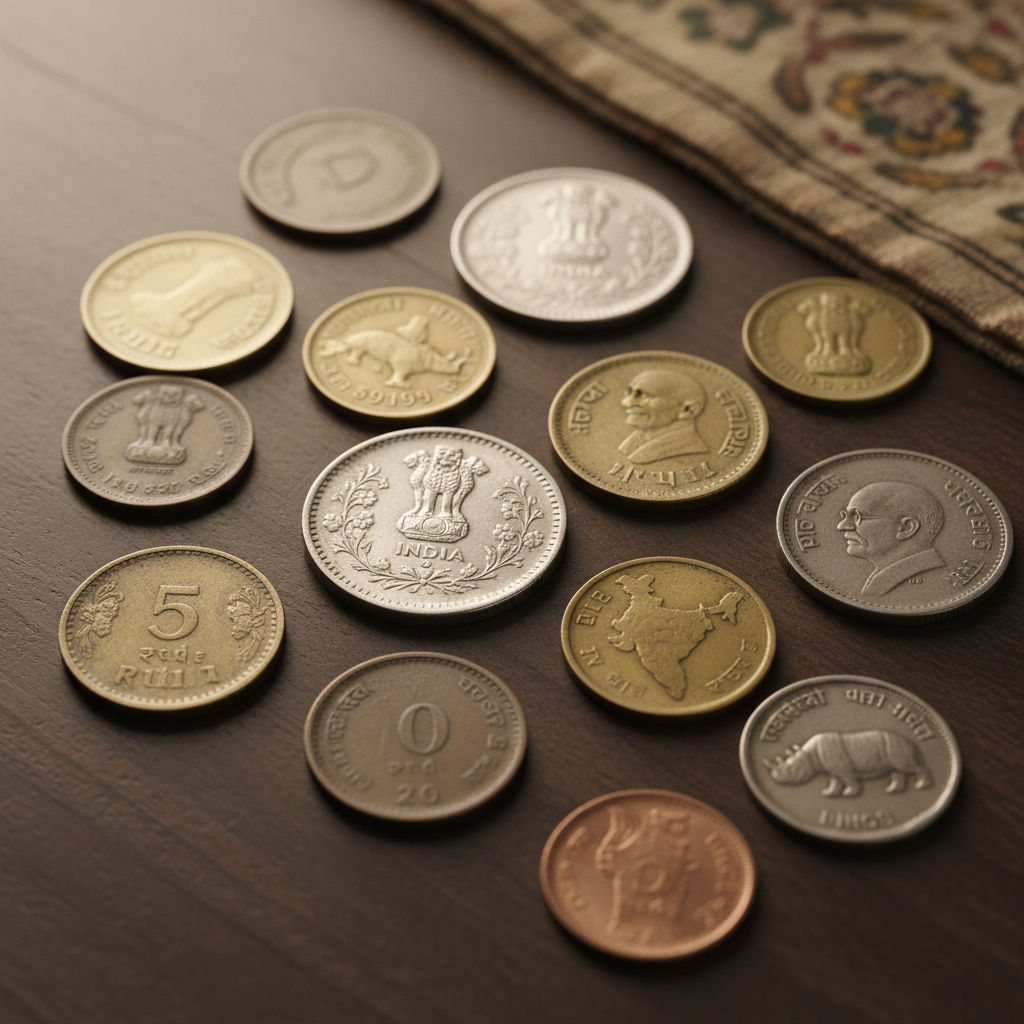
What are Coins?
Coins are small, round pieces of metal that have a value. Think of them like little messengers telling us how much something is worth. Just like different toys cost different amounts, different coins also have different values.
 ⚠️ This picture may have spelling mistakes. Trust the words in the lesson.
The ₹1 Coin: Our Starting Point!
The ₹1 coin is like the smallest building block for counting money. It's the most basic value. Imagine you have a delicious lollipop. If that lollipop costs ₹1, you need one ₹1 coin to buy it!
Analogy: Think of the ₹1 coin like a single LEGO brick. You can build many things with LEGO bricks, but each brick is the basic piece.
The ₹1 coin has a picture of Emperor Ashoka's lion capital on one side and the number '1' on the other, along with the word 'Rupaya' (which means Rupee).
The ₹2 Coin: Two Little Steps!
Now, let's meet the ₹2 coin! This coin is worth more than the ₹1 coin. It's like having two ₹1 coins together. If a small packet of biscuits costs ₹2, you would need one ₹2 coin to buy it.
Analogy: If the ₹1 coin is one step, the ₹2 coin is like taking two steps! It covers more ground, just like it has more value.
The ₹2 coin also has different designs, often featuring symbols of nature or national importance, and the number '2'.
The ₹5 Coin: A Happy Handful!
The ₹5 coin is even more valuable! It's like having five ₹1 coins. Imagine you want to buy a small toy car that costs ₹5. You would use a ₹5 coin. It's heavier and bigger than the ₹1 and ₹2 coins, showing it holds more value.
Analogy: Think of a ₹5 coin like a whole slice of pizza! It's more than just a crumb (₹1) or a small bite (₹2). It's a good amount!
The ₹5 coin usually shows the number '5' and may have images like the Parliament House or other national symbols.
The ₹10 Coin: A Big Treat!
And here's the ₹10 coin! This is the highest value coin we are learning about today. It's worth as much as ten ₹1 coins! If you wanted to buy a nice ice cream cone that costs ₹10, you would use a ₹10 coin.
Analogy: A ₹10 coin is like a whole birthday cake slice! It's the biggest and most valuable among the coins we've discussed, perfect for a bigger treat.
The ₹10 coin often has a bolder design, showing the number '10' prominently, and sometimes features images related to India's heritage or achievements.
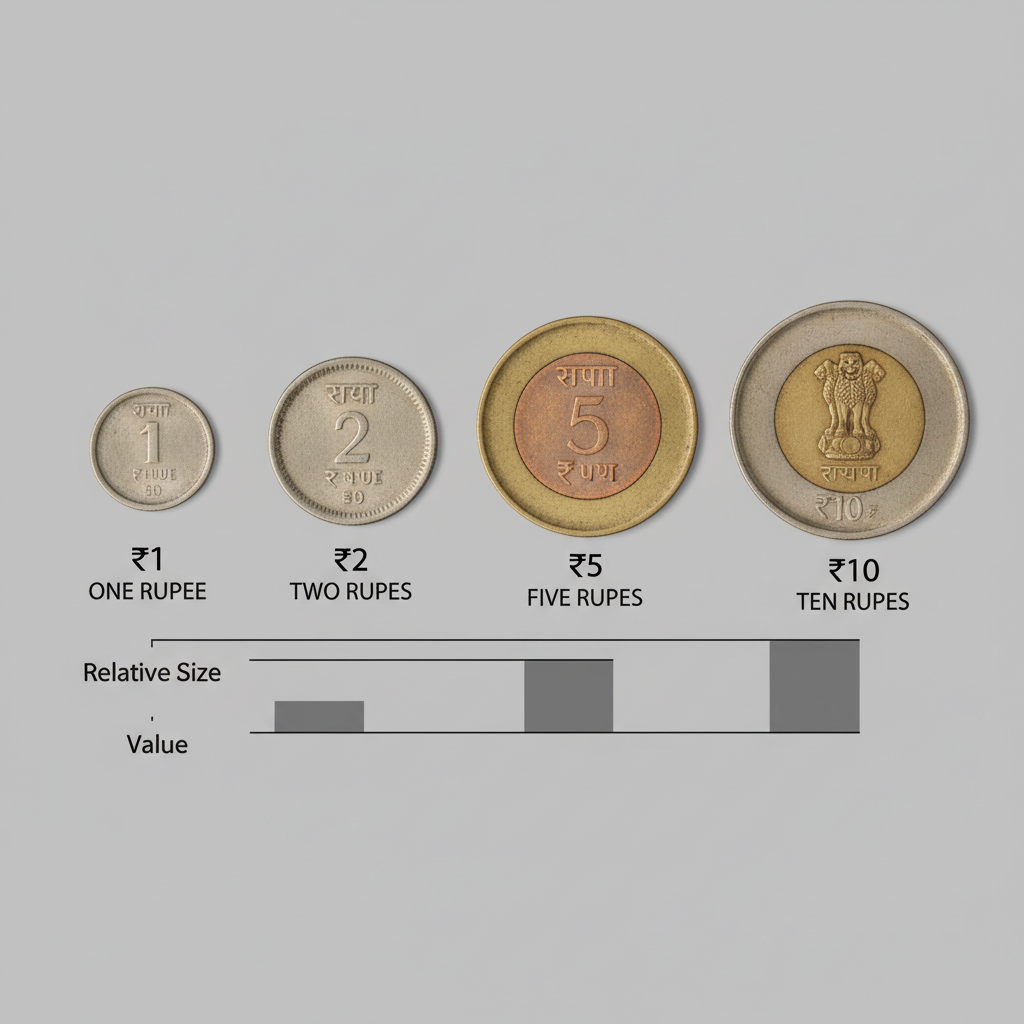
Putting It All Together: Comparing Values
Let's see how these coins stack up:
- ₹1 is the smallest value.
- ₹2 is more than ₹1.
- ₹5 is more than ₹2.
- ₹10 is the most valuable among these coins.
So, if you have a ₹10 coin, you have more value than if you have a ₹5 coin. It's like having more toys or more candy!
 ⚠️ This picture may have spelling mistakes. Trust the words in the lesson.
Why Do We Need Different Values?
Different values help us pay for things easily. If everything cost only ₹1, we would need a huge pile of ₹1 coins to buy something like a book! Having coins with different values makes it simpler to count and pay.
Imagine you need to pay ₹7. You could give one ₹5 coin and two ₹1 coins (₹5 + ₹1 + ₹1 = ₹7). Or, you could give three ₹2 coins and one ₹1 coin (₹2 + ₹2 + ₹2 + ₹1 = ₹7).
Practice Time!
Now that we've learned about ₹1, ₹2, ₹5, and ₹10 coins, let's test your knowledge with some fun questions!
Keep learning, free
Create a free Syllabax account to unlock practice questions and games for this topic.
Visual Learning Enhanced! 🚀
To help you master this topic, we use Advanced Syllabax AI to generate detailed diagrams and visual models.
Note on Visuals: The AI sometimes makes spelling errors in image labels. Please refer to the lesson text for the correct terminology.