Daily timetable reading (Real Life Math)
Watch this topic in 60 seconds
Free preview · Lesson 1
Understanding Daily timetable reading (Real Life Math)
Understanding Our Day: Reading a Daily Timetable
Hello young learners! Have you ever wondered how we know when it's time for breakfast, playtime, or bedtime? It's all thanks to something called a timetable! A timetable is like a special map that tells us what we should be doing at different times of the day.
What is a Timetable?
Imagine you're going on a treasure hunt. You need a map to know where to go next, right? A timetable is like a map for our day. It shows us a list of activities and the specific times they happen. It helps us plan our day so we don't miss out on fun things!
Think of your day as a story. The timetable tells us what happens in each part of the story and when.
Why Do We Need Timetables?
Timetables are super helpful! They help us:
- Know what to do: When you see '9:00 AM - Breakfast', you know it's time to eat!
- Be on time: If you know playtime starts at 10:30 AM, you can get ready for it.
- Manage our time: It helps us see how much time we have for different activities. Like, do we have a long time for reading or a short time for a quick game?
- Feel organized: Knowing what's coming next can make us feel calm and prepared, just like knowing what's on your plate before you eat makes you feel ready for your meal!
Looking at Time: Hours and Minutes
To read a timetable, we need to understand clocks. Clocks have numbers from 1 to 12. They help us tell time in hours and minutes.
Think of hours as big chunks of time. A whole day is made of 24 hours! A clock face shows 12 hours, and we have two rounds of those in a day (AM and PM).
Think of minutes as smaller steps within an hour. There are 60 minutes in one hour. Imagine an hour is like a whole pizza, and minutes are the slices! You need 60 slices to make the whole pizza.
When we see times like 9:00 AM, the '9' tells us the hour, and the '00' tells us there are no minutes past the hour yet. It's exactly 9 o'clock!
When we see 10:30 AM, the '10' is the hour, and the '30' means 30 minutes past 10 o'clock. That's halfway through the hour, like halfway through eating that pizza!
AM and PM: Day and Night
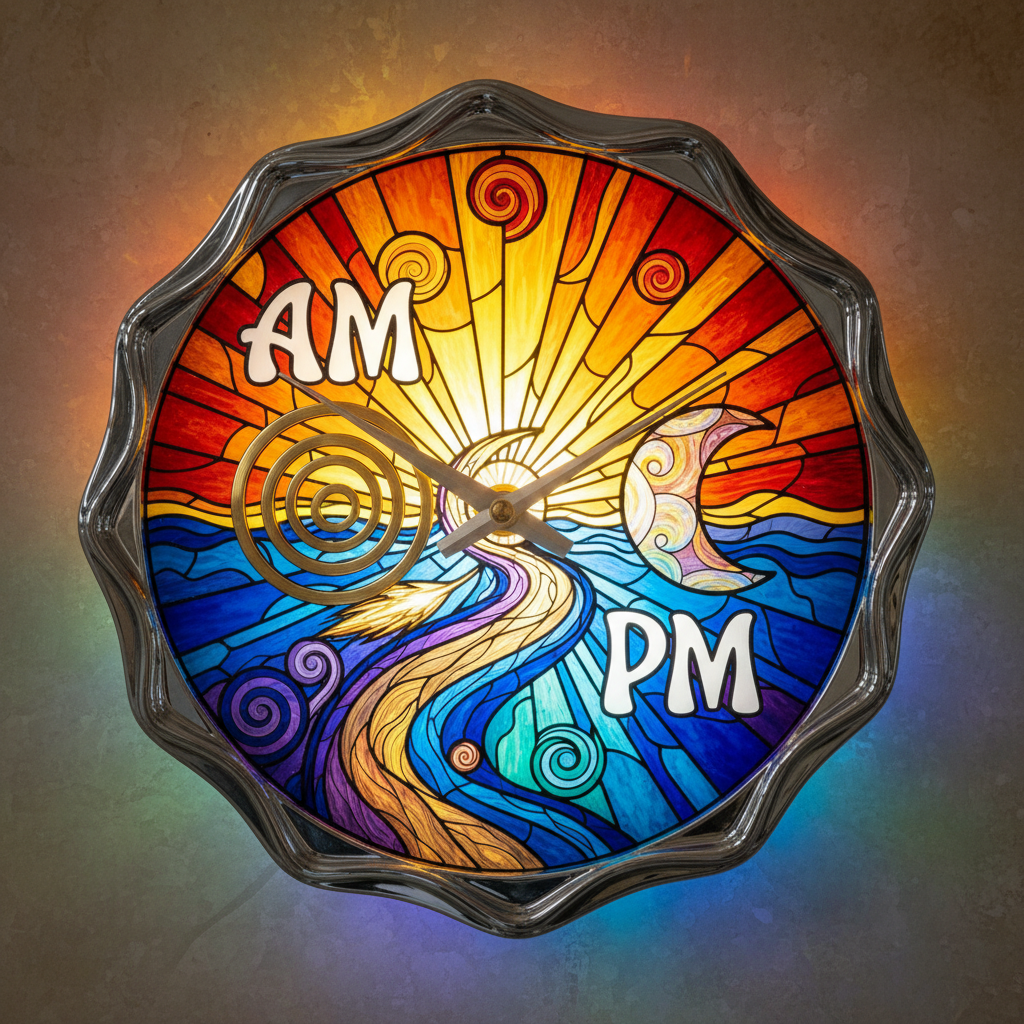
The letters AM and PM help us know if it's morning, afternoon, or evening.
- AM stands for 'ante meridiem', which is a fancy way of saying 'before noon'. This is for the time from midnight (when you're probably sleeping!) all the way until 12:00 PM (noon). So, 7:00 AM is breakfast time, and 11:00 AM is almost lunchtime!
- PM stands for 'post meridiem', which means 'after noon'. This is for the time from 12:00 PM (noon) all the way until midnight. So, 1:00 PM is after lunch, and 7:00 PM might be dinner time!
Think of AM as the 'Awake Morning' and PM as 'Party Evening' (or just afternoon/evening!).
Reading a Simple Daily Timetable
Let's look at a simple timetable for a school day. It's like a plan for our learning adventure!
| Time | Activity |
|---|---|
| 8:30 AM | Arrival at School |
| 9:00 AM - 10:00 AM | Math Class |
| 10:00 AM - 10:30 AM | Playtime / Recess |
| 10:30 AM - 11:30 AM | Reading Time |
| 11:30 AM - 12:00 PM | Art Class |
| 12:00 PM - 1:00 PM | Lunch Break |
| 1:00 PM - 2:00 PM | Science Fun |
| 2:00 PM - 2:30 PM | Story Time |
| 2:30 PM | End of School Day |
See? This timetable tells us exactly when things happen. For example:
- Arrival at School: 8:30 AM. This means we should be at school at half past eight in the morning.
- Math Class: 9:00 AM to 10:00 AM. This is a one-hour block for learning numbers.
- Playtime / Recess: 10:00 AM to 10:30 AM. This is 30 minutes of fun and games after Math!
- Lunch Break: 12:00 PM to 1:00 PM. A whole hour to eat our yummy food.
- End of School Day: 2:30 PM. This is when our learning adventure finishes for the day.
Let's imagine another timetable, this time for your weekend at home!
Weekend Fun Timetable
| Time | Activity |
|---|---|
| 8:00 AM | Wake Up & Breakfast |
| 9:00 AM - 10:00 AM | Play with Toys |
| 10:00 AM - 11:00 AM | Go to the Park |
| 11:00 AM - 11:30 AM | Snack Time |
| 11:30 AM - 12:30 PM | Family Game Time |
| 12:30 PM - 1:30 PM | Lunch |
| 1:30 PM - 3:00 PM | Reading Books / Quiet Play |
| 3:00 PM - 4:00 PM | Help with Chores |
| 4:00 PM - 5:00 PM | Watch a Cartoon |
| 5:00 PM - 6:00 PM | Help Prepare Dinner |
| 6:00 PM - 7:00 PM | Dinner Time |
| 7:00 PM - 8:00 PM | Bath Time |
| 8:00 PM | Bedtime Story & Sleep |
This timetable helps us see how our day can be planned, even on the weekend! It shows us when we have fun, when we eat, and when it's time to wind down.
Remember, a timetable is a useful tool that makes our days smoother and more enjoyable. It's like having a guide for every part of our day!
Key Concepts Recap
Let's quickly remember what we learned:
- Timetable: A schedule or map of activities with specific times.
- Hours: Big units of time (like 1 hour, 2 hours).
- Minutes: Smaller units of time within an hour (like 30 minutes, 15 minutes).
- AM: Time from midnight to noon (morning).
- PM: Time from noon to midnight (afternoon and evening).
Keep learning, free
Create a free Syllabax account to unlock practice questions and games for this topic.
Visual Learning Enhanced! 🚀
To help you master this topic, we use Advanced Syllabax AI to generate detailed diagrams and visual models.
Note on Visuals: The AI sometimes makes spelling errors in image labels. Please refer to the lesson text for the correct terminology.