Learning Journey
Watch this topic in 60 seconds
Free preview · Lesson 1
Understanding Uses in food, medicine, agriculture[BIOLOGY]
Biology: Uses in Food, Medicine, and Agriculture
Welcome to our exploration of biology, where we'll discover how living things play a crucial role in our daily lives, especially in the areas of food, medicine, and agriculture! Biology is the study of life, and understanding it helps us appreciate the amazing world around us and how we can use it to improve our lives.
Part 1: Biology in Our Food
Think about your favorite meal. Whether it's a juicy apple, a slice of bread, or a bowl of pasta, biology is at the heart of it all! Plants and animals are the foundation of most of the food we eat.
Plants as Food
Plants are like nature's chefs, creating their own food through a process called photosynthesis. They use sunlight, water, and air (carbon dioxide) to make energy. We then eat these plants, or we eat animals that eat plants. It's a delicious cycle!
Examples:
- Fruits and Vegetables: Apples, bananas, carrots, broccoli – these are all parts of plants that provide us with vitamins, minerals, and energy.
- Grains: Wheat, rice, corn – these are seeds from plants that are ground into flour for bread, pasta, and cereals. They are a major source of carbohydrates, our body's main fuel.
- Legumes: Beans, lentils, peas – these are packed with protein, which is like the building blocks for our bodies.
Analogy: Think of plants as tiny solar-powered factories. They capture sunlight and turn it into edible products, just like a factory takes raw materials and makes useful goods.
Animals as Food
Animals are also a vital part of our diet. They get their energy by eating plants or other animals. When we consume meat, poultry, fish, or dairy products, we are getting nutrients like protein and fats from these animals.
Examples:
- Meat: Beef, chicken, lamb – provide protein and iron.
- Fish: Salmon, tuna, cod – are great sources of protein and omega-3 fatty acids, which are good for our brains.
- Dairy: Milk, cheese, yogurt – come from cows, goats, or sheep and are rich in calcium for strong bones.
Analogy: Animals are like delivery trucks for nutrients. They eat plants (or other animals) and convert those nutrients into forms that our bodies can easily use, delivering them to us when we eat them.
Microorganisms: The Unseen Chefs
Did you know that tiny living things, called microorganisms (like bacteria and yeast), are also important in our food? They are responsible for making some of our favorite foods taste and behave the way they do!
Examples:
- Yeast: This tiny fungus makes bread rise by producing a gas called carbon dioxide. It's like a tiny balloon maker inside the dough!
- Bacteria: Certain bacteria are used to make yogurt tangy and thick, and to ferment pickles.
Analogy: Microorganisms are like invisible chefs that help transform ingredients. Yeast acts like a little baker, puffing up dough, while specific bacteria are like flavor artists, adding unique tastes to foods like yogurt and cheese.
Part 2: Biology in Medicine
Biology has revolutionized medicine, helping us understand diseases, prevent them, and treat them. Many medicines we use today come directly from living organisms or are inspired by them.
Medicines from Plants
For centuries, humans have used plants to heal. Many modern medicines are derived from plant compounds.
Examples:
- Aspirin: Originally derived from the bark of willow trees.
- Pain Relievers: Compounds found in plants like poppies have been used for pain relief.
- Heart Medications: Some drugs used to treat heart conditions come from plants like the foxglove flower.
Analogy: Plants are like nature's pharmacies. They produce a vast array of chemical compounds that can have powerful effects on our bodies, some of which we've learned to use as medicines.
Medicines from Microorganisms
Perhaps the most famous medical discovery from microorganisms is antibiotics. These are substances that can kill or slow the growth of harmful bacteria, helping our bodies fight infections.
Example:
- Penicillin: Discovered from a type of mold (a fungus, which is a microorganism). It was a game-changer in treating bacterial infections.
Analogy: Antibiotics are like microscopic police officers that target and neutralize the bad guys (harmful bacteria) in our bodies, allowing our immune system to recover.
Vaccines
Vaccines are a marvel of biology. They use weakened or inactive parts of pathogens (like viruses or bacteria) to teach our immune system how to fight them off *before* we get sick. It's like a training drill for your body's defense team!
Analogy: A vaccine is like giving your body's immune system a wanted poster and a training manual for a specific germ. Your immune system learns to recognize and defeat the germ if it ever shows up for real.
Biotechnology and Genetic Engineering
Modern biology uses advanced techniques like biotechnology and genetic engineering to create new medicines or improve existing ones. Scientists can even use bacteria to produce important human proteins, like insulin for people with diabetes.
Analogy: Biotechnology is like using advanced tools to reprogram living things, making them produce helpful substances or perform useful tasks, such as having bacteria act as tiny insulin factories.
Part 3: Biology in Agriculture
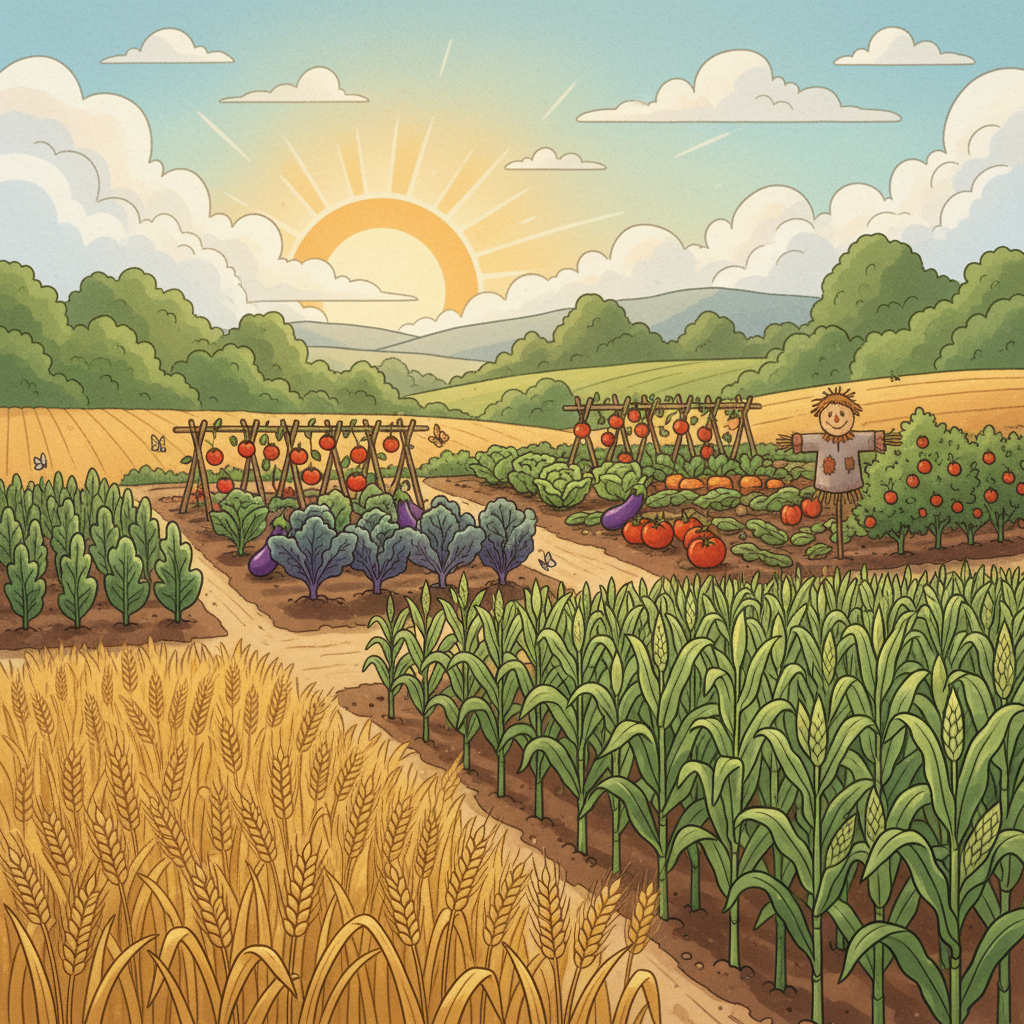
Agriculture is the practice of farming, and biology is absolutely essential for growing enough food to feed the world. It helps us understand how plants and animals grow, how to protect them from pests and diseases, and how to get the best yields.
Crop Improvement
Biologists work to develop better crops that are more resistant to diseases, pests, and harsh weather conditions. They also work to increase the nutritional value and yield of crops.
Examples:
- Selective Breeding: Choosing the best plants or animals with desirable traits (like bigger fruits or faster growth) and breeding them together.
- Genetic Modification (GM): Scientists can directly change the genes of a plant to give it new traits, like resistance to insects or the ability to grow in salty soil.
Analogy: Improving crops is like giving them superpowers! Selective breeding is like picking the strongest athletes to have strong children, while genetic modification is like giving a plant a special shield against bugs or the ability to thrive in tough conditions.
Pest and Disease Control
Protecting crops and livestock from harmful organisms is a huge part of agriculture. Biology helps us understand these pests and diseases and find ways to control them.
Examples:
- Biological Control: Using one living organism to control another. For example, introducing ladybugs to eat aphids (small insects that damage plants).
- Pesticides and Herbicides: While often chemicals, their development and use are guided by biological understanding of how they affect pests and plants.
Analogy: Biological control is like using nature's own security guards. Instead of using a harsh chemical spray, you bring in helpful insects to get rid of the pests.
Animal Husbandry
This involves the care and breeding of farm animals. Biology helps us understand animal nutrition, reproduction, and how to keep them healthy and productive.
Examples:
- Understanding the dietary needs of cows for milk production.
- Breeding chickens that lay more eggs.
- Preventing and treating diseases in livestock.
Analogy: Animal husbandry is like being a super-caregiver and matchmaker for farm animals, ensuring they get the best food, live in good conditions, and have healthy offspring to provide us with food.
Soil Health
Healthy soil is full of tiny living organisms (bacteria, fungi, worms) that help plants grow. Biologists study these soil ecosystems to improve farming practices and keep the soil fertile for future generations.
Analogy: Soil is like a bustling underground city, with billions of microorganisms working together to break down waste, recycle nutrients, and create a healthy home for plant roots.
Conclusion
As you can see, biology is woven into the fabric of our lives! From the food on our plates to the medicines that keep us healthy, and the farms that feed us, living organisms and biological principles are essential. By understanding biology, we can better appreciate and utilize the incredible power of nature.
Keep learning, free
Create a free Syllabax account to unlock practice questions and games for this topic.
Visual Learning Enhanced! 🚀
To help you master this topic, we use Advanced Syllabax AI to generate detailed diagrams and visual models.
Note on Visuals: The AI sometimes makes spelling errors in image labels. Please refer to the lesson text for the correct terminology.