Preservation of food[BIOLOGY]
Watch this topic in 60 seconds
Free preview · Lesson 1
Understanding Preservation of food[BIOLOGY]
Understanding Food Preservation: Keeping Our Food Safe and Tasty!
Imagine you have a delicious slice of pizza, but you can't eat it all right now. What happens if you leave it out on the counter for a few days? Uh oh! It starts to look, smell, and taste bad. This is where food preservation comes in! Think of food preservation as a superhero shield for your food, protecting it from getting spoiled so you can enjoy it later.
Why Does Food Spoil Anyway? The "Bad Guys" of Food
Just like a good story needs a villain, food spoilage has its own set of "bad guys" that try to ruin our food. Understanding who they are helps us learn how to fight them!
1. Tiny Invaders: Microorganisms (Bacteria, Fungi, Yeast)
These are the biggest trouble-makers! Microorganisms are super-tiny living things that we can't see without a microscope. They are everywhere – in the air, on surfaces, and even on our food. When they find food, especially food that's warm and moist, they think it's a giant buffet! They eat the food, grow, multiply, and release waste products that make our food go bad. This causes bad smells, slimy textures, and mold.
- Analogy: Imagine your food is a big house, and bacteria and fungi are like tiny, uninvited party guests who crash the party, eat all the food, make a mess, and then multiply until the house is overflowing!
2. Food's Internal Timers: Enzymes
Even without tiny invaders, food has natural processes that make it ripen and eventually spoil. These processes are controlled by special proteins called enzymes, which are naturally present in food. Enzymes help fruit ripen, but eventually, they also cause fruit to become overripe and mushy.
- Analogy: Think of enzymes as tiny chefs inside the food, constantly working. When fruit is picked, these chefs are still working, making it ripen. But if they work for too long, they start to overcook everything, turning it into mush!
3. Oxygen and Light: The Aging Accelerators
Exposure to air (which contains oxygen) and light can also speed up spoilage. Oxygen can react with fats in food, making them taste stale (this is called rancidity). Light can also break down vitamins and change the color and flavor of food.
- Analogy: Oxygen and light are like curious little gremlins that poke and prod at your food, making it age faster and lose its freshness, especially if there are fats present.
4. Pests: The Big Eaters
Insects, rodents, and other pests can also get into food, eat it, contaminate it with their waste, and spread microorganisms.
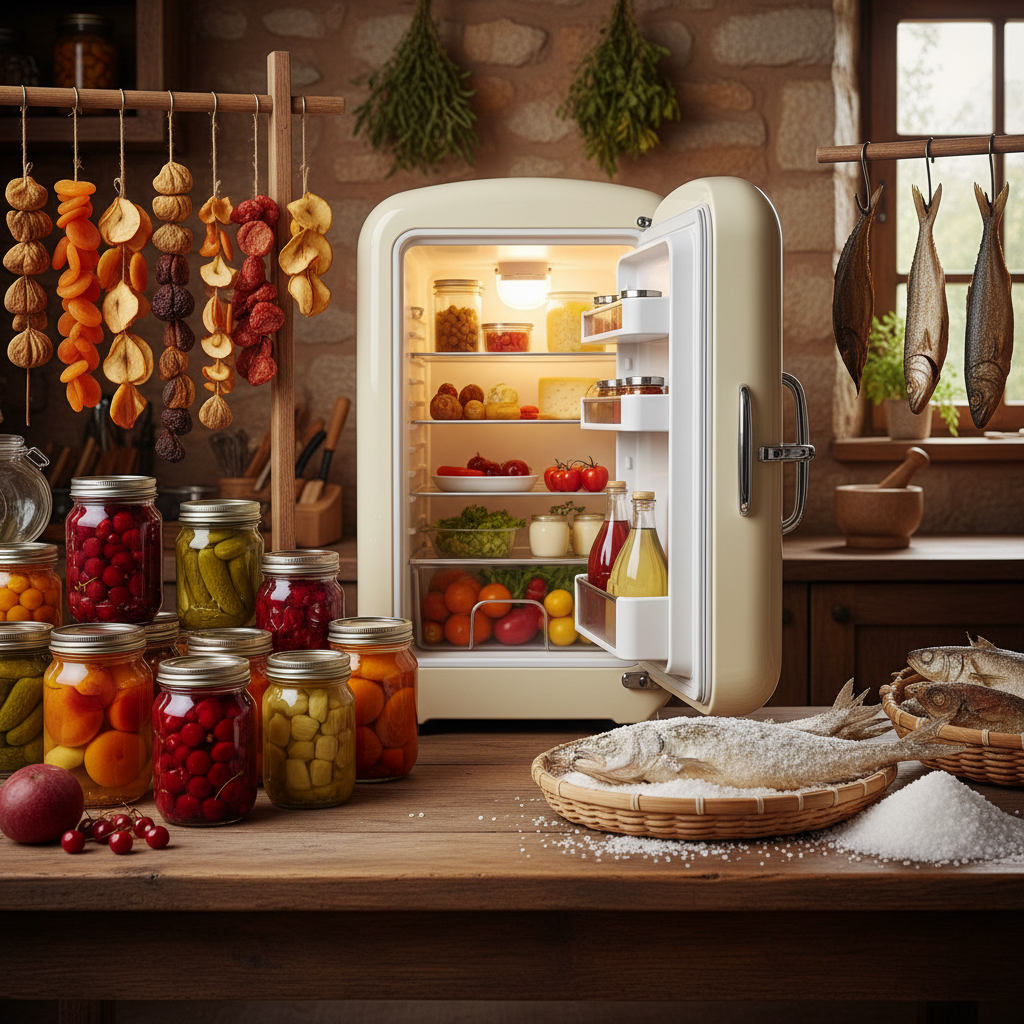 ⚠️ This picture may have spelling mistakes. Trust the words in the lesson.
How Do We Fight Back? The Superpowers of Food Preservation
Now that we know the enemies, let's learn about the strategies we use to protect our food. The main goals of food preservation are to:
- Stop or slow down the growth of microorganisms.
- Stop or slow down the action of enzymes.
- Prevent damage from pests, oxygen, and light.
Common Methods of Food Preservation:
1. Drying or Dehydration: The "Thirsty" Method
This method simply removes water from food. Microorganisms, just like us, need water to live and grow. If there's no water, they can't survive! Think of sun-dried tomatoes or raisins.
- How it works: Reduces moisture content significantly.
- Analogy: Imagine the tiny invaders need a swimming pool to survive. Drying the food is like draining the pool completely, leaving them with nowhere to swim or live!
2. Refrigeration and Freezing: The "Deep Sleep" Method
Lowering the temperature is a super common way to preserve food. Refrigeration slows down the growth of most microorganisms and the activity of enzymes. Freezing stops them almost completely.
- How it works: Low temperatures slow down chemical reactions and biological activity.
- Analogy: Refrigeration is like putting the food and its invaders into a slow-motion movie – everything moves much slower. Freezing is like putting them into a deep, icy sleep; they can't move or cause trouble until they wake up!
3. Salting and Sugaring: The "Thirsty Trap" Method (Osmosis)
Adding a lot of salt or sugar to food draws water out of it. This makes the environment too dry for microorganisms to grow. This is how foods like salted fish or fruit jams are made.
- How it works: Salt/sugar creates a high concentration outside the microbial cells, causing water to leave the cells (osmosis), dehydrating them.
- Analogy: Imagine the microorganisms are little sponges filled with water. Adding lots of salt or sugar is like putting those sponges in a very dry desert – all the water gets sucked out of them, and they shrivel up!
4. Pickling: The "Sour Power" Method (Acidification)
Pickling involves adding an acid, usually vinegar (acetic acid), to food. Most spoilage-causing microorganisms hate acidic environments and cannot grow well in them. Pickles are a great example!
- How it works: The acidic environment inhibits microbial growth.
- Analogy: Imagine the tiny invaders love a nice, neutral, comfortable home. Pickling is like turning their home into a super sour, lemon-juice filled nightmare – they just can't stand it and leave!
5. Canning: The "Fortress and Fire" Method
Canning involves heating food to a high temperature (to kill microorganisms and deactivate enzymes) and then sealing it in airtight jars or cans. This creates a vacuum and prevents new microorganisms from entering.
- How it works: Heat sterilization followed by hermetic sealing.
- Analogy: First, you "cook" the food and all the bad guys inside it to make sure they're gone (the fire part). Then, you put the food inside a super-strong, sealed metal or glass "fortress" so no new bad guys can ever get in!
6. Pasteurization: The "Quick Zap" Method
Named after Louis Pasteur, this method involves heating liquids (like milk or juice) to a specific temperature for a short period, then quickly cooling them. It kills harmful bacteria without significantly changing the food's taste or nutritional value. It's not a complete sterilization, so pasteurized foods still need refrigeration.
- How it works: Moderate heat treatment to reduce pathogens.
- Analogy: It's like giving the food a quick, hot shower to wash away most of the germs, making it much safer. But you still need to keep it in the fridge because a few tiny germs might have survived and could eventually grow back.
7. Vacuum Packing: The "No Air, No Problem" Method
This method removes all the air (oxygen) from around the food before sealing it. Many microorganisms that cause spoilage need oxygen to grow. Also, removing oxygen prevents fats from going rancid.
- How it works: Removes oxygen, inhibiting aerobic microbial growth and oxidative reactions.
- Analogy: Imagine the bad guys need to breathe air to survive. Vacuum packing is like putting them in a room with no oxygen, suffocating them and preventing them from causing trouble!
Why is Food Preservation So Important?
Food preservation is not just a trick; it's vital for many reasons:
- Reduces Food Waste: Less food goes bad, so we throw less away.
- Ensures Food Availability: We can eat seasonal fruits and vegetables all year round, even when they're not growing.
- Increases Food Safety: It kills harmful bacteria that can make us sick.
- Economic Benefits: Farmers can sell their produce, and people have access to a wider variety of affordable food.
Conclusion
Food preservation is a fascinating blend of science and tradition. By understanding the enemies of food – microorganisms, enzymes, oxygen, and pests – and using clever methods like drying, freezing, salting, pickling, canning, and vacuum packing, we can keep our food safe, delicious, and available for longer. It's like giving our food its own superpower to stay fresh!
Keep learning, free
Create a free Syllabax account to unlock practice questions and games for this topic.
Visual Learning Enhanced! 🚀
To help you master this topic, we use Advanced Syllabax AI to generate detailed diagrams and visual models.
Note on Visuals: The AI sometimes makes spelling errors in image labels. Please refer to the lesson text for the correct terminology.