Medieval India: Delhi Sultanate, Mughal Empire - History of India
Watch this topic in 60 seconds
Free preview · Lesson 1
Medieval India: Delhi Sultanate, Mughal Empire - History of India (Foundational)
Medieval India: Delhi Sultanate and Mughal Empire
This lesson provides a foundational understanding of Medieval India, focusing on the Delhi Sultanate and the Mughal Empire. We will explore the key rulers, their contributions, and the significant events that shaped this era.
The Delhi Sultanate (1206-1526)
The Delhi Sultanate was a series of five dynasties that ruled over parts of the Indian subcontinent. These dynasties were:
- Mamluk Dynasty (1206-1290): Founded by Qutb-ud-din Aibak, a former slave of Muhammad Ghori. Key achievements include the construction of the Qutub Minar.
- Khilji Dynasty (1290-1320): Known for Alauddin Khilji's military campaigns and economic reforms. He controlled prices and maintained a large standing army.
- Tughlaq Dynasty (1320-1414): Muhammad bin Tughlaq is famous for his ambitious but often unsuccessful projects, such as shifting the capital from Delhi to Daulatabad.
- Sayyid Dynasty (1414-1451): A relatively weak dynasty that ruled after the decline of the Tughlaqs.
- Lodi Dynasty (1451-1526): The last dynasty of the Delhi Sultanate, overthrown by Babur in the First Battle of Panipat in 1526.
The Mughal Empire (1526-1857)
The Mughal Empire was founded by Babur, a descendant of Timur and Genghis Khan. The Mughals established a vast empire that unified much of the Indian subcontinent. Key Mughal rulers include:
- Babur (1526-1530): Founder of the Mughal Empire, won the First Battle of Panipat against the Lodi dynasty.
- Humayun (1530-1540, 1555-1556): Faced challenges from Sher Shah Suri, who temporarily ousted him.
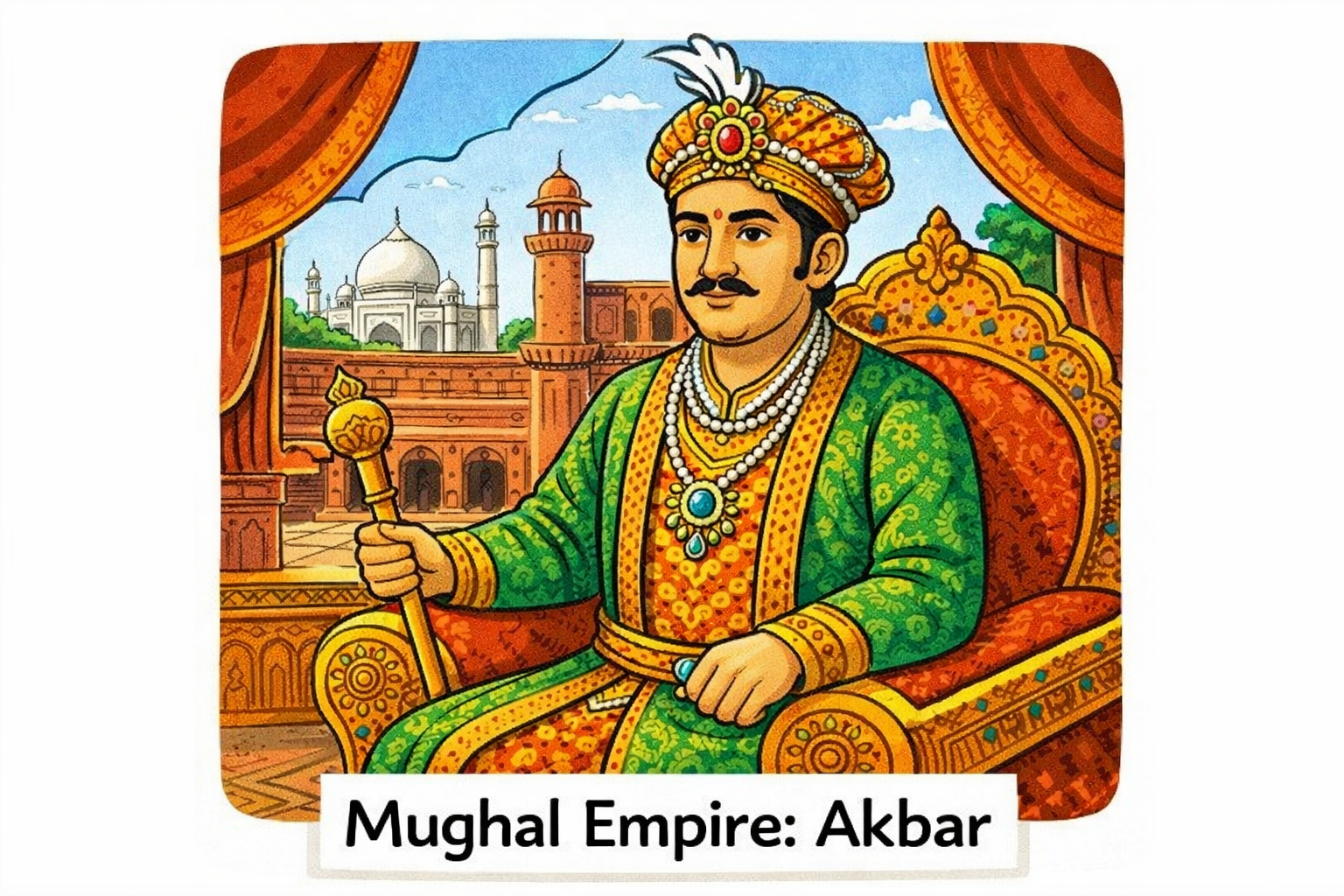
- Akbar (1556-1605): Considered the greatest Mughal emperor, known for his religious tolerance (Din-i-Ilahi), administrative reforms, and expansion of the empire.
- Jahangir (1605-1627): Known for his interest in art and culture.
- Shah Jahan (1628-1658): Built the Taj Mahal in memory of his wife, Mumtaz Mahal. His reign is considered the peak of Mughal architecture.
- Aurangzeb (1658-1707): Known for his strict religious policies and expansion of the empire, but also for the beginning of its decline.
Contributions of the Delhi Sultanate and Mughal Empire
- Architecture: The Qutub Minar, Taj Mahal, and numerous forts and mosques aretestaments to the architectural achievements of the period.
- Language and Literature: Development of Urdu language, and rich literary works in Persian and Hindi.
- Administration: Centralized administrative systems and land revenue systems were developed and implemented.
- Culture: Fusion of Persian, Central Asian, and Indian cultures, leading to new forms of art, music, and cuisine.
Keep learning, free
Create a free Syllabax account to unlock practice questions and games for this topic.
Visual Learning Enhanced! 🚀
To help you master this topic, we use Advanced Syllabax AI to generate detailed diagrams and visual models.
Note on Visuals: The AI sometimes makes spelling errors in image labels. Please refer to the lesson text for the correct terminology.