Likely and Unlikely Events
Watch this topic in 60 seconds
Free preview · Lesson 1
Understanding Likely and Unlikely Events
Understanding Likely and Unlikely Events!
Hello, young mathematicians! Today, we're going on an exciting adventure to learn about things that are likely to happen and things that are unlikely to happen. It's like predicting the future, but with a sprinkle of math! We use these ideas all the time in our daily lives without even realizing it.
What Does 'Likely' Mean?
When something is likely to happen, it means it has a good chance of happening. It's something we expect to see or hear most of the time. Think of it like this: if you have a big basket full of red apples and only one green apple, what kind of apple are you most probably going to pick if you reach in without looking? A red apple, right? That's because picking a red apple is likely!
Analogy Time!
Imagine you live in a place where it's always sunny in the summer. If someone asks you if it will be sunny tomorrow in summer, you'd probably say yes! It's likely to be sunny because it happens almost every day during that season.
Here are some other things that are likely:
- It's likely the sun will rise tomorrow morning. (It almost always does!)
- It's likely that if you drop a ball, it will fall down to the ground. (Gravity is super reliable!)
- If you have 10 chocolate cookies and 1 oatmeal cookie on a plate, it's likely you'll pick a chocolate cookie first. (Yum!)
When we say something is likely, it means there are many ways for it to happen, or it happens very often. It's not 100% guaranteed, but it's very close!
What Does 'Unlikely' Mean?
Now, let's talk about the opposite! When something is unlikely to happen, it means it has a very small chance of happening. It's something we don't expect to see very often, or maybe even never!
Analogy Time!
Let's go back to our apple basket. Remember the big basket with mostly red apples and just one green apple? What if I asked you to pick the green apple without looking? It would be very hard, wouldn't it? Picking the green apple is unlikely because there's only one of it compared to all the red ones!
Here are some other things that are unlikely:
- It's unlikely for a fish to climb a tree. (Fish live in water, not trees!)
- It's unlikely for it to snow in the middle of a hot desert in July. (Deserts are usually very hot and dry.)
- If you have a bag with 10 blue marbles and only 1 red marble, it's unlikely you will pick the red marble if you reach in without looking.
When we say something is unlikely, it means there are very few ways for it to happen, or it almost never happens. It's possible, but don't hold your breath!
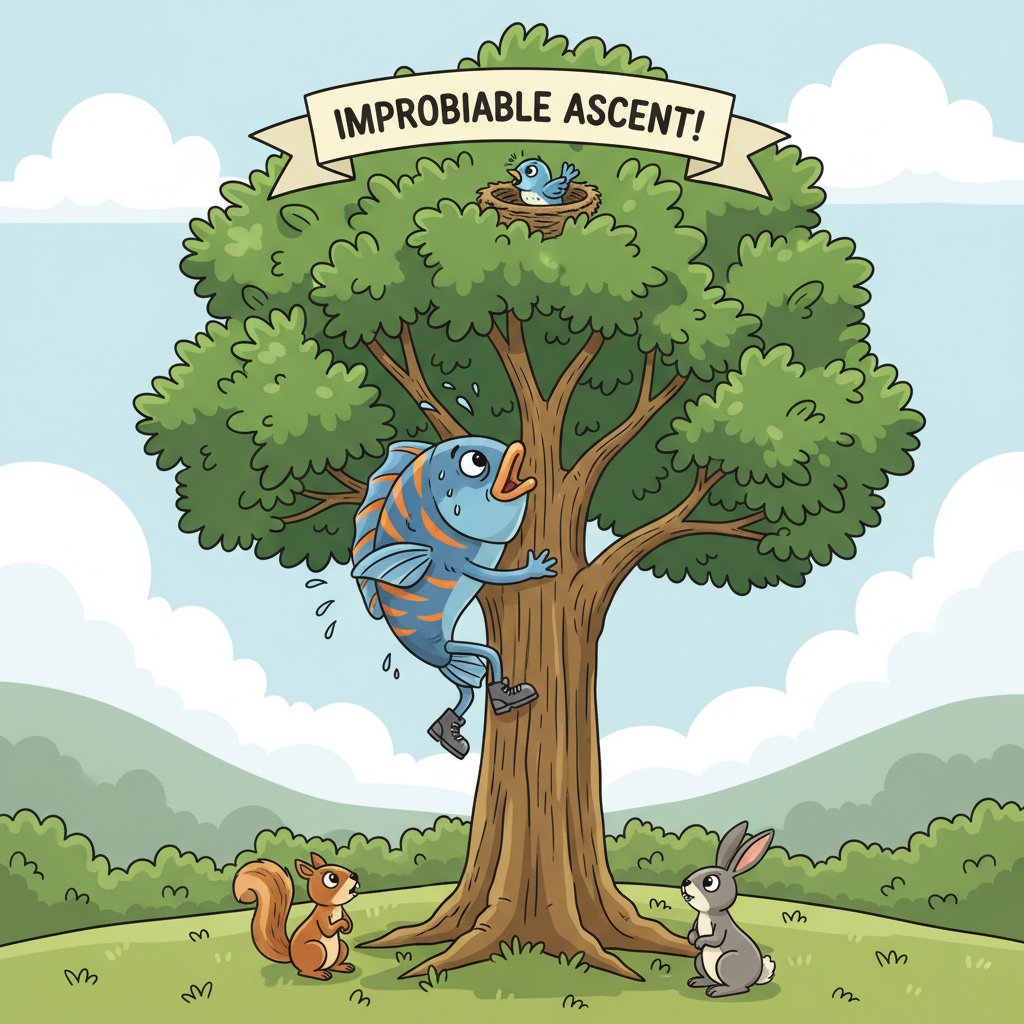
Comparing Likely and Unlikely
So, how do we know if something is likely or unlikely? We compare the chances!
- If there are many ways for something to happen, it's likely.
- If there are very few ways for something to happen, it's unlikely.
Key Idea: Think about what you see most often, or what has the most choices. That's usually the likely outcome! What you see least often, or what has the fewest choices, is usually the unlikely outcome.
Let's practice with a spinner!
Imagine a spinner for a game. It has 8 sections. 7 of them are blue, and 1 is red.
- Is it likely or unlikely to land on blue? LIKELY! Because there are many more blue sections (7) than red (1).
- Is it likely or unlikely to land on red? UNLIKELY! Because there is only one red section.
What about flipping a coin?
When you flip a coin, there are two sides: heads or tails. Is it likely to land on heads? Is it unlikely? This is a special case! It's neither truly likely nor truly unlikely because both sides have an equal chance. We call this 'equally likely'. But in most situations, we'll see a clear difference between likely and unlikely.
Why is this important?
Understanding likely and unlikely helps us make smart guesses and understand the world around us. It helps us know what to expect and what might be a big surprise!
For example, if you know it's likely to rain, you bring an umbrella. If you know it's unlikely to snow in summer, you don't pack your winter coat!
Time to Think!
Look around you. Can you think of something that is likely to happen today? What about something that is unlikely to happen?
Great job exploring the world of likely and unlikely events! Keep practicing, and you'll become a super predictor!
Keep learning, free
Create a free Syllabax account to unlock practice questions and games for this topic.
Visual Learning Enhanced! 🚀
To help you master this topic, we use Advanced Syllabax AI to generate detailed diagrams and visual models.
Note on Visuals: The AI sometimes makes spelling errors in image labels. Please refer to the lesson text for the correct terminology.