Learning Journey
Watch this topic in 60 seconds
Free preview · Lesson 1
Understanding Odd-one-out (Logical Reasoning)
Learning Resource: Odd One Out! (Logical Reasoning)
Welcome, super thinkers! Today, we're going on an adventure to find the "odd one out." What does that mean? It means we're going to look at a group of things and figure out which one doesn't belong with the others. This is a fun way to practice our logical reasoning skills. Logical reasoning is like being a detective! You look for clues, you think about how things are connected, and then you make a smart guess about what's different.
What is "Odd One Out"?
Imagine you have a basket of fruits. You see apples, bananas, and oranges. All of them are fruits, right? Now, imagine I add a toy car to the basket. Which one is the "odd one out"? The toy car! Why? Because all the other things are fruits, but the toy car is a toy. It's different!
In "Odd One Out," we look for a pattern or a rule that connects most of the items in a group. The item that doesn't follow that rule is the odd one out.
Let's Explore with Examples!
Example 1: Animals
Look at these animals:
- Dog
- Cat
- Cow
- Fish
What do you think is the odd one out? Let's think like detectives!
- Dog: Barks, has fur, lives on land.
- Cat: Meows, has fur, lives on land.
- Cow: Moos, has fur, lives on land.
- Fish: Swims, has scales, lives in water.
See the pattern? Dogs, cats, and cows all have fur, and they all live on land. The fish is different because it has scales and lives in water. So, the fish is the odd one out!
Example 2: Shapes
Now, let's look at some shapes:
- Circle
- Square
- Triangle
- Blue
Which one doesn't belong? Let's think:
- Circle: A shape.
- Square: A shape.
- Triangle: A shape.
- Blue: A color.
The circle, square, and triangle are all shapes. But "blue" is a color. It doesn't fit the pattern of being a shape. So, Blue is the odd one out!
Why is "Odd One Out" Important?
Practicing "Odd One Out" helps your brain grow strong in many ways:
- It makes you a great observer: You learn to look closely at details.
- It helps you find connections: You get better at seeing how things are alike.
- It boosts your thinking skills: You learn to identify what's different and why.
- It prepares you for bigger challenges: This skill is useful in school and in life for solving problems!
How to Play "Odd One Out"
Here’s a simple way to play:
- Look at all the items in the group carefully.
- Think about what they have in common. What's the rule that connects most of them?
- Look for the one item that doesn't fit the rule.
- Explain why it's the odd one out. The explanation is important, just like a detective explaining their case!
Let's Try Another Analogy!
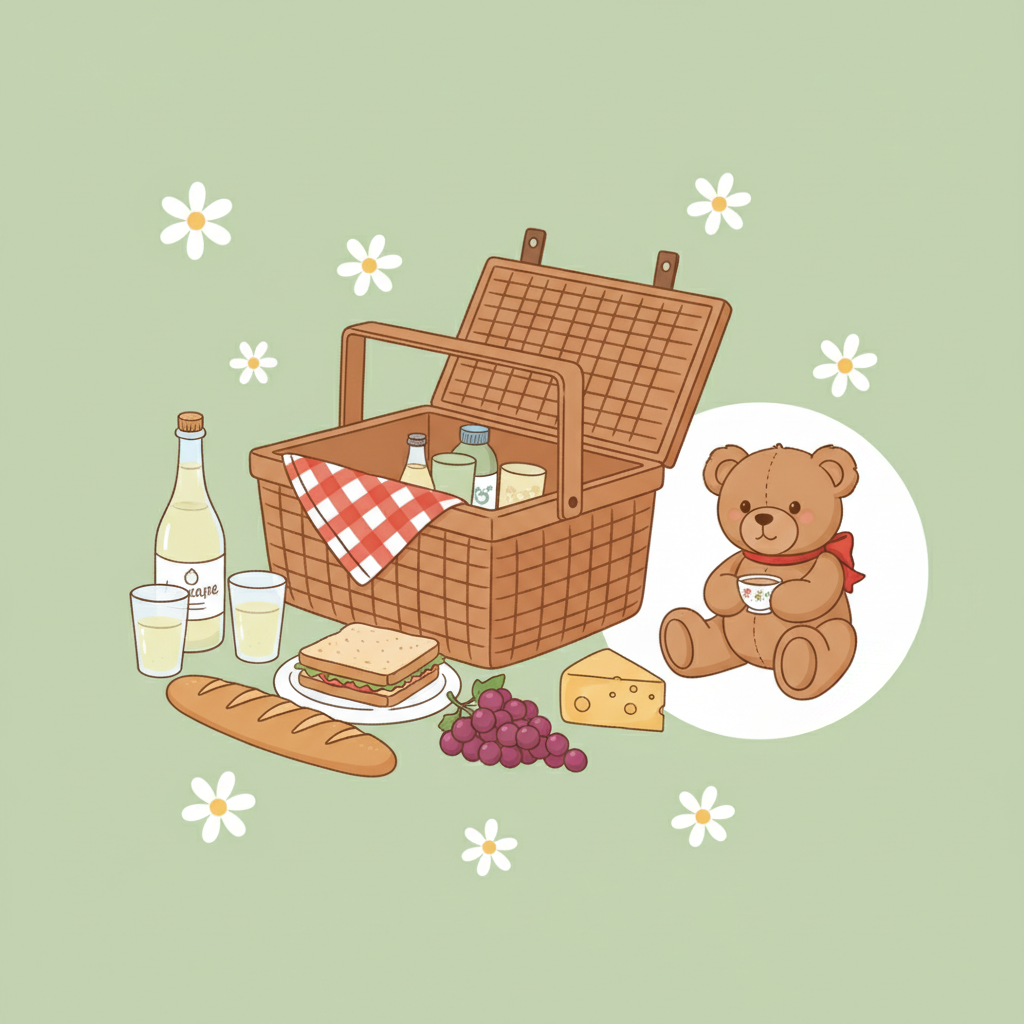
Imagine you're packing your backpack for a picnic. You pack a sandwich, an apple, and a juice box. These are all things you can eat or drink at a picnic. Now, imagine you accidentally pack your teddy bear. Is the teddy bear the odd one out? Yes! Because the sandwich, apple, and juice box are picnic food and drinks, while the teddy bear is a toy. It doesn't fit the picnic food/drink rule.
More Thinking Practice!
Let's think about actions. What if the group is:
- Running
- Jumping
- Sleeping
- Skipping
Running, jumping, and skipping are all ways to move your body and are usually done when you are awake and energetic. Sleeping is when you rest and are not active. So, sleeping is the odd one out!
Sometimes the differences are very small, and sometimes they are big. The trick is to look for the clearest connection that links most of the items.
Keep practicing, and you'll become a super "Odd One Out" detective in no time!
Keep learning, free
Create a free Syllabax account to unlock practice questions and games for this topic.
Visual Learning Enhanced! 🚀
To help you master this topic, we use Advanced Syllabax AI to generate detailed diagrams and visual models.
Note on Visuals: The AI sometimes makes spelling errors in image labels. Please refer to the lesson text for the correct terminology.