Direct & Indirect Speech (Introduction)
Watch this topic in 60 seconds
Free preview · Lesson 1
Direct & Indirect Speech (Introduction) (Foundational)
Direct & Indirect Speech: Let's Talk!
Hey there, future storytellers! Have you ever told someone what another person said? That's where Direct and Indirect Speech come in handy! Think of it like being a super reporter, sharing what you heard with everyone.
What is Direct Speech?
Direct speech is when you report the exact words someone used. It's like replaying a recording! We use quotation marks (" ") to show the exact words. Imagine it like this:
Example: Lily said, "I love reading!"
- See those " " marks? They tell us that "I love reading!" are Lily's exact words.
What is Indirect Speech?
Indirect speech (also called reported speech) is when you report what someone said, but without using their exact words. It's like summarizing what they said in your own words. We usually use words like that, told, or said to connect the reported information.
Example: Lily said that she loves reading.
- Notice there are no quotation marks? We're not using Lily's exact words. We're just telling you what she said.
- We used the word "that" to connect what Lily said.
Let's Compare!
Direct SpeechIndirect SpeechJohn said, "I am going to the park."John said that he was going to the park.Mia asked, "Are you hungry?"Mia asked if I was hungry. Key Differences to Remember:
- Quotation Marks: Direct speech uses quotation marks; indirect speech doesn't.
- Your Own Words: Indirect speech uses your own words to report what was said.
- Connecting Words: Indirect speech often uses words like "that," "if," or "whether."
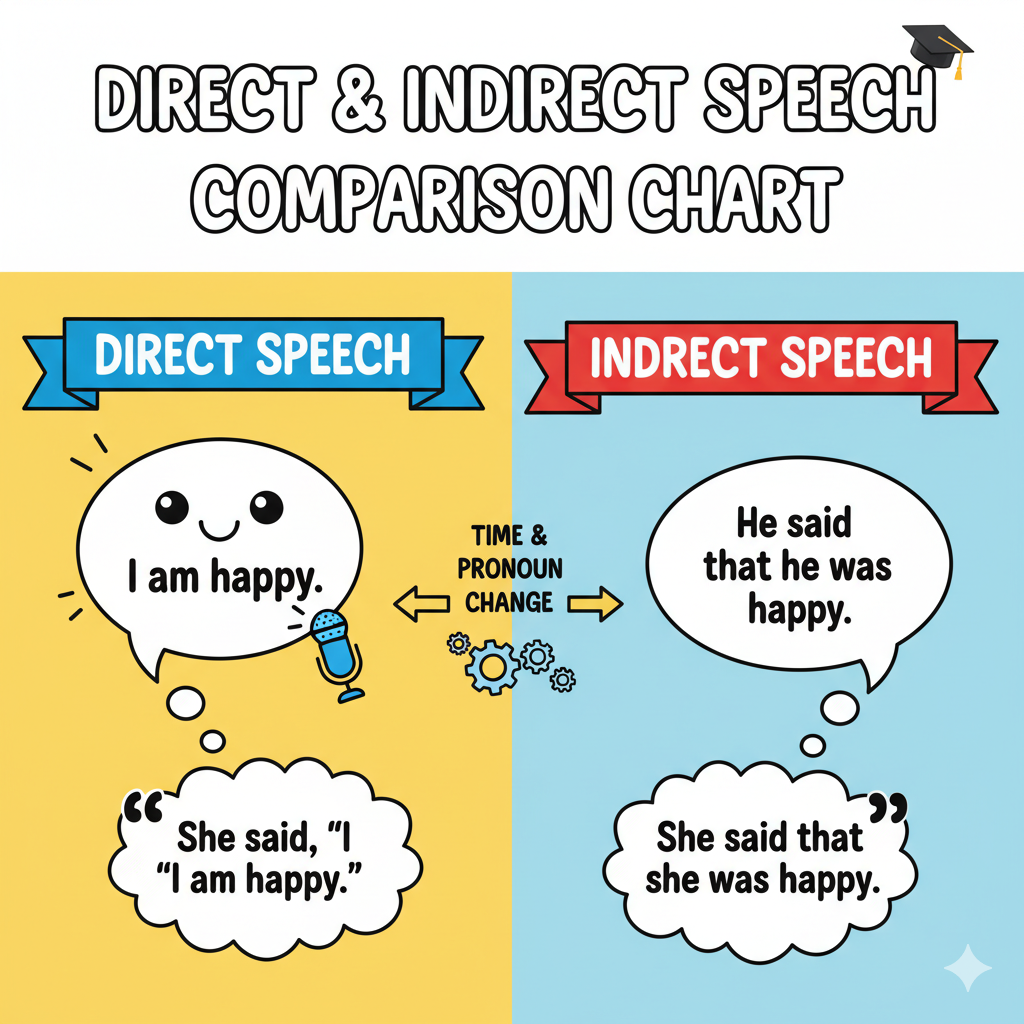 ⚠️ This picture may have spelling mistakes. Trust the words in the lesson.That's it for our introduction! Now you're ready to start spotting direct and indirect speech everywhere!
Keep learning, free
Create a free Syllabax account to unlock practice questions and games for this topic.
Visual Learning Enhanced! 🚀
To help you master this topic, we use Advanced Syllabax AI to generate detailed diagrams and visual models.
Note on Visuals: The AI sometimes makes spelling errors in image labels. Please refer to the lesson text for the correct terminology.