Biodiversity & Endangered Species – Environment & Ecology
Watch this topic in 60 seconds
Free preview · Lesson 1
Biodiversity & Endangered Species – Environment & Ecology (Foundational)
Biodiversity & Endangered Species: Introduction
Welcome to the world of biodiversity and endangered species! This lesson will introduce you to the core concepts of biodiversity, why it's important, and what it means when species become endangered.
What is Biodiversity?
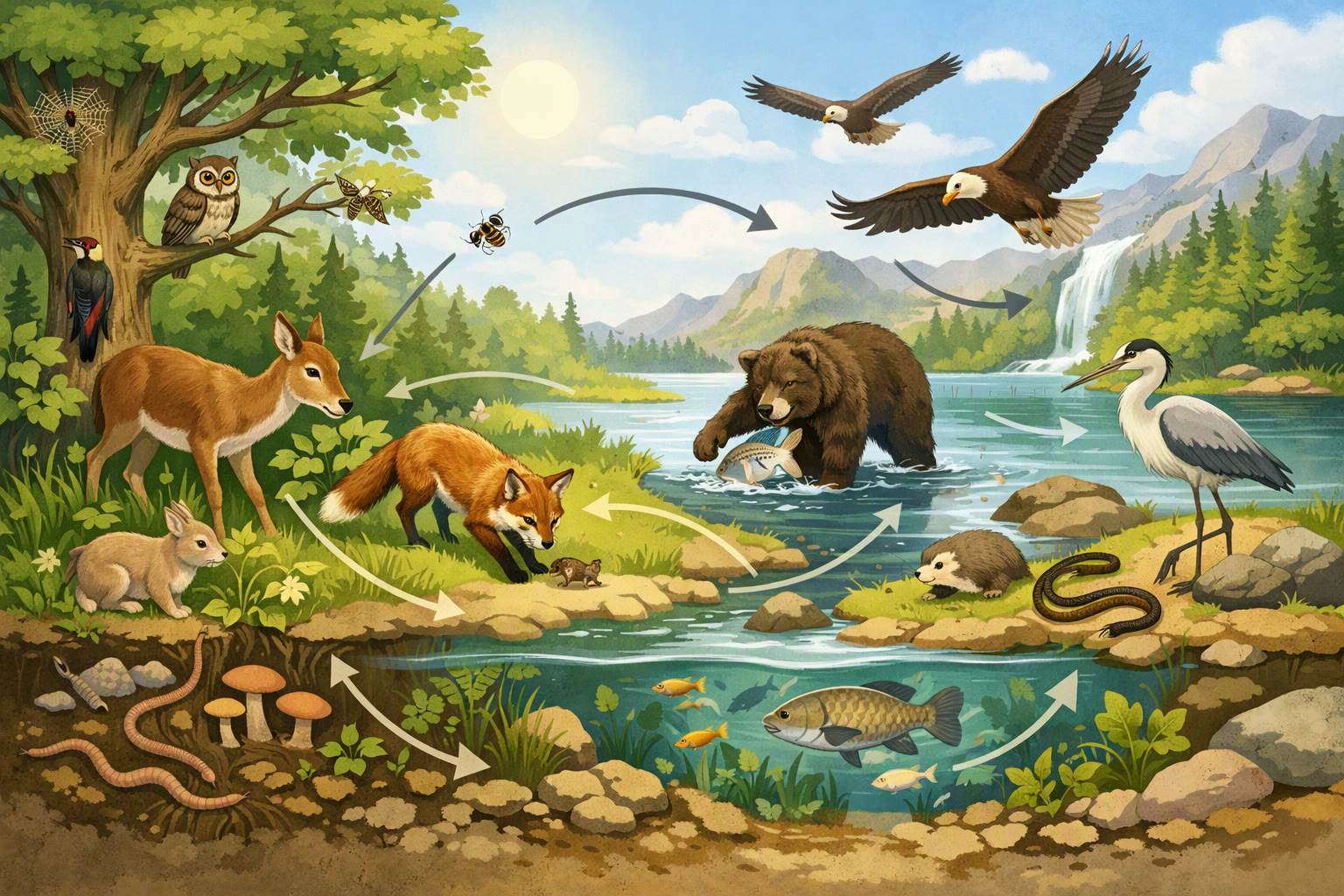
Biodiversity simply means the variety of life on Earth. It includes all living things – plants, animals, fungi, and even tiny microorganisms like bacteria. This variety exists at different levels:
- Genetic Diversity: Differences within a single species. For example, different breeds of dogs.
- Species Diversity: The number of different species in a particular area. A rainforest has high species diversity.
- Ecosystem Diversity: The variety of different habitats and ecosystems, like forests, deserts, and oceans.
A place with high biodiversity has many different kinds of living things.
Why is Biodiversity Important?
Biodiversity is essential for a healthy planet. It provides us with many important things, including:
- Food: Many of the foods we eat come from diverse plant and animal species.
- Clean Air and Water: Healthy ecosystems help to purify air and water.
- Medicines: Many medicines are derived from plants and other organisms.
- Economic Benefits: Tourism and other industries rely on biodiversity.
- Ecosystem Services: Pollination, nutrient cycling, and climate regulation are all supported by biodiversity.
What are Endangered Species?
An endangered species is a type of animal or plant that is at risk of disappearing forever (becoming extinct). This means there are very few of them left in the world, and they could die out completely if we don't help them.
Why do Species Become Endangered?
Species become endangered for many reasons, most of which are related to human activities. Some common causes include:
- Habitat Loss: When forests are cut down or wetlands are drained, animals lose their homes.
- Pollution: Chemicals and waste can poison animals and their environment.
- Overhunting/Overfishing: Hunting or fishing too much can reduce populations to dangerous levels.
- Climate Change: Changes in temperature and weather patterns can make it difficult for species to survive.
- Invasive Species: New plants or animals brought to an area can outcompete native species for food and resources.
What Can We Do to Help?
Protecting biodiversity and endangered species is everyone's responsibility. Here are a few things we can do:
- Protect Habitats: Support conservation efforts to protect forests, wetlands, and other important habitats.
- Reduce Pollution: Use less plastic, recycle, and avoid using harmful chemicals.
- Support Sustainable Practices: Choose products that are made in an environmentally friendly way.
- Educate Others: Learn more about biodiversity and endangered species, and share your knowledge with others.
Keep learning, free
Create a free Syllabax account to unlock practice questions and games for this topic.
Visual Learning Enhanced! 🚀
To help you master this topic, we use Advanced Syllabax AI to generate detailed diagrams and visual models.
Note on Visuals: The AI sometimes makes spelling errors in image labels. Please refer to the lesson text for the correct terminology.