Surface area & volume (intro level) (Introduction to 3D Shapes) [Mensuration]
Watch this topic in 60 seconds
Free preview · Lesson 1
Understanding Surface area & volume (intro level) (Introduction to 3D Shapes) [Mensuration]
Exploring the World of 3D Shapes: An Introduction to Surface Area & Volume
Welcome, young explorers, to the fascinating world of three-dimensional (3D) shapes! Up until now, you might have spent a lot of time drawing and learning about flat shapes like squares, circles, and triangles. These are called two-dimensional (2D) shapes because they only have two main measurements: length and width. Think of a drawing on a piece of paper – it's flat!
But what about the things we use and see every day? The box your new toy came in, the ball you play with, your water bottle, or even the room you're sitting in right now? These aren't flat, are they? They pop out of the page! These are all examples of 3D shapes. They have not just length and width, but also height (or depth). This third dimension is what makes them 'solid' and allows them to take up space in the real world.
What Makes a Shape 3D?
Imagine drawing a square on paper. You can measure how long its sides are and how wide it is. That's 2D. Now, imagine picking up a dice (which is a cube). It has a front face (which is a square), but it also has sides that go 'back' or 'up'. This 'backness' or 'upness' is the third dimension. So, 3D shapes have:
- Length: How long it is.
- Width: How wide it is.
- Height (or Depth): How tall or deep it is.
This allows them to exist in our real world, unlike a perfect 2D shape which only exists on a flat surface or in our minds!
Meet the Main Characters: Common 3D Shapes
Let's introduce some of the most common 3D shapes you'll encounter:
- Cube: Think of a dice or a Rubik's Cube. All its faces are squares, and they are all the same size.
- Cuboid: This is like a stretched cube. Think of a shoebox or a brick. Its faces are rectangles (and sometimes squares), but not all faces have to be the same size.
- Cylinder: Think of a can of soup, a battery, or a toilet paper roll. It has two circular bases and a curved side.
- Sphere: Think of a basketball, a soccer ball, or a globe. It's perfectly round in all directions, like a 3D circle.
- Cone: Think of an ice cream cone or a party hat. It has a circular base and tapers to a single point at the top.
- Pyramid: Imagine the ancient pyramids of Egypt! They have a base (often a square) and triangular faces that meet at a single point at the top.
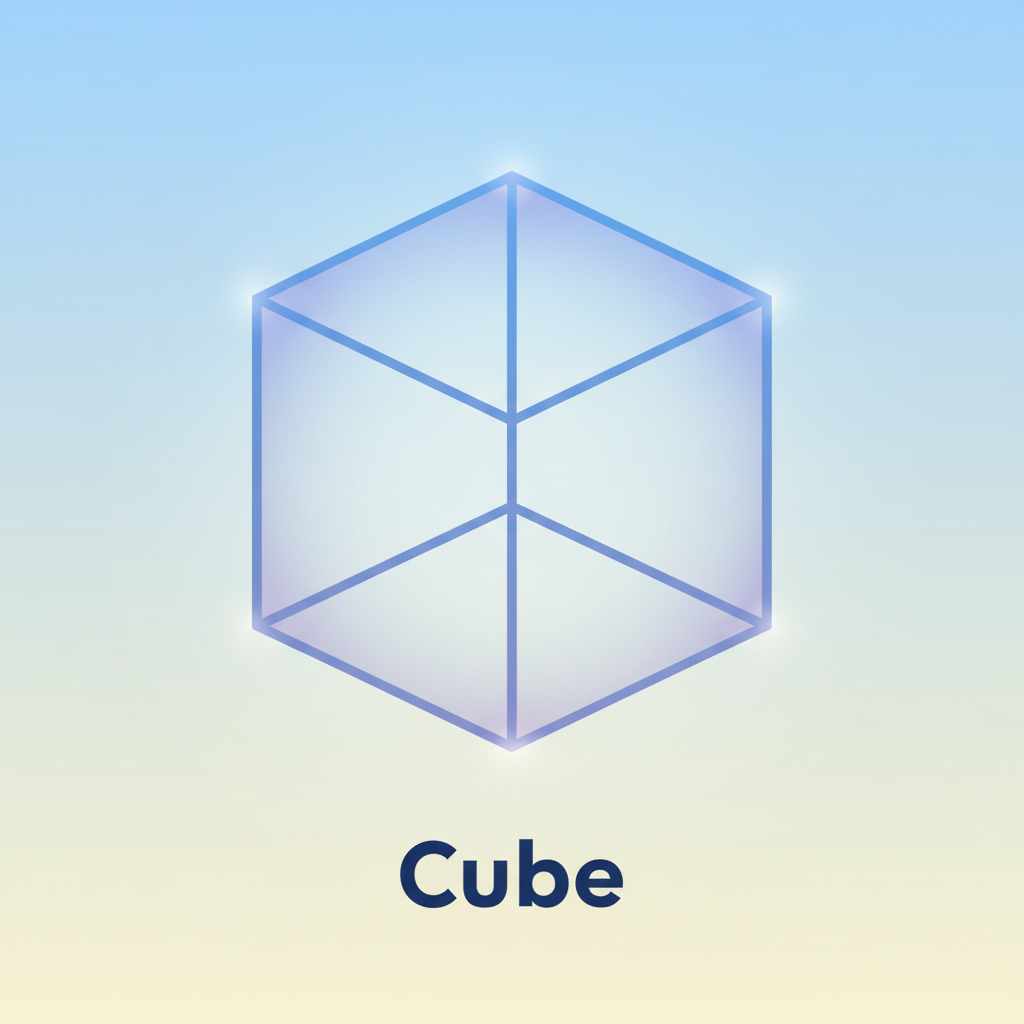
Understanding Surface Area: The 'Wrapping Paper' Concept
Now that we know what 3D shapes are, let's talk about how we measure different aspects of them. First up is Surface Area.
Imagine you have a gift box (a cuboid). You want to wrap it perfectly. How much wrapping paper would you need? The amount of wrapping paper required to cover the entire outside of the box is its surface area.
In simpler terms, the surface area of a 3D shape is the total area of all its faces (or surfaces) combined. If you could 'unfold' a 3D shape and lay it flat, the total area of that flattened shape would be its surface area.
Analogies for Surface Area:
- Painting a room: If you want to paint the walls and ceiling of your room, you need to know the total area of all those surfaces. That's the surface area of your room (which is usually a cuboid).
- The 'skin' of an apple: The peel of an apple covers its entire outside. The amount of peel is like the surface area of the apple (a sphere, roughly).
- Sticking labels: If you put a label on a tin can, the size of that label relates to the surface area of the can's curved side.
Since surface area is a measure of flat space (like the paper), we measure it in square units (e.g., square centimeters cm², square meters m², square inches in²). Just like when you measure the area of a square or a rectangle, you count how many 'unit squares' would fit on it.
Understanding Volume: The 'Filling Up' Concept
Next, let's explore Volume.
Using that same gift box (cuboid), instead of wrapping it, imagine you want to fill it with small candy pieces. How much candy can the box hold? The amount of space inside the box that can be filled is its volume.
Volume is the amount of space a 3D object occupies or the capacity it has to hold something. It's about how much 'stuff' can fit inside a shape, or how much space the shape itself takes up in the world.
Analogies for Volume:
- Water in a bottle: If you fill a water bottle, the amount of water it holds is its volume (or capacity).
- Air in a balloon: When you blow up a balloon, the amount of air inside it is its volume.
- Sand in a sandbox: The amount of sand that fits into a sandbox represents the volume of the sandbox.
Because volume measures three-dimensional space, we measure it in cubic units (e.g., cubic centimeters cm³, cubic meters m³, cubic inches in³). Imagine filling a box with tiny unit cubes – the total number of cubes you can fit is the volume.
Surface Area vs. Volume: What's the Difference?
It's super important not to get these two mixed up! Think about it like this:
- Surface Area: How much 'outside' a 3D shape has. It's like the skin of an orange.
- Volume: How much 'inside' a 3D shape has. It's like the juicy fruit inside the orange.
They measure completely different things about a 3D object, even though they both describe its size. One is about covering, the other is about filling!
Why Do We Care About Surface Area and Volume?
These concepts aren't just for math class; they're used everywhere!
- Engineers use volume to figure out how much concrete is needed to build a foundation.
- Architects use surface area to calculate how much paint is needed for a building's exterior.
- Packaging designers need to know the volume of a product to create the right-sized box, and the surface area to estimate material costs.
- Scientists might calculate the volume of a liquid or a gas in an experiment.
- Even you! When you pick a storage container, you're thinking about its volume (how much it can hold). When you consider painting a birdhouse, you're thinking about its surface area.
Understanding 3D shapes, their surface area, and their volume is a foundational skill that will help you make sense of the world around you and prepare you for more advanced math and science in the future. Keep exploring!
Keep learning, free
Create a free Syllabax account to unlock practice questions and games for this topic.
Visual Learning Enhanced! 🚀
To help you master this topic, we use Advanced Syllabax AI to generate detailed diagrams and visual models.
Note on Visuals: The AI sometimes makes spelling errors in image labels. Please refer to the lesson text for the correct terminology.