Characteristics of living things (BIOLOGY)
Watch this topic in 60 seconds
Free preview · Lesson 1
Understanding Characteristics of living things (BIOLOGY)
Living Things: What Makes Them Alive?
Have you ever wondered what makes a fluffy kitten different from a smooth, grey rock? Or what makes a tall oak tree different from a tiny pebble? The answer is simple: living things have special characteristics that non-living things don't have. Let's explore these amazing traits!
1. They Grow and Develop
Imagine a tiny seed. It doesn't look like much, does it? But give it some water, sunlight, and good soil, and it starts to grow! First, a little sprout pushes out, then roots grow down, and soon you have a big plant. This is called growth. Living things get bigger and change over time. Think about how you were a tiny baby once, and now you are a big 5th grader! That's development.
Non-living things, like a toy car, don't grow. They might get dirty or a little scratched, but they don't get bigger on their own or change into something new like a caterpillar turning into a butterfly. A caterpillar grows from a tiny egg, eats a lot, and then develops into a beautiful butterfly.
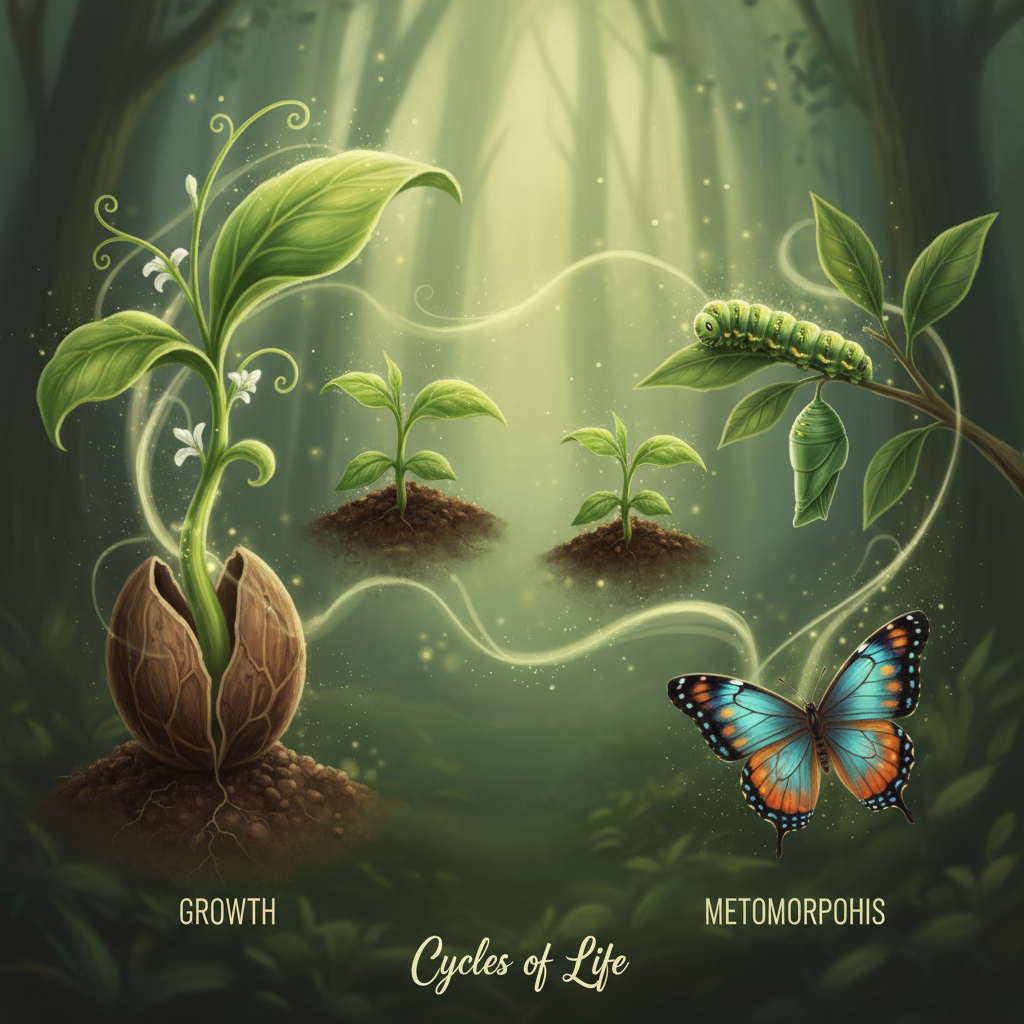 ⚠️ This picture may have spelling mistakes. Trust the words in the lesson.
2. They Reproduce
Have you ever seen a mother duck with her ducklings? Or a cat with her kittens? This is called reproduction. Living things can make more of their own kind. It's like how your parents had you, and you might have siblings! This ensures that the species, or type of living thing, continues to exist.
A rock can't have baby rocks. A chair can't make another chair. But a dog can have puppies, a bird can lay eggs that hatch into chicks, and a flower can make seeds that grow into new flowers. This ability to create new life is a super important characteristic of living things.
3. They Need Energy (Food and Water)
Do you get hungry? Do you get thirsty? Of course! Living things need energy to do everything: to grow, to move, to think, and even to sleep! They get this energy by taking in food and water. For animals, this means eating plants or other animals. For plants, it's a bit different. They make their own food using sunlight, water, and air through a process called photosynthesis.
Think of food as fuel for a car. Without fuel, the car can't move. Without food and water, living things can't function. A toy car doesn't need to eat to move; it needs batteries or to be pushed. But a real car needs gasoline (its fuel) to run.
4. They Respond to Their Environment
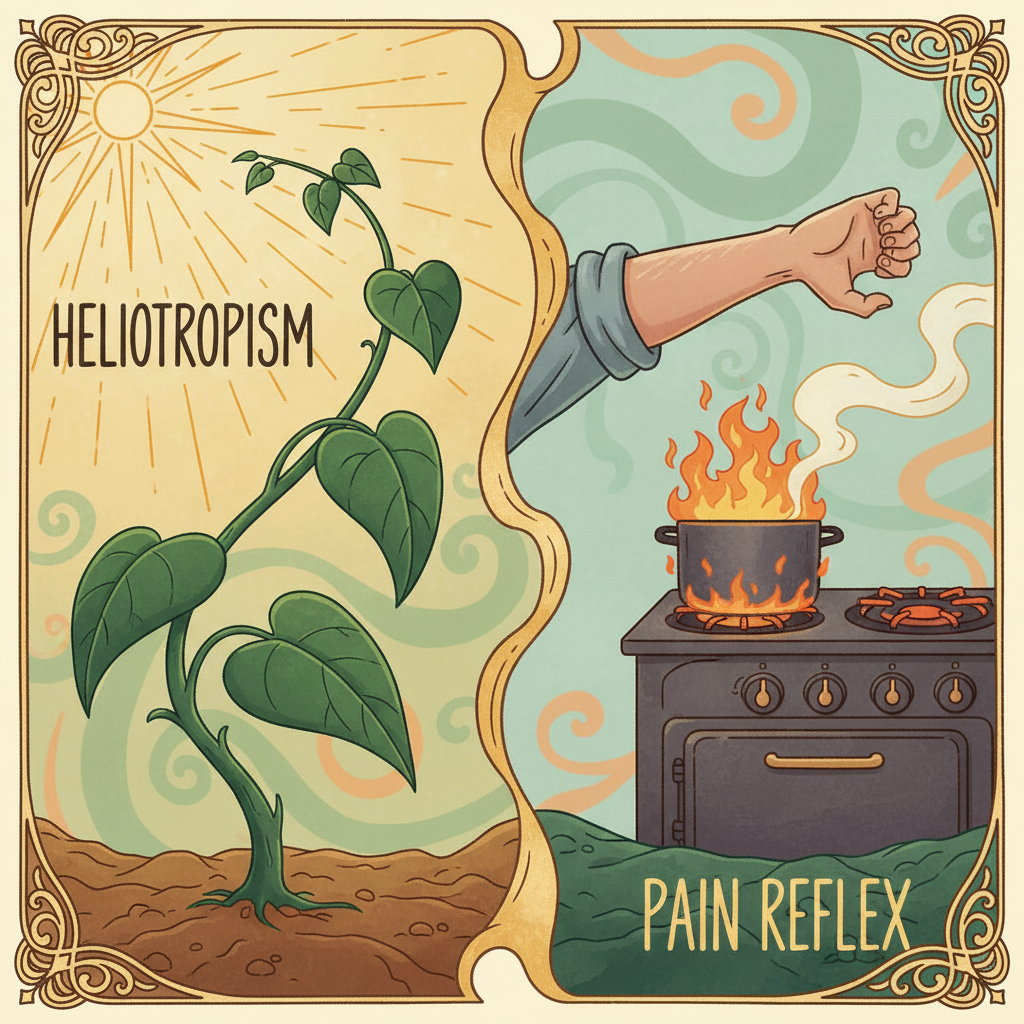
What happens if you touch something hot? You quickly pull your hand away, right? That's because you responded to the heat. Living things can sense and react to changes in their surroundings, which we call their environment.
A plant might turn its leaves towards the sunlight. If you shine a light on a snail, it might pull its head into its shell. If you walk into a dark room, your eyes adjust to see better. These are all examples of living things responding to their environment. A rock doesn't react if you poke it; it just stays a rock.
5. They Breathe (Exchange Gases)
We breathe in air and breathe out air. This process is called respiration or breathing. Living things need to exchange gases with their environment. Humans and animals take in oxygen from the air and release carbon dioxide. Plants also 'breathe,' but they take in carbon dioxide and release oxygen during the day (thanks to photosynthesis!).
Think of it like a constant swap. We swap oxygen for carbon dioxide. Plants swap carbon dioxide for oxygen. This exchange is vital for getting the energy needed to live. A stuffed animal doesn't need to breathe; it's just stuffing inside!
6. They Move
Most living things can move, even if it's very slowly. Animals obviously move around to find food or escape danger. Think of a bird flying, a fish swimming, or a dog running. But plants move too! A sunflower turns its head to follow the sun. Some tiny plants can even move their leaves or roots.
Even things we don't think of as moving much, like trees, have parts that move. Their leaves might sway in the wind, and their roots grow deeper into the soil. A table might get moved, but it can't decide to get up and walk across the room on its own. True movement comes from within the living thing.
7. They Get Rid of Waste
Just like we need to go to the bathroom, living things produce waste products that their bodies need to get rid of. This is called excretion. If waste builds up inside, it can make the living thing sick. So, plants release extra water and gases, and animals urinate and defecate. This helps keep their bodies clean and functioning properly.
A broken toy doesn't need to 'excrete' anything. It just sits there. But a living creature is constantly working, and some of those processes create 'leftovers' that need to be removed.
So, the next time you see something, ask yourself: Does it grow? Can it make more of itself? Does it need food? Does it react to things? Does it breathe? Can it move? Does it get rid of waste? If it answers 'yes' to most of these questions, chances are you're looking at a living thing!
Keep learning, free
Create a free Syllabax account to unlock practice questions and games for this topic.
Visual Learning Enhanced! 🚀
To help you master this topic, we use Advanced Syllabax AI to generate detailed diagrams and visual models.
Note on Visuals: The AI sometimes makes spelling errors in image labels. Please refer to the lesson text for the correct terminology.