Real-life measurement tasks (Length, Weight & Capacity)
Watch this topic in 60 seconds
Free preview · Lesson 1
Understanding Real-life measurement tasks (Length, Weight & Capacity)
Real-Life Measurement: Length, Weight, and Capacity for 4th Graders!
Welcome, super learners! Today, we're going on an exciting adventure into the world of measurement. We use measurement every single day, even when we don't realize it! Think about baking a cake, building with LEGOs, or even seeing how tall you've grown. All these things involve measuring. We'll be focusing on three main types of measurement: length, weight, and capacity. Let's dive in!
What is Measurement?
Measurement is like comparing things to a standard. Imagine you want to know how long your pencil is. You could say it's "long," but that's not very helpful. If you compare it to a ruler, you can say it's "15 centimeters long." Now, that's a specific measurement! We use tools like rulers, scales, and measuring cups to get these specific numbers. These numbers help us understand how big, how heavy, or how much something holds.
1. Measuring Length: How Long is it?
Length tells us how far apart two points are. It's about how long, how wide, or how tall something is.
Units of Length:
We have different tools and units to measure length, depending on how big or small the object is.
- Centimeters (cm): These are small units, perfect for measuring things like a crayon, a ladybug, or the width of your finger. Think of the little marks on a ruler.
- Inches (in): Inches are a bit bigger than centimeters. We often use inches to measure things like the length of a book, the size of a TV screen, or how tall a small plant is.
- Meters (m): A meter is much bigger than a centimeter. It's about the height of a doorknob. We use meters to measure longer things like the length of a room, the height of a person, or the distance across a playground.
- Feet (ft): Feet are also used for longer distances. If you have a shoe size of 10, that's measured in feet! We use feet to measure the length of a car, the height of a building, or how far you can jump.
Analogies for Length:
- Centimeters are like tiny ants marching in a line. You need a lot of ants to cover a long distance.
- Inches are like your thumb's width. You can use your thumb to estimate lengths that aren't too big.
- Meters are like a big stride you take. One big step can be about a meter.
- Feet are like, well, your feet! If you lay down 12 shoes end-to-end, that's about a foot.
Tools for Measuring Length:
- Ruler: Usually 12 inches or 30 centimeters long. Great for small objects.
- Measuring Tape: This is like a long, flexible ruler, often in a case. It's great for measuring around curves or longer distances, like measuring a table or a waist.
2. Measuring Weight: How Heavy is it?
Weight tells us how heavy or light an object is. It's all about how much "stuff" is packed into something. When you lift a backpack, you can feel its weight!
Units of Weight:
- Grams (g): Grams are very small units of weight. Think of a single paperclip – it weighs about 1 gram. We use grams for very light things like a feather or a single grain of rice.
- Ounces (oz): Ounces are heavier than grams. A slice of bread might weigh about 1 ounce. We use ounces for things like a small chocolate bar or a small bag of chips.
- Kilograms (kg): Kilograms are much heavier. A bag of sugar is often 1 kilogram. You might weigh around 30 kilograms if you are in 4th grade. We use kilograms for heavier things like a watermelon, a person, or a pet.
- Pounds (lb): Pounds are also used for heavier things. A gallon of milk weighs about 8 pounds. A medium-sized dog might weigh 20-30 pounds.
Analogies for Weight:
- Grams are like a tiny feather's tickle. Very, very light!
- Ounces are like a few grapes. Noticeably heavier than a feather, but still light.
- Kilograms are like a bowling ball. Definitely has some weight to it!
- Pounds are like a bag of apples. You can feel the weight when you carry it.
Tools for Measuring Weight:
- Kitchen Scale: Used in the kitchen to weigh ingredients for baking or cooking.
- Bathroom Scale: The one you stand on to see how much you weigh.
- Balance Scale: This ancient tool compares the weight of two objects.
3. Measuring Capacity: How Much Can it Hold?
Capacity tells us how much a container can hold, usually liquids like water, juice, or milk. It's about the volume inside.
Units of Capacity:
- Milliliters (mL): Milliliters are very small amounts. A teaspoon of medicine is about 5 mL. They are used for tiny amounts of liquid, like in a small medicine dropper.
- Liters (L): Liters are much bigger. A large soda bottle is usually 2 liters. We use liters to measure big amounts of liquids, like in a water cooler or a swimming pool.
- Fluid Ounces (fl oz): Fluid ounces are used for measuring liquids, often in recipes or drink sizes. A small juice box is about 6 fl oz.
- Cups (c): You probably use cups when baking! A standard measuring cup holds 8 fluid ounces.
- Quarts (qt): A quart is bigger than a cup. Think of a small milk carton; it's often 1 quart.
- Gallons (gal): A gallon is a very large amount. A big milk jug you buy at the store is usually 1 gallon.
Analogies for Capacity:
- Milliliters are like tiny raindrops. Each drop is small, but many drops fill up a container.
- Liters are like a big water bottle you'd take on a hike. Holds a good amount of water.
- Cups are like your favorite mug. Holds enough drink for one person.
- Gallons are like a big bucket. You can carry a lot of water in it.
Tools for Measuring Capacity:
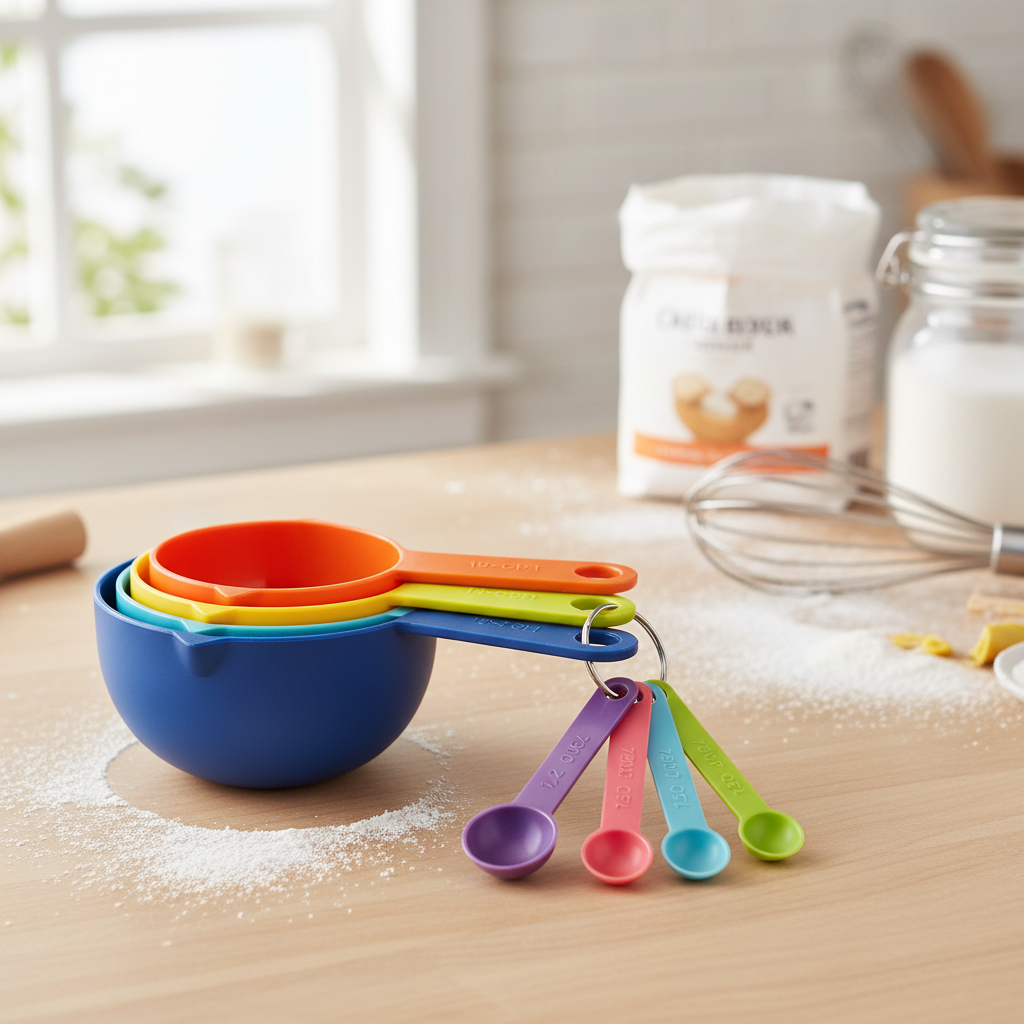
- Measuring Cups: Often come in sets (1 cup, 1/2 cup, 1/3 cup, 1/4 cup) for cooking.
- Liquid Measuring Cup: A clear cup with markings on the side for measuring liquids accurately.
- Measuring Spoons: For very small amounts of liquids or dry ingredients (tablespoon, teaspoon).
- Pitchers and Bottles with Markings: Many drink containers have lines showing how much they hold.
Putting it all Together!
Measurement helps us understand the world around us. When you measure, remember to choose the right tool and the right units!
- Use units like centimeters and meters for length.
- Use units like grams and kilograms for weight.
- Use units like liters and cups for capacity.
Keep practicing, and you'll become a measurement master in no time!
Keep learning, free
Create a free Syllabax account to unlock practice questions and games for this topic.
Visual Learning Enhanced! 🚀
To help you master this topic, we use Advanced Syllabax AI to generate detailed diagrams and visual models.
Note on Visuals: The AI sometimes makes spelling errors in image labels. Please refer to the lesson text for the correct terminology.