Learning Journey
Watch this topic in 60 seconds
Free preview · Lesson 1
Ancient civilizations: Indus Valley - History of India (Foundational)
Ancient Civilizations: The Indus Valley Civilization
The Indus Valley Civilization (IVC), also known as the Harappan Civilization, represents one of the world's three earliest widespread civilizations of the Ancient Near East and South Asia, flourishing from approximately 2500 to 1900 BCE. Predating the Vedic period in India, it developed along the basins of the Indus River, encompassing modern-day Pakistan, Afghanistan, and northwest India. This Bronze Age civilization is renowned for its sophisticated urban planning, impressive architecture, and a highly organized societal structure, elements that set it apart from many contemporary cultures.
Discovery and Chronology
The existence of the Indus Valley Civilization remained unknown to the modern world until the early 20th century. Systematic excavations began in the 1920s at the sites of Harappa in Punjab and Mohenjo-Daro in Sindh, both in present-day Pakistan. These discoveries pushed back the timeline of Indian history by several millennia, revealing a civilization that rivaled ancient Egypt and Mesopotamia in its complexity and extent. The IVC is typically divided into three phases: Early Harappan (c. 3300-2600 BCE), Mature Harappan (c. 2600-1900 BCE), and Late Harappan (c. 1900-1300 BCE), with the Mature phase representing its zenith.
 Major Cities and Urban Planning
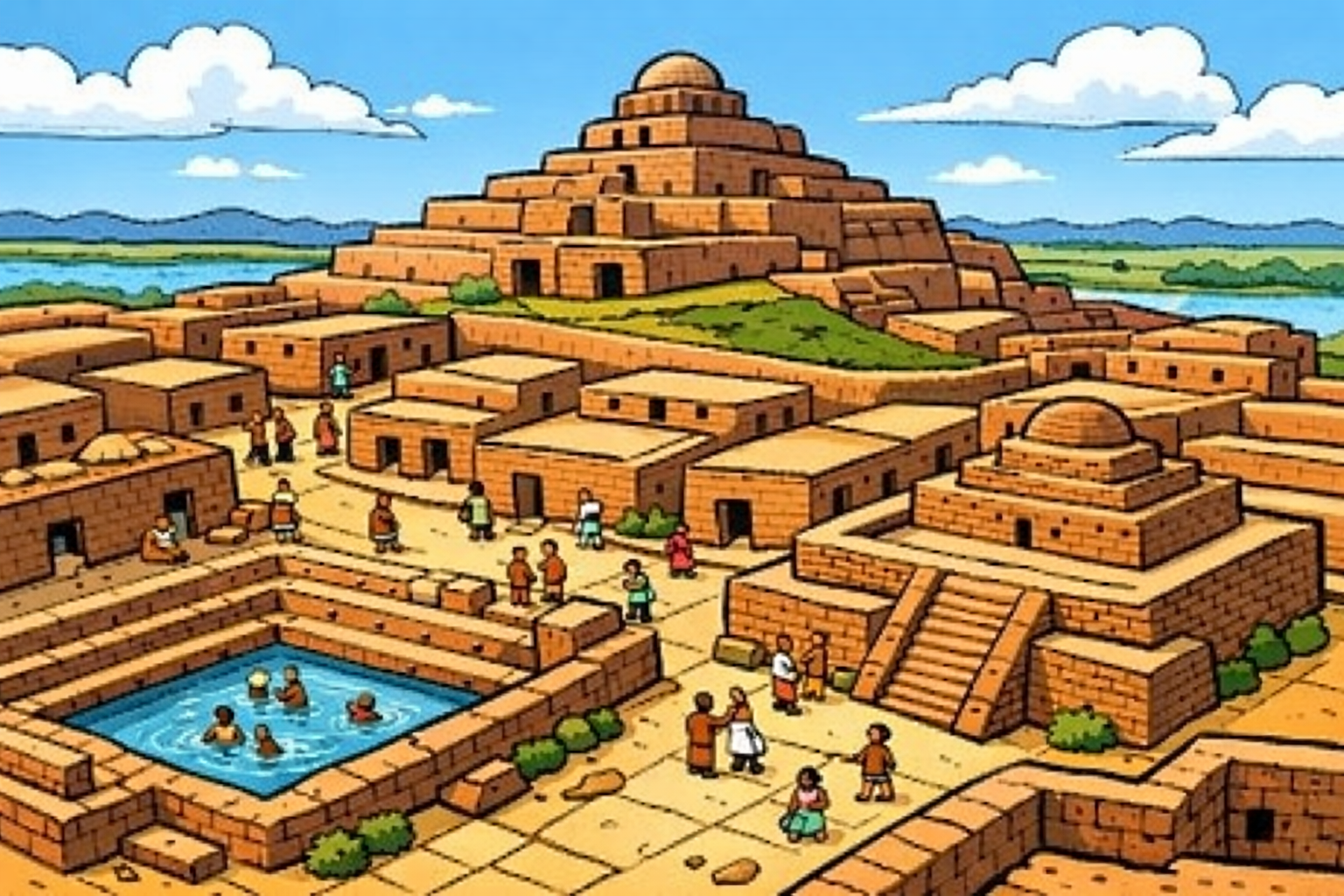
The most distinctive feature of the IVC was its advanced urban planning. Major cities like Mohenjo-Daro, Harappa, Dholavira, Lothal, and Rakhigarhi exhibited remarkable uniformity in design and construction. City layouts often followed a grid pattern, with streets running north-south and east-west, dividing the city into rectangular blocks. Buildings were predominantly constructed from standardized burnt bricks, suggesting a centralized authority capable of organizing large-scale public works. Each city was typically divided into a 'citadel' mound, possibly housing public buildings, administrative offices, or religious structures, and a 'lower town' where the majority of the population resided.
One of the most impressive feats of Harappan engineering was its sophisticated drainage system. Many houses had private wells and bathrooms, with wastewater channeled through elaborate systems of covered drains running beneath the streets. These drains emptied into larger channels outside the city. This attention to sanitation and public health was unparalleled in the ancient world. The Great Bath at Mohenjo-Daro, a large public bathing area, further highlights their advanced civic infrastructure and possibly ritualistic practices.
Key Features of Harappan Culture
- Agriculture: The primary economic activity was agriculture, with cultivation of wheat, barley, peas, and sesame. They were also among the earliest people to cultivate cotton. Animal husbandry included cattle, sheep, goats, and water buffalo.
- Trade: Extensive trade networks existed, both internal and external. Evidence suggests trade with Mesopotamia (Sumer), Oman, Bahrain, and Central Asia, involving goods such as copper, lapis lazuli, carnelian, and timber. Standardized weights and measures were used.
- Crafts and Technology: Harappans were skilled artisans, producing pottery, beadwork, metallurgy (copper, bronze, gold, silver), and shell and faience objects. Their technology included the use of the potter's wheel and efficient brick kilns.
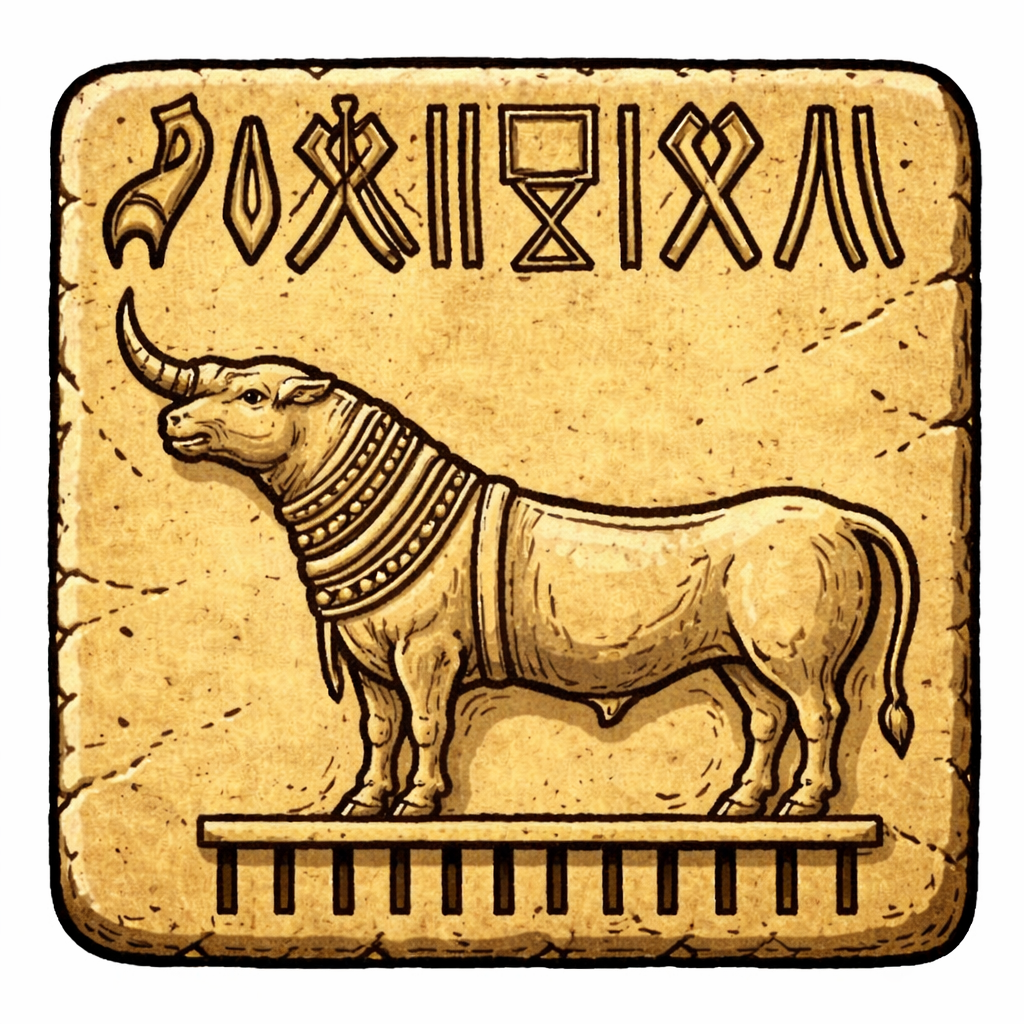
- Script: The Indus script, consisting of pictographic and logographic signs, has been found on seals, pottery, and small tablets. Despite numerous attempts, it remains undeciphered, posing a significant challenge to fully understanding their language and administration.
- Religion and Society: While no grand temples have been found, figurines suggest the worship of a Mother Goddess, possibly associated with fertility. The 'Pashupati' seal, depicting a seated figure surrounded by animals, is often interpreted as a proto-Shiva deity. The uniformity of city planning and absence of ostentatious royal tombs suggest a relatively egalitarian society, possibly ruled by merchants or a priestly class, rather than a king.
 Decline and Legacy
Around 1900 BCE, the Indus Valley Civilization began to decline, and by 1700 BCE, most of its major cities were abandoned. The reasons for this decline are still debated among historians and archaeologists. Several theories have been proposed, including:
- Climatic Change: A shift in monsoon patterns leading to prolonged droughts or increased flooding of the Indus River.
- Environmental Degradation: Over-exploitation of forests for timber (for brick kilns and construction) and agricultural land.
- Tectonic Activity: Earthquakes or changes in river courses.
- Invasion Theory: Historically, the 'Aryan Invasion Theory' suggested an invasion by Indo-Aryans as a cause, but this has largely been discredited due to lack of archaeological evidence. Modern scholarship suggests a more complex internal decline exacerbated by environmental factors.
While the urban centers faded, elements of Harappan culture persisted in subsequent regional cultures. The IVC's legacy includes significant contributions to urban planning, sanitation, early forms of writing, and possibly religious practices that influenced later Indian traditions. Its study continues to provide profound insights into the origins of civilization in South Asia and the complexities of ancient societal collapse.
Keep learning, free
Create a free Syllabax account to unlock practice questions and games for this topic.
Visual Learning Enhanced! 🚀
To help you master this topic, we use Advanced Syllabax AI to generate detailed diagrams and visual models.
Note on Visuals: The AI sometimes makes spelling errors in image labels. Please refer to the lesson text for the correct terminology.