Biosphere reserves[BIOLOGY]
Watch this topic in 60 seconds
Free preview · Lesson 1
Understanding Biosphere reserves[BIOLOGY]
Understanding Biosphere Reserves: Our Planet's Special Protected Places
Imagine our Earth is like a giant, beautiful garden. This garden is home to countless plants, animals, fungi, and tiny microorganisms, all living together and interacting in amazing ways. This living part of our Earth, where all life exists, is called the **Biosphere**. It stretches from the deepest oceans to the highest mountains, and even into the air we breathe!
Now, just like a gardener protects certain special parts of their garden to keep rare flowers safe or to study how different plants grow together, humans have created special areas on Earth to protect parts of our Biosphere. These special protected areas are called **Biosphere Reserves**.
What Exactly is a Biosphere Reserve?
Think of a Biosphere Reserve as a **living laboratory** or a **nature sanctuary**. It's a place where scientists, local communities, and governments work together to protect nature and also find ways for people and nature to live in harmony. They are not just about saving animals and plants; they are about saving entire ecosystems and the ways of life that depend on them.
Why Do We Need Biosphere Reserves?
Our planet is facing many challenges. Pollution, climate change, and the way we use land can harm nature. Biosphere Reserves are like **firewalls for nature**. They help:
- Protect Biodiversity: This is a big word that means protecting all the different kinds of life – from the smallest bug to the largest whale, and all the plants in between. Biosphere Reserves act like a safe house for endangered species, giving them a place to live and reproduce without being disturbed.
- Study Nature: Scientists can observe how ecosystems work, how animals interact with their environment, and how plants grow in different conditions. It's like having a classroom where you can study nature firsthand, without disturbing it too much.
- Learn Sustainable Living: Biosphere Reserves often include areas where local people live. They help find ways for people to use resources from nature (like farming or fishing) without damaging the environment for the future. This is called sustainable living – using resources wisely so they last.
- Promote Conservation: They raise awareness about the importance of protecting nature and encourage people to get involved in conservation efforts.
The Three Zones of a Biosphere Reserve
To achieve these goals, most Biosphere Reserves are divided into three main zones, each with a different purpose. Imagine these zones like layers of protection around a precious treasure.
1. The Core Zone: The Deepest Protection
This is the most protected part of the reserve. It's like the **heart of the sanctuary**. Here, human activities are very limited or not allowed at all. The main goal is to protect the natural ecosystem and wildlife in its purest form. Think of it as a pristine wilderness where nature is left completely to itself. Strict rules are in place to ensure that the environment remains undisturbed. Scientific research and monitoring might happen here, but only in ways that don't harm the ecosystem.
2. The Buffer Zone: A Protective Ring
Surrounding the core zone is the buffer zone. This area acts as a **transition space** between the strictly protected core and the more human-influenced outer areas. Here, activities are allowed as long as they don't harm the core zone. These activities can include things like research, environmental education, and sometimes even small-scale, sustainable tourism or traditional practices that don't damage the ecosystem. It's like a protective belt that helps shield the core from outside pressures.
3. The Transition Zone: Living Together
This is the outermost area of the Biosphere Reserve. It's where you'll find the **most human activity**, including communities, farms, and businesses. The goal here is to promote sustainable development. This means finding ways for people to make a living and meet their needs without destroying the environment. It involves cooperation between the reserve management and the local communities to ensure that economic activities are compatible with conservation. Think of this zone as a place where humans and nature are actively trying to find a balance and live in harmony.
Here's a simple way to visualize it:
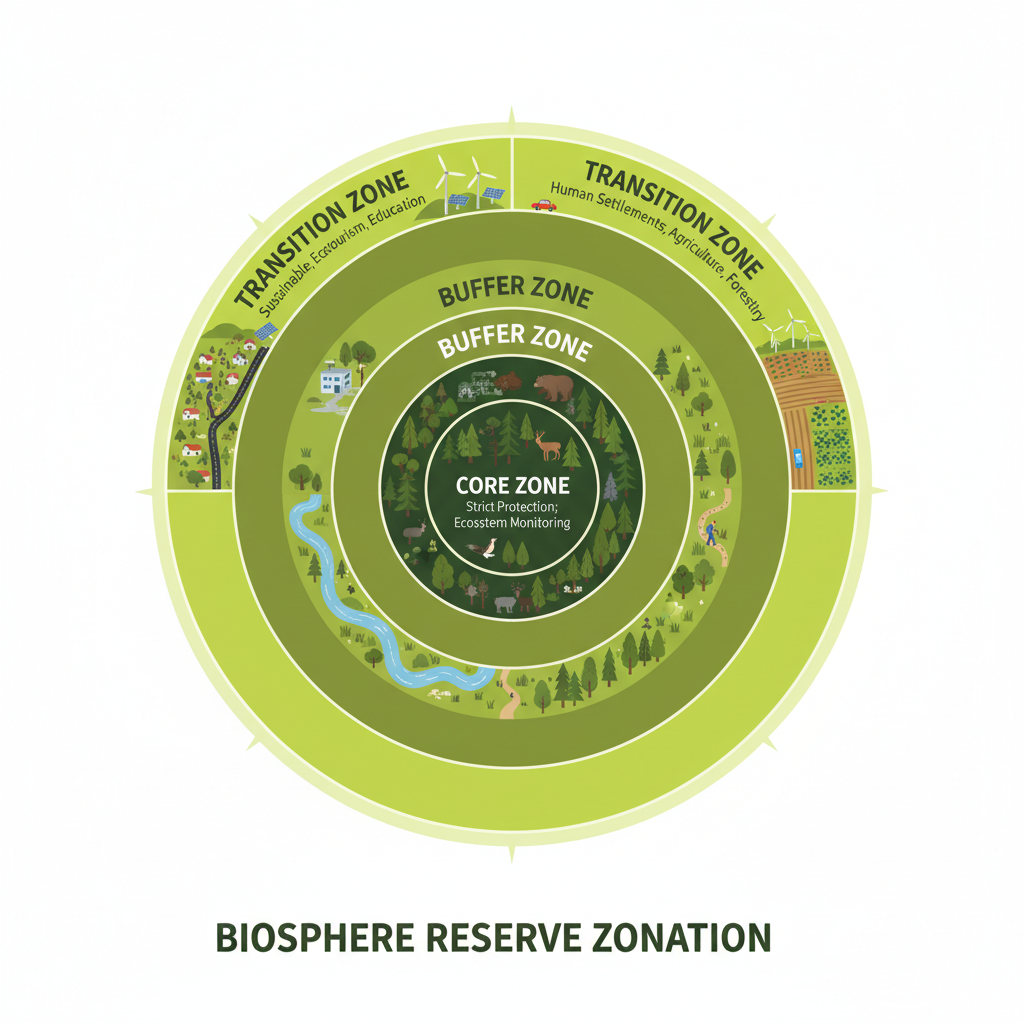 ⚠️ This picture may have spelling mistakes. Trust the words in the lesson.
Examples of Biosphere Reserves
There are hundreds of Biosphere Reserves all around the world, each unique and special. Some famous examples include:
- The Great Barrier Reef Marine Park (Australia): Protecting one of the world's most important marine ecosystems.
- The Serengeti (Tanzania): Famous for its incredible wildlife and the annual migration of wildebeest.
- The Amazon (various South American countries): Protecting vast tropical rainforests and the incredible biodiversity they hold.
- The Atlantic Forest Biosphere Reserve (Brazil): An area rich in unique plants and animals found nowhere else on Earth.
Why are they Important?
Biosphere Reserves are more than just protected areas. They are **models for the future**. They show us how we can manage our planet's resources in a way that benefits both people and nature. They are crucial for:
- Maintaining Natural Balance: Helping to keep the intricate web of life intact.
- Combating Climate Change: Protecting forests and oceans that absorb carbon dioxide.
- Preserving Cultural Heritage: Many reserves protect the traditional ways of life of indigenous communities.
- Inspiring Future Generations: Teaching us the value of conservation and sustainable practices.
In essence, Biosphere Reserves are our planet's way of saying, "Let's protect these precious parts of life for everyone, forever." They are vital spaces where we can learn, protect, and live in a way that respects the incredible diversity of our Earth.
Keep learning, free
Create a free Syllabax account to unlock practice questions and games for this topic.
Visual Learning Enhanced! 🚀
To help you master this topic, we use Advanced Syllabax AI to generate detailed diagrams and visual models.
Note on Visuals: The AI sometimes makes spelling errors in image labels. Please refer to the lesson text for the correct terminology.