Cyberbullying: Definition & Prevention
Watch this topic in 60 seconds
Free preview · Lesson 1
Understanding Cyberbullying: Definition & Prevention
Understanding Cyberbullying: What It Is and How to Stop It!
Hey everyone! Welcome to our important lesson on cyberbullying. This might sound like a big word, but it's super important to understand, especially since we all spend time online, whether playing games, watching videos, or talking to friends. Think of it like learning to cross the street safely – you need to know the rules to stay safe in the digital world too!
What is Cyberbullying?
Let's break it down. You know what 'bullying' is, right? It's when someone is mean to another person, usually over and over again. It can be physical (like pushing), verbal (like name-calling), or social (like leaving someone out). Well, cyberbullying is just like regular bullying, but it happens using technology!
Imagine someone is being mean to you, not on the playground, but through your phone, tablet, or computer. That's cyberbullying. It's when someone uses:
- The internet: like on websites or social media.
- Mobile phones: through texts or calls.
- Video games: where people can chat or send messages.
to hurt, embarrass, or scare someone else. It's like a mean message or picture being sent through a digital post office, but instead of just one person seeing it, lots of people might!
Here are some examples of what cyberbullying can look like:
- Sending mean texts or messages: Someone might send a text message saying hurtful things about you. This is like someone whispering mean things behind your back, but on your phone, and it can reach you anywhere, anytime.
- Posting embarrassing pictures or videos: Imagine someone takes a silly picture of you without your permission and then shares it online for everyone to laugh at. That would be really upsetting, right? It's like someone showing a funny picture of you to the whole class, but the 'class' online is much, much bigger!
- Spreading rumors online: This is when someone makes up untrue stories about you and posts them on social media or in group chats. It's like a wildfire – once it starts, it can spread very quickly and cause a lot of damage, even if it's not true.
- Excluding someone from online games or groups: If a group of friends always plays an online game together, and they suddenly start ignoring one person or kicking them out just to be mean, that's also cyberbullying. It's like being left out of a game on the playground, but digitally.
- Pretending to be someone else: Sometimes, a cyberbully might create a fake profile or pretend to be someone they're not to trick or hurt another person. It's like someone wearing a mask to hide their identity while doing something unkind.
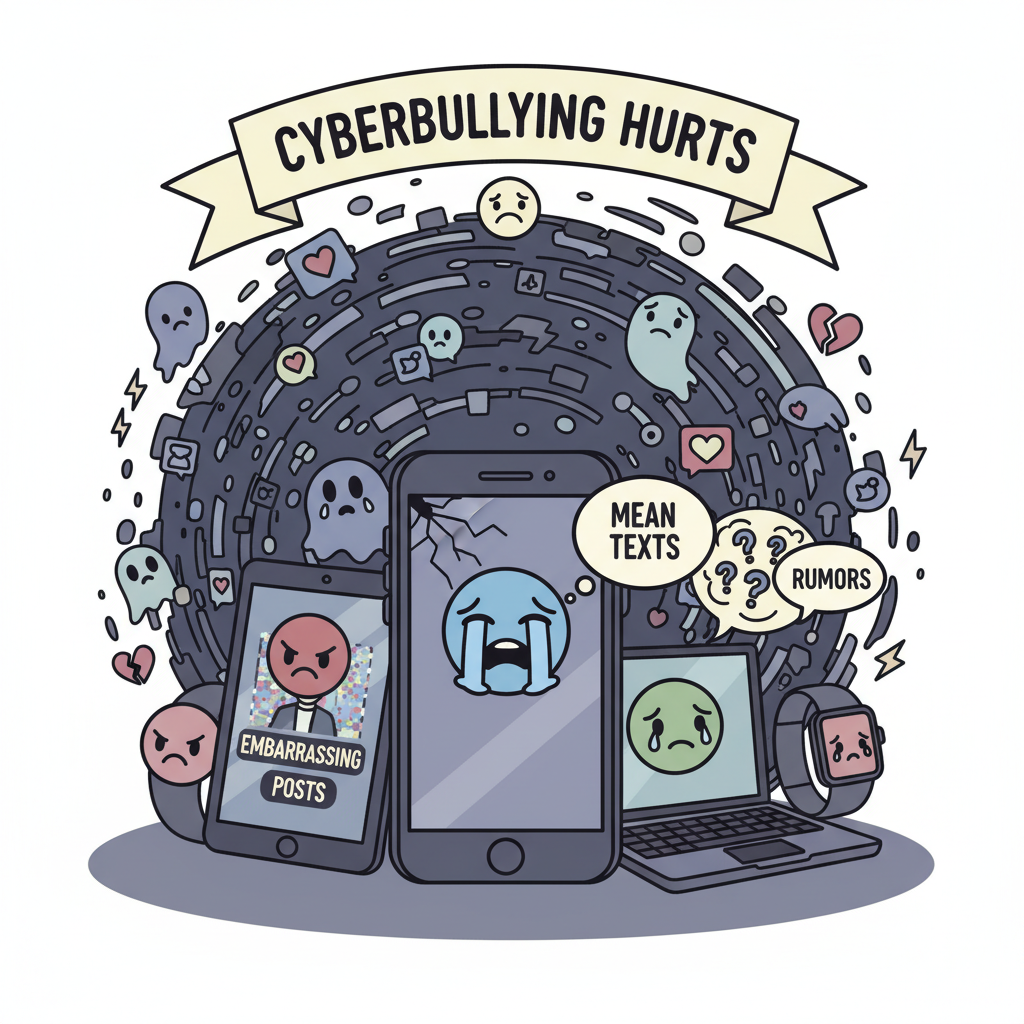 ⚠️ This picture may have spelling mistakes. Trust the words in the lesson.
How Does Cyberbullying Make People Feel?
Being cyberbullied can make someone feel really terrible. It's like a dark cloud following you around everywhere. Because it happens online, it can feel like there's no escape, even when you're at home. A person who is cyberbullied might feel:
- Sad or lonely: They might feel like no one understands or cares.
- Scared or anxious: They might worry about what will be posted next or who will see it.
- Embarrassed or ashamed: They might feel like everyone is judging them.
- Angry or frustrated: They might feel helpless and not know what to do.
It can even make them not want to go online anymore, or not want to go to school, because they worry about what people are saying or thinking about them.
How to STOP Cyberbullying: Prevention is Key!
The good news is that we all have the power to help stop cyberbullying! It's like having a superhero shield and a secret superpower to protect yourself and others. Here are some of the most important things you can do:
1. Tell a Trusted Adult
This is the MOST important step! If you ever experience cyberbullying or see it happening to someone else, tell a trusted adult immediately. Who is a trusted adult? It could be your parent, guardian, teacher, school counselor, or another grown-up you feel safe with. Telling an adult is like hitting the 'emergency stop' button. They have the power and knowledge to help make it stop and keep you safe. You don't have to deal with it alone!
2. Don't Respond to Mean Messages
It's natural to want to respond or fight back, but that's often exactly what a cyberbully wants. Responding can make the situation worse, like adding fuel to a small fire. If someone sends you a mean message, the best thing to do is usually to ignore it. Don't send a mean message back, and don't try to get revenge. Just like a naughty pet looking for attention, if you don't give it, it might eventually stop.
3. Block the Bully
Many apps and websites allow you to block people. If someone is cyberbullying you, blocking them is like closing a door in their face. It prevents them from sending you more messages or seeing your posts. It’s a very effective way to cut off their access to you.
4. Save the Evidence
If someone is cyberbullying, it's really helpful to save proof. Take screenshots of messages, posts, or pictures. This is like collecting clues for a detective. This evidence can be very important when you tell a trusted adult, as it helps them understand exactly what happened and take action.
5. Be Kind Online
Remember the Golden Rule? 'Treat others how you want to be treated.' This applies just as much online as it does in person. Always think before you post or send a message. Would you say this to someone's face? Would you be okay with everyone seeing it? Being kind and respectful online helps create a safer, happier digital world for everyone.
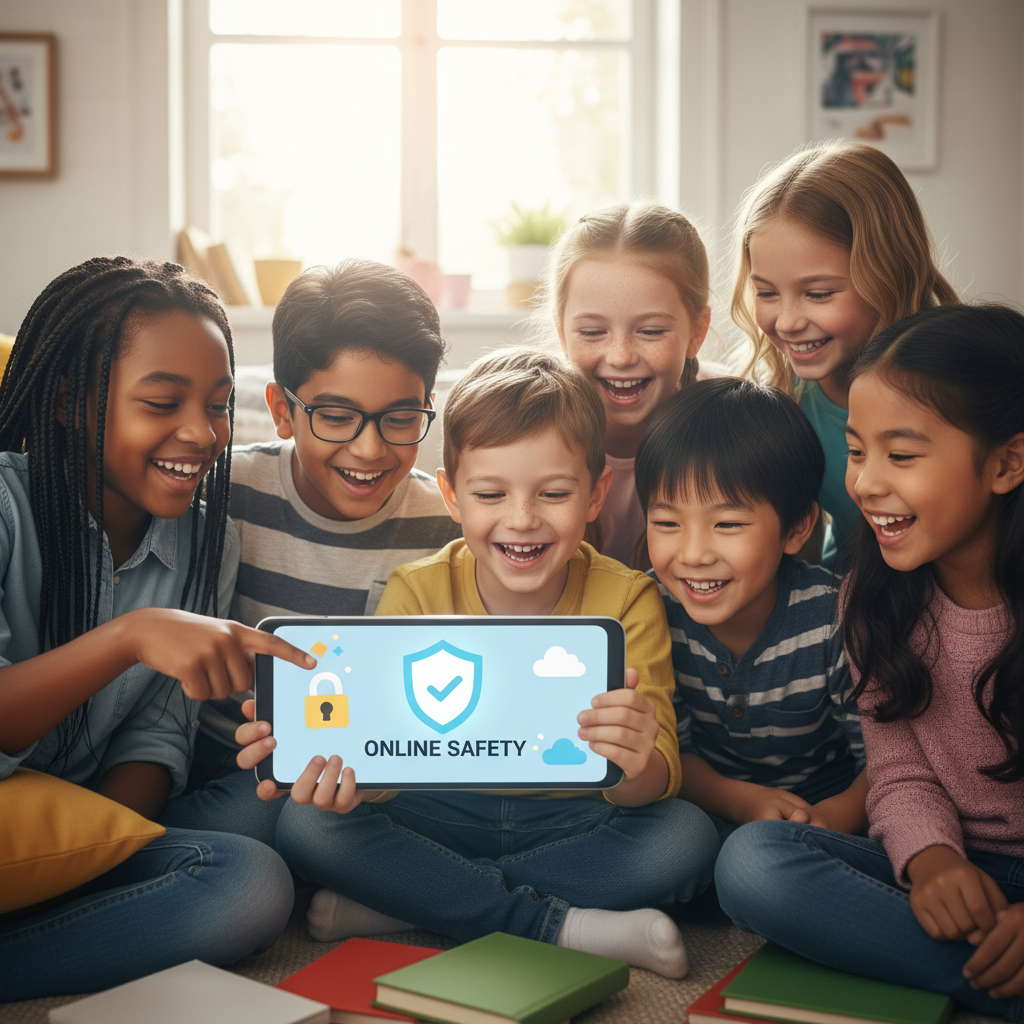
Cyberbullying is serious, but by learning what it is and how to prevent it, you can become a digital superhero! Always remember: you are not alone, and it's never your fault if someone cyberbullies you. Speaking up and getting help is the bravest thing you can do.
Keep learning, free
Create a free Syllabax account to unlock practice questions and games for this topic.
Visual Learning Enhanced! 🚀
To help you master this topic, we use Advanced Syllabax AI to generate detailed diagrams and visual models.
Note on Visuals: The AI sometimes makes spelling errors in image labels. Please refer to the lesson text for the correct terminology.