Learning Journey
Watch this topic in 60 seconds
Free preview · Lesson 1
Understanding Sequencing Commands in Code
Decoding the Digital Dance: Sequencing Commands in Code
Welcome, young coders, to an exciting journey into the heart of computer programming! Today, we're going to explore a super important idea called Sequencing Commands in Code. Don't let the big words scare you – it's actually a lot like things you do every single day!
What Does 'Sequencing Commands' Even Mean?
Imagine you're trying to build something with LEGOs, or you're getting ready for school in the morning. Does the order of what you do matter? Absolutely! You wouldn't put on your shoes *before* your socks, would you? And you wouldn't try to build the roof of a LEGO house *before* you've built the walls!
Sequencing Commands just means putting instructions (we call them 'commands') in the right order, one after the other, so a computer can understand exactly what you want it to do. Computers are brilliant, but they can't guess! They need clear, step-by-step instructions.
Analogy 1: Your Morning Routine (Order is Everything!)
Think about your morning:
- Wake up
- Brush your teeth
- Get dressed
- Eat breakfast
- Pack your backpack
- Head to school
What if you tried to eat breakfast *before* brushing your teeth? Or pack your backpack *before* you even got dressed? Things would get messy or just wouldn't make sense! Your morning routine is a perfect example of sequencing – each step happens in a specific, logical order.
In coding, each of these steps is like a 'command' you give to the computer. And just like your morning, the computer needs to follow these commands in the correct sequence to get the job done right.
What Are 'Commands' in Code?
A command in code is simply an instruction you give to the computer. It's like telling a pet to 'sit' or 'stay.' For a computer, commands can be things like:
Move Forward(Go one step ahead)Turn Right(Spin around to face the right)Pick Up Item(Grab something from the ground)Say "Hello"(Show the words "Hello" on the screen)
Each command tells the computer to do one small, specific action. Computers are very literal – they will do exactly what you tell them, no more, no less, and always in the order you tell them!
Analogy 2: Following a Recipe (Baking a Delicious Outcome)
Imagine you're baking a cake. You have a recipe, which is like a list of commands:
- Preheat oven to 350 degrees
- Mix flour, sugar, and baking soda in a bowl
- Add eggs and milk to the mixture
- Pour batter into a pan
- Bake for 30 minutes
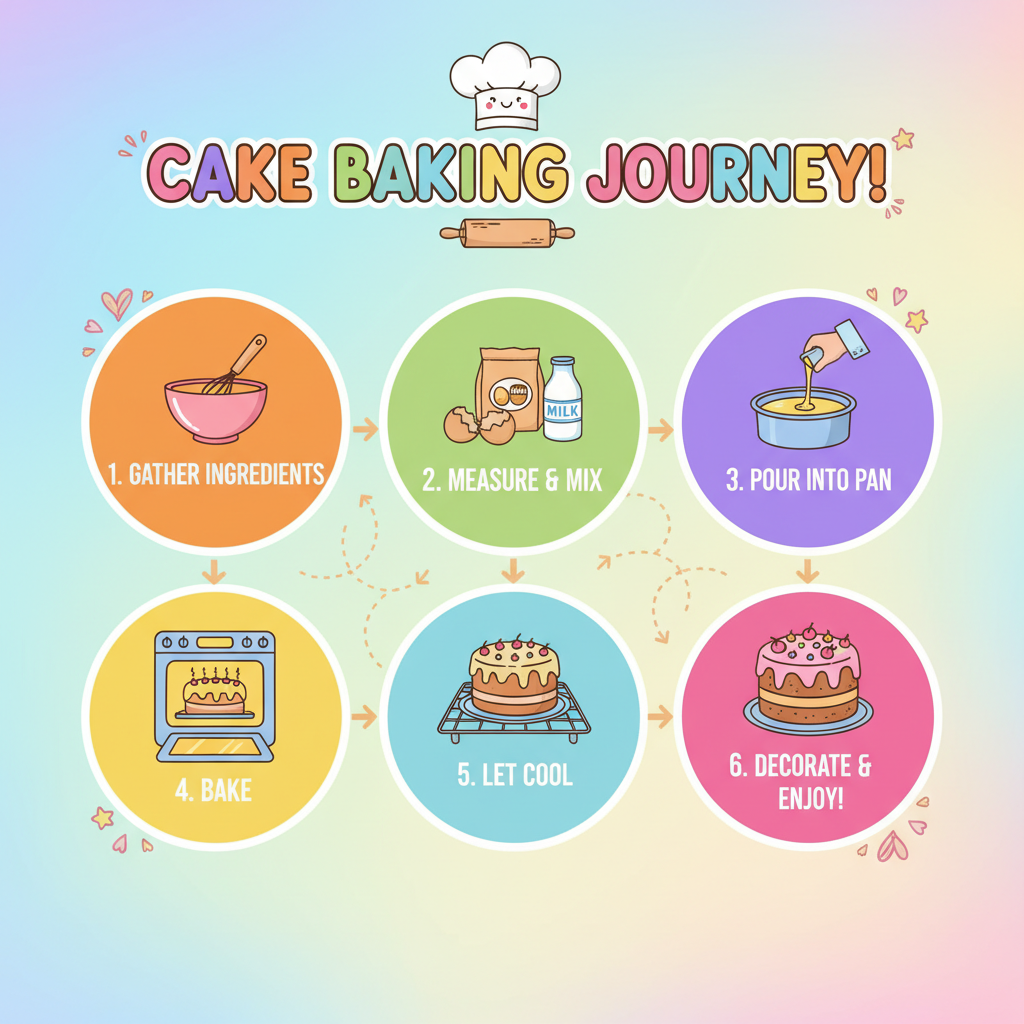
What if you tried to bake the cake *before* mixing the ingredients? Or added the eggs *after* the cake was already baked? You wouldn't end up with a delicious cake, would you? You'd have a big mess! The recipe's sequence of commands is super important for a yummy result.
In the same way, when you write code, you're giving the computer a 'recipe' for solving a problem or performing a task. Each command is an ingredient or a step, and the order you put them in determines if your computer 'bakes' a perfect solution or a digital disaster!
Why Does Order Matter So Much in Code?
The sequence of your commands is critical for a few big reasons:
-
Achieving the Right Outcome: If you want your character in a game to walk to a treasure chest, you need to tell it to 'move forward' a certain number of times, then 'turn,' then 'move forward' again. If you mix up the 'turn' and 'move forward' commands, your character might walk into a wall instead!
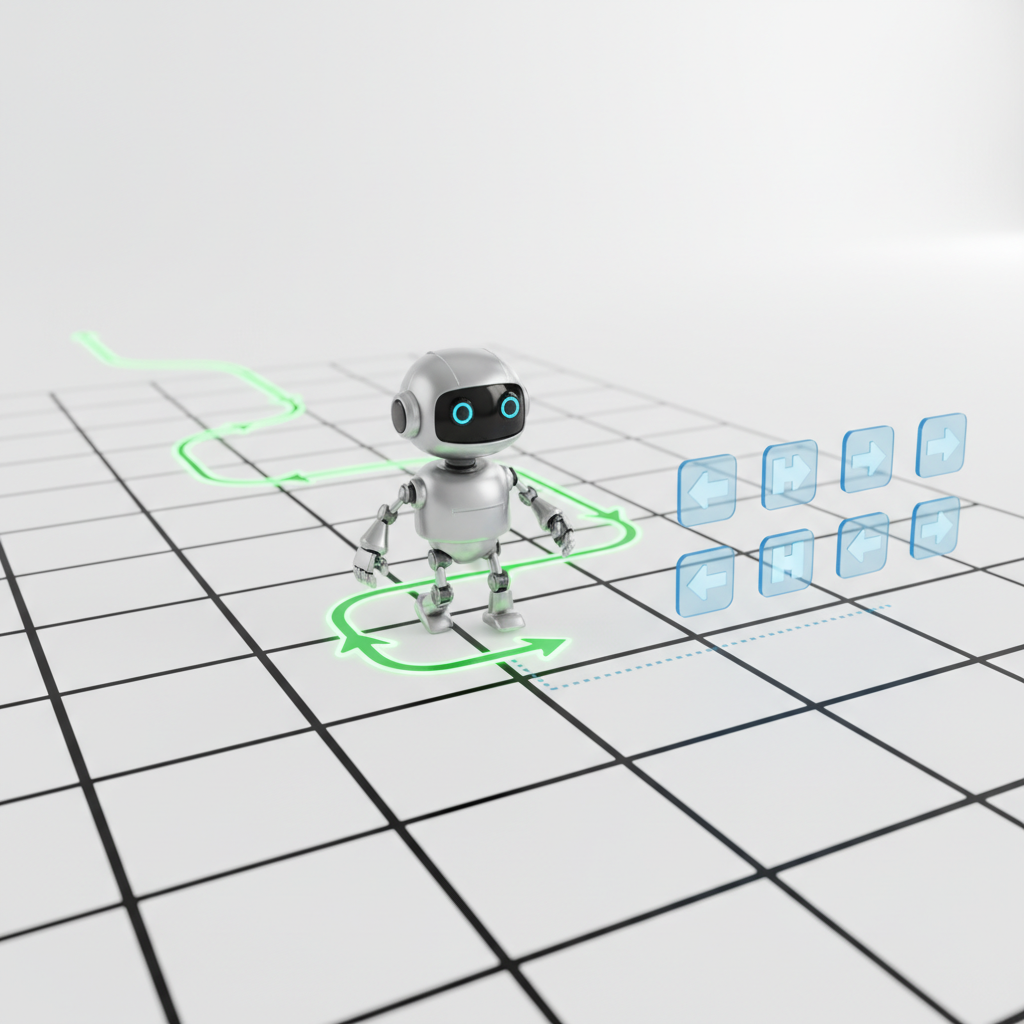
- Avoiding 'Bugs' (Errors): In coding, a 'bug' is a mistake. Most bugs happen because the computer was given instructions that were out of order, or missing, or didn't make sense. Fixing these bugs often means checking your sequence of commands.
- Making Sense to the Computer: Computers are very logical. They process one command, then the next, then the next, exactly as they are written. They don't try to guess your intention. So, if your sequence is messy, the computer will follow the messy instructions and give you a messy result.
Let's Practice a Simple Sequence!
Imagine you have a robot, and you want it to:
Task: Move forward two steps, then turn right, then move forward one step.
Here's the correct sequence of commands:
Move ForwardMove ForwardTurn RightMove Forward
What if you wrote this instead?
Turn RightMove ForwardMove ForwardMove Forward
The robot would turn right first, then walk three steps in that new direction. It wouldn't end up where you wanted it to go! This shows how a small change in sequence can lead to a completely different outcome.
Putting It All Together
Sequencing commands is one of the most fundamental skills in computer programming. It's about breaking down a big problem into smaller, manageable steps and then arranging those steps in the perfect order for the computer to follow. Just like following a recipe or getting ready for school, the right order makes all the difference.
As you continue your coding adventures, remember to always think: 'What step comes first? What comes next? What's the best order for these commands?' Master sequencing, and you'll be well on your way to becoming an amazing programmer!
Keep learning, free
Create a free Syllabax account to unlock practice questions and games for this topic.
Visual Learning Enhanced! 🚀
To help you master this topic, we use Advanced Syllabax AI to generate detailed diagrams and visual models.
Note on Visuals: The AI sometimes makes spelling errors in image labels. Please refer to the lesson text for the correct terminology.