Introduction to Robots
Watch this topic in 60 seconds
Free preview · Lesson 1
Understanding Introduction to Robots
Welcome to the World of Robots!
Hello, super curious learners! Today, we're going on an exciting adventure to meet some very special helpers: robots! You might have seen them in movies, cartoons, or maybe even in real life. But what exactly IS a robot? Let's find out!
What is a Robot? Your Super Helper Machine!
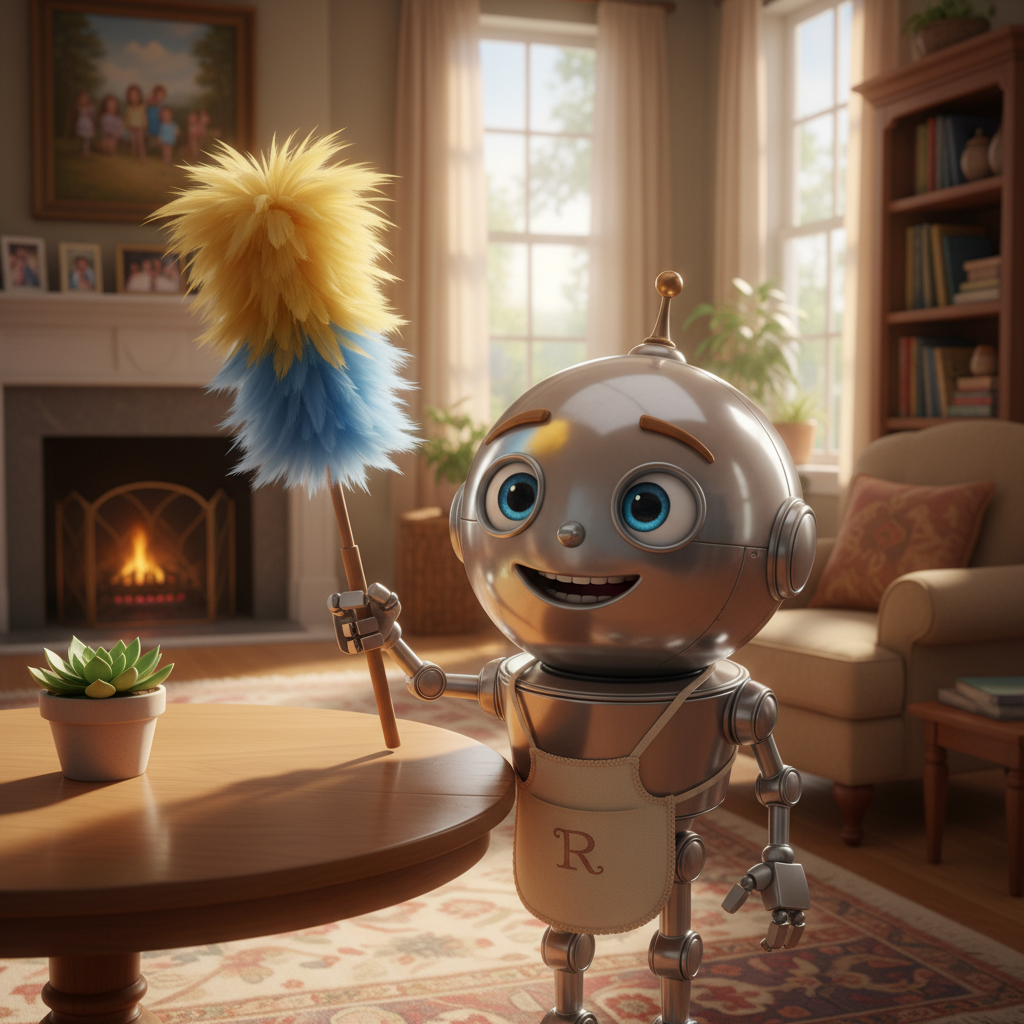
Imagine you have a toy car that can drive itself, or a vacuum cleaner that cleans your room all by itself. That's a little bit like a robot! A robot is a special kind of machine that is designed to do tasks and help humans. Think of them as super helpers! They can do jobs that are sometimes too hard, too dangerous, or even too boring for people to do all the time.
Just like a pet dog can fetch a ball, a robot can fetch things, build things, clean things, and even explore places far away. The big difference is that a robot doesn't have feelings, and it follows instructions given by people.
What Makes a Robot Work? The Amazing Parts!
Robots might look very different from each other, but most of them have some similar important parts, kind of like how we humans have a brain, eyes, and muscles!
- The Brain (Controller/Computer): Every robot has a 'brain,' which is usually a computer. This computer holds all the instructions, or 'code,' that tells the robot what to do, how to move, and when to start or stop. It's like the part of your brain that tells your hand to pick up a pencil!
- The Eyes and Ears (Sensors): How does a robot know what's happening around it? It uses 'eyes' and 'ears' called sensors! Some robots have cameras to 'see' things, just like your eyes. Others have microphones to 'hear' sounds. Some have special sensors that can feel if something is hot or cold, or if they are close to an object. These sensors help the robot understand its surroundings so it doesn't bump into things or can find what it's looking for.
- The Muscles and Movers (Actuators): Once the robot's brain decides what to do, it needs a way to move! That's where actuators come in. These are like a robot's muscles. They are often motors that can make wheels turn, arms lift, or grippers close. If a robot needs to walk, it uses motors in its 'legs.' If it needs to grab something, it uses motors in its 'hand' (which we often call a gripper or manipulator).
- The Body (Frame): All these amazing parts need something to hold them together! That's the robot's body or frame. It can be made of strong materials like metal or plastic, and it gives the robot its shape and helps protect its inner workings.
Where Do We Find Robots? Everywhere!
You might be surprised by how many places robots are used today! They aren't just science fiction anymore.
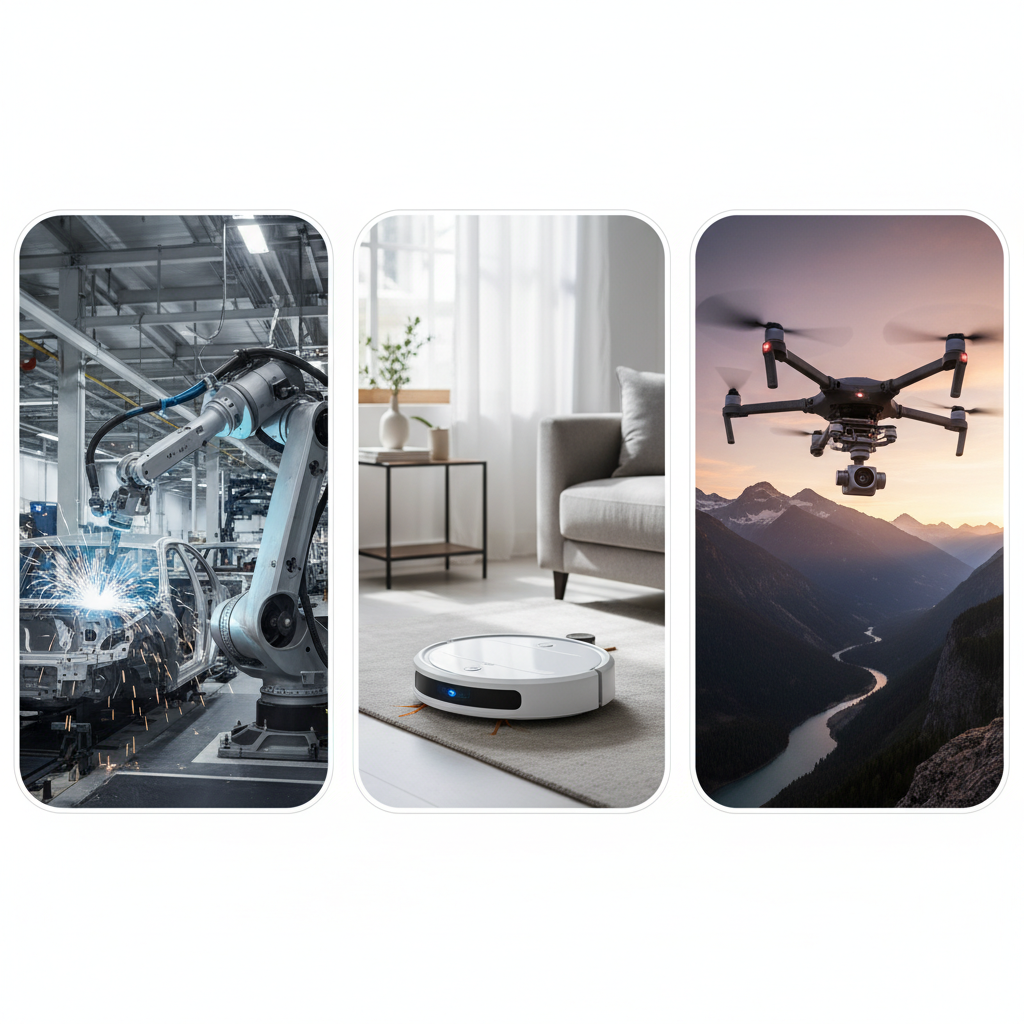
- In Factories: Many robots work in factories, building cars, making toys, or putting together electronics. They can do the same job over and over again very quickly and precisely, without getting tired. Imagine a robot arm picking up a part and placing it exactly right every single time!
- In Our Homes: Some robots help us at home. Have you ever seen a robot vacuum cleaner that zooms around the floor, sucking up dust all by itself? That's a robot! There are also robots that mow lawns or even clean windows.
- In Hospitals: Robots can help doctors and nurses! Some assist with surgeries, helping to make them very precise. Others can deliver medicines or clean hospital rooms, making sure everything is super sterile.
- Exploring Dangerous Places: Robots are excellent at going where it might be too dangerous for humans. They can explore volcanoes, deep oceans, or even other planets like Mars! These robots send back pictures and information, helping scientists learn new things.
- Fun and Games: Of course, some robots are made just for fun! Toy robots, robot pets, or robots that play games are all around us.
 ⚠️ This picture may have spelling mistakes. Trust the words in the lesson.
Are All Robots Shaped Like People? Not at All!
When you think of a robot, you might imagine something that looks exactly like a human, with two arms and two legs. But that's not always true! Robots come in all sorts of shapes and sizes, depending on the job they need to do.
- Some robots look like arms with grippers.
- Some look like small wheeled boxes.
- Some can fly, like drones!
- And yes, some are designed to look a bit like people, especially if they need to interact with us in a more human-like way.
The important thing is not what they look like, but what they do and how they help us. They are amazing tools that we design to make our lives easier, safer, and more interesting!
So, the next time you see a machine doing something awesome all by itself, think if it might be a robot – our incredible, helpful machines!
Keep learning, free
Create a free Syllabax account to unlock practice questions and games for this topic.
Visual Learning Enhanced! 🚀
To help you master this topic, we use Advanced Syllabax AI to generate detailed diagrams and visual models.
Note on Visuals: The AI sometimes makes spelling errors in image labels. Please refer to the lesson text for the correct terminology.