Diseases caused[BIOLOGY]
Watch this topic in 60 seconds
Free preview · Lesson 1
Understanding Diseases caused[BIOLOGY]
Understanding Diseases: Our Bodies' Battles!
Imagine your body is like a magnificent castle. It has strong walls (your skin!), a vigilant army (your immune system!), and efficient workers (your organs!). But sometimes, invaders try to sneak in and cause trouble. These invaders are called germs or pathogens, and when they attack our castle, we get sick. The trouble they cause is called a disease.
What is a Disease?
A disease is like a breakdown in the normal working of your body castle. It's when something goes wrong, making you feel unwell and unable to do all the things you normally can. Think of it like a glitch in your favorite video game that makes a character move funny or a level hard to complete. A disease disrupts the smooth running of your body.
The Invaders: Germs and Pathogens
The most common troublemakers are tiny, invisible creatures called germs. Scientists often call these harmful germs pathogens. They are so small you need a special microscope to see them. There are different types of these invaders:
- Bacteria: Imagine tiny, single-celled robots that can reproduce very quickly. Some bacteria are good and help us, like the ones that help digest our food. But some are bad and can cause infections like strep throat or ear infections.
- Viruses: These are even smaller than bacteria. Think of them like tiny, mischievous instruction manuals that can hijack your body's own machines (your cells) and force them to make more viruses. Common viruses cause the common cold, the flu, or chickenpox.
- Fungi: These are like tiny plants that don't need sunlight. Some fungi are harmless, but others, like the ones that cause athlete's foot, can cause infections on your skin.
- Protozoa: These are slightly larger single-celled organisms. Some can cause diseases like malaria, which is spread by mosquitoes.
How Do Diseases Spread? (The Invaders' Routes)
These invaders are clever and have many ways to get into our body castle. Here are some common routes:
- Direct Contact: Shaking hands with someone who is sick, or touching a contaminated surface and then touching your face. It's like a spy handing a secret message directly to another spy.
- Airborne Transmission: When someone coughs or sneezes, they release tiny droplets containing germs into the air. If you breathe these droplets in, you can get sick. This is like a secret code being whispered through the air.
- Contaminated Food or Water: Eating food or drinking water that has been touched by germs. Imagine a rotten apple in a basket of good ones – one bad apple can spoil the bunch if not removed!
- Vectors: Some diseases are spread by insects like mosquitoes or ticks. These are called vectors. They bite a sick person or animal and then bite a healthy person, passing on the germ. This is like a delivery service for germs!
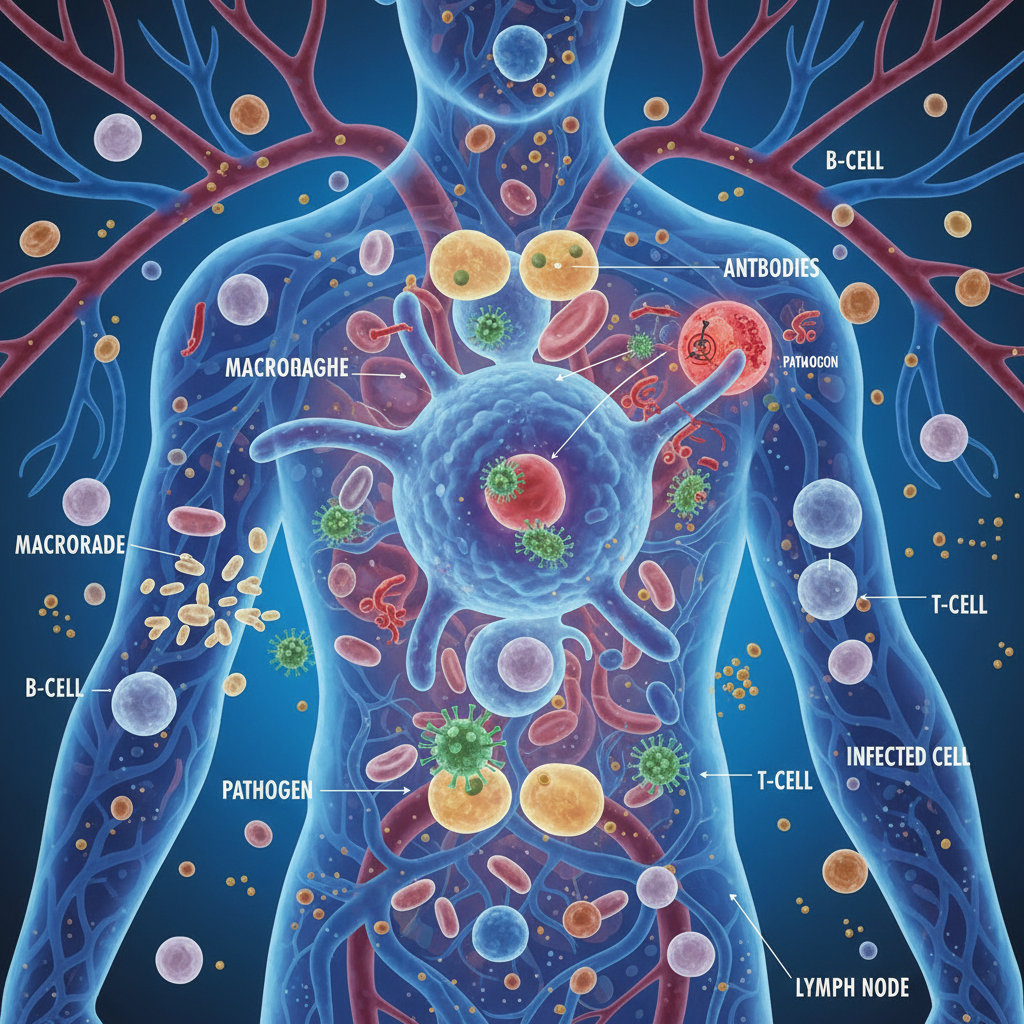 ⚠️ This picture may have spelling mistakes. Trust the words in the lesson.
Your Body's Defense: The Immune System!
Luckily, our body castle has a powerful defense system called the immune system. This is like the castle's brave knights and guards. The immune system has many parts that work together to:
- Identify Invaders: The immune system can recognize what belongs in the body and what is an invader. It's like the guards at the castle gates checking everyone's ID.
- Fight Invaders: Once an invader is identified, the immune system sends out specialized cells to attack and destroy it. These cells are like the knights who fight the enemy soldiers.
- Remember Invaders: After defeating an enemy, the immune system remembers what it looked like. This way, if the same invader tries to attack again, the immune system can fight it off much faster, often before you even feel sick. This is like the castle keeping a wanted poster of past attackers!
Types of Diseases
Diseases can be grouped into a few main categories:
- Infectious Diseases: These are the ones caused by pathogens (germs) like bacteria, viruses, fungi, or protozoa. They can often be spread from person to person. Examples include the flu, COVID-19, and the common cold.
- Non-infectious Diseases: These diseases are NOT caused by germs and cannot be spread from person to person. They are often caused by problems within the body itself, or by lifestyle or environmental factors. Examples include:
- Genetic Diseases: Problems that are passed down from parents through genes (like cystic fibrosis). Think of this as a slight design flaw in the castle's blueprints.
- Allergies: When the immune system overreacts to harmless substances like pollen or certain foods. It's like the castle guards mistaking a friendly visitor for an enemy and attacking them.
- Chronic Diseases: These are long-lasting conditions that may develop over time. Examples include diabetes (where the body has trouble controlling sugar levels) or heart disease. This is like a part of the castle slowly wearing down over many years.
- Deficiency Diseases: Caused by not getting enough of certain vitamins or minerals in your diet. Imagine the castle workers not getting the right tools – they can't maintain the castle properly.
Preventing Diseases: Keeping the Castle Safe!
The best way to deal with diseases is to prevent them from entering our body castle in the first place! Here are some ways we can stay healthy:
- Good Hygiene: Washing your hands frequently with soap and water is like cleaning the castle walls and gates to remove any lurking spies.
- Healthy Diet: Eating nutritious foods gives your immune system the energy and building blocks it needs to be strong. This is like ensuring the castle has plenty of supplies for its army.
- Exercise: Regular physical activity keeps your body strong and helps your immune system work efficiently. It's like training the castle guards so they are always ready.
- Vaccinations: Vaccines are like a training program for your immune system. They introduce a weakened or inactive part of a germ, so your immune system learns how to fight the real germ if it ever encounters it. This is like showing the guards a picture of the enemy so they know who to look out for.
- Avoiding Sick People: If someone is coughing or sneezing, it's wise to keep some distance, just like avoiding areas of the castle known to have an outbreak.
Understanding diseases helps us appreciate how amazing our bodies are and how important it is to take care of them!
Keep learning, free
Create a free Syllabax account to unlock practice questions and games for this topic.
Visual Learning Enhanced! 🚀
To help you master this topic, we use Advanced Syllabax AI to generate detailed diagrams and visual models.
Note on Visuals: The AI sometimes makes spelling errors in image labels. Please refer to the lesson text for the correct terminology.