Poultry, fisheries[BIOLOGY]
Watch this topic in 60 seconds
Free preview · Lesson 1
Understanding Poultry, fisheries[BIOLOGY]
Understanding Poultry and Fisheries: Farming for Food and Future
Welcome to the fascinating world of how we get some of our most common foods: chicken, eggs, and fish! In this lesson, we're going to explore two important practices that help feed millions of people around the globe: Poultry Farming and Fisheries. Both are branches of animal husbandry, which simply means taking care of animals for human benefit. Think of it like taking care of pets, but on a much larger scale, with the goal of producing food!
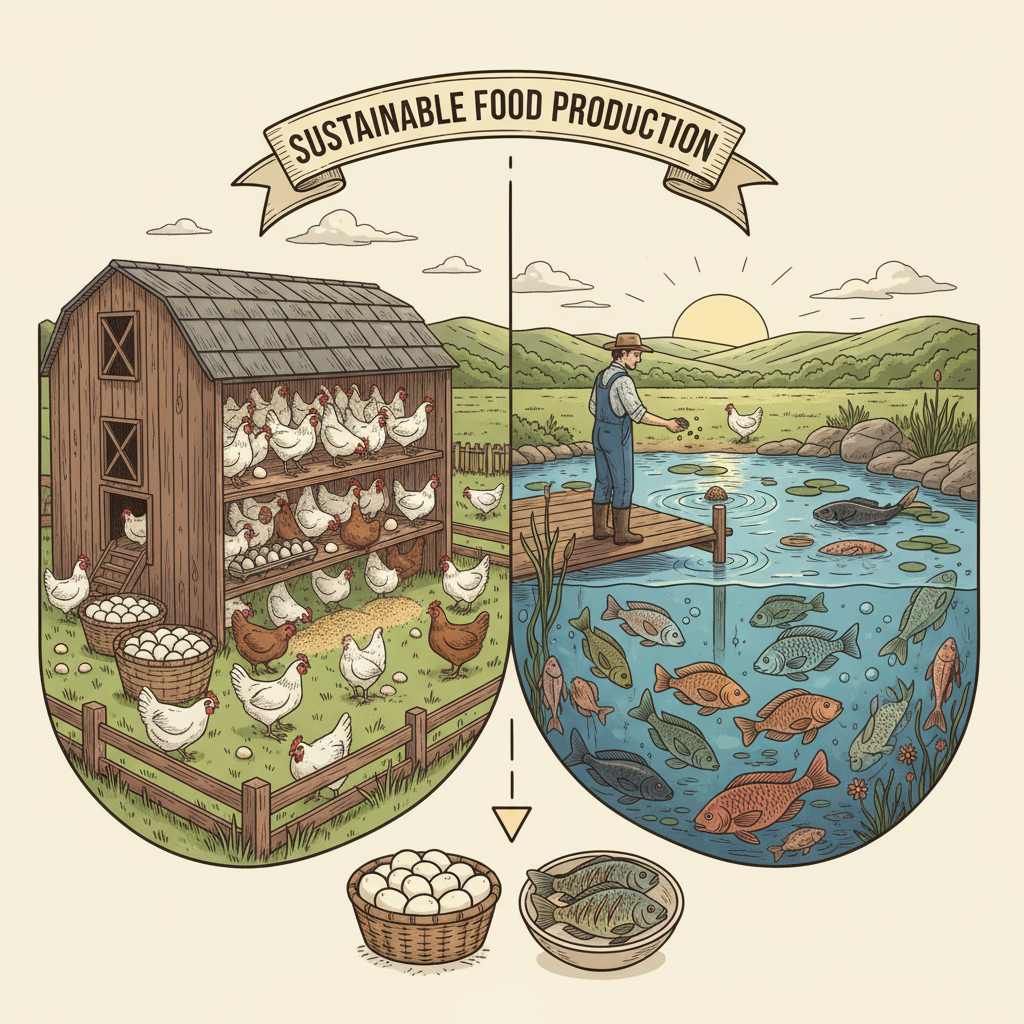
What is Poultry Farming?
Imagine a farm full of happy clucking chickens, ducks quacking by a pond, or turkeys gobbling away. This is essentially what poultry farming is! Poultry farming is the practice of raising domestic birds, such as chickens, ducks, turkeys, and geese, primarily for their meat and eggs. It's like having a special farm just for birds that give us delicious food.
Why Do We Farm Poultry? (The 'Products')
- Meat: Chicken meat is one of the most popular meats worldwide. Turkeys and ducks also provide tasty meat. These meats are excellent sources of protein, which our bodies need to grow and repair themselves. Think of protein as the building blocks for your muscles and other body parts!
- Eggs: Chicken eggs are a staple food in many diets. They are packed with protein, vitamins, and minerals. Eggs are versatile and can be cooked in countless ways – scrambled, boiled, fried, or baked into cakes!
- Feathers: While less common now, feathers were traditionally used for making pillows, cushions, and even quill pens.
Key Aspects of Successful Poultry Farming (Taking Care of Our Feathered Friends)
Just like you need a safe home, good food, and clean water to stay healthy, poultry birds need similar care. Farmers work hard to provide the best environment for their birds. Here are the core things:
1. Shelter and Housing:
Birds need a safe place to live that protects them from harsh weather (like heavy rain or strong sun) and predators (like foxes or wild dogs). The housing needs to be:
- Spacious: Enough room for the birds to move around comfortably. Overcrowding can stress them and spread diseases.
- Well-ventilated: Good airflow is essential to keep the air fresh and prevent the buildup of harmful gases. Imagine being in a stuffy room – birds don't like it either!
- Clean and Dry: Regular cleaning is crucial to prevent the growth of bacteria and parasites. Dry bedding (like straw or wood shavings) helps keep the birds comfortable and healthy.
- Safe: Secure from predators. This means strong walls, fences, and sometimes even nets.
Analogy: Think of their coop or shed as their very own apartment building, designed to keep them safe, dry, and comfortable, just like your home protects you!
2. Nutrition and Feed:
Birds need a balanced diet to grow well and produce lots of eggs. Their feed usually consists of grains (like corn, wheat), proteins (like soybean meal), vitamins, and minerals. The type of feed changes depending on the bird's age and purpose (e.g., egg-laying hens need different nutrients than young chicks growing for meat).
Analogy: Just like athletes need special diets to perform their best, or how growing teenagers need lots of nutrients, chickens also need specific nutrients to lay eggs or grow big and strong!
3. Water:
Fresh, clean water must be available to the birds at all times. Water is essential for digestion, regulating body temperature, and overall health. Contaminated water can quickly lead to sickness.
Analogy: This is simple – just like humans and every other living thing, birds can't survive without clean water. It’s their lifeblood, just like ours!
4. Health and Disease Management:
Diseases can spread rapidly in a flock, so farmers take many steps to keep their birds healthy:
- Vaccination: Birds are often vaccinated against common diseases, similar to how children get vaccinations to prevent illnesses.
- Hygiene: Keeping the farm clean is paramount. This includes disinfecting equipment and houses regularly.
- Isolation: Sick birds are isolated quickly to prevent diseases from spreading to the rest of the flock.
- Biosecurity: Measures to prevent diseases from entering the farm in the first place, like controlling who enters and leaves.
Analogy: Think of it like a school trying to prevent the flu from spreading – lots of hand washing, staying home when sick, and sometimes even flu shots! Farmers do the same for their birds.
5. Breeding:
Farmers select specific breeds of chickens or other poultry that are known for producing lots of eggs (layers) or growing quickly into meaty birds (broilers). This careful selection over generations has led to highly efficient poultry breeds.
What are Fisheries?
Now, let's dive into the water! Fisheries refers to the industry or activity of catching, breeding, processing, and selling fish, shellfish, and other aquatic animals. It's about getting food from oceans, rivers, lakes, and even specially built ponds.
Types of Fisheries
There are two main ways we get fish and other aquatic creatures:
1. Capture Fisheries:
This is like going hunting in the wild. Capture fisheries involve catching fish directly from natural water bodies – oceans, seas, rivers, and lakes. Fishermen use nets, hooks, and traps to catch wild fish. It's often unpredictable because you depend on what nature provides.
- Marine Fisheries: Catching fish from saltwater environments like oceans and seas. Examples of fish caught include sardines, mackerel, pomfret, and shrimp.
- Inland Fisheries: Catching fish from freshwater environments like rivers, lakes, ponds, and reservoirs. Examples include rohu, catla, and common carp.
Analogy: Imagine going into a vast forest to hunt for wild berries or mushrooms. You don't control where they grow, you just find and collect them. Capture fisheries are similar – you're 'hunting' for fish in their natural habitat.
2. Culture Fisheries (Aquaculture):
This is more like farming crops in a field. Culture fisheries, also known as aquaculture, involve rearing fish and other aquatic animals in controlled environments, such as ponds, tanks, or enclosures in lakes and seas. The farmer manages the entire life cycle of the fish, from breeding to harvesting.
- Pisciculture: Specifically refers to the farming of fish.
- Mariculture: Farming of marine organisms (like fish, shrimp, oysters) in saltwater environments.
- Freshwater Aquaculture: Farming of freshwater organisms (like carp, tilapia) in ponds, tanks, or rice fields.
Analogy: Instead of searching for wild berries, imagine planting a berry bush in your garden and carefully tending to it – watering it, fertilizing it, and protecting it from pests. Culture fisheries are like this, but for fish!
Key Aspects of Successful Fish Farming (Taking Care of Our Aquatic Friends)
Fish also have specific needs to grow healthy and strong:
1. Water Quality Management:
This is perhaps the most critical factor. Fish live and breathe in water, so its quality directly impacts their health. Farmers carefully monitor:
- Oxygen Levels: Fish need dissolved oxygen in the water to breathe, just like we need oxygen in the air. Low oxygen can kill fish.
- Temperature: Each species of fish has an ideal temperature range.
- pH Levels: How acidic or alkaline the water is. Extreme pH levels are harmful.
- Ammonia and Nitrates: Waste products from fish can build up and become toxic if not managed.
Analogy: Imagine trying to live in a room with very little fresh air, or where the air is full of smoke. You wouldn't last long! Fish depend entirely on the quality of their water environment in the same way.
2. Nutrition and Feed:
Farm-raised fish are given specially formulated feeds that provide all the necessary nutrients for growth. Some fish also feed on natural plankton and small insects present in the pond.
Analogy: Just like we give our children balanced meals to ensure they grow up healthy, fish farmers provide their fish with special pellets packed with nutrients.
3. Pond/Tank Management:
For pond farming, this includes:
- Construction and Maintenance: Ensuring the pond is properly built and doesn't leak.
- Predator Control: Protecting fish from birds, snakes, and other predators.
- Weed Control: Preventing excessive growth of aquatic weeds that can consume oxygen and nutrients.
- Stocking Density: Not putting too many fish in one area, as this can lead to stress, disease, and oxygen depletion.
4. Breeding and Seed Production:
Farmers either collect fish eggs and young fish (called 'seed' or 'fry') from natural sources or, more commonly, breed fish in hatcheries under controlled conditions. This ensures a steady supply of healthy young fish to grow.
The Importance of Poultry and Fisheries
Both poultry farming and fisheries are vital for human societies for several reasons:
- Food Security: They provide a reliable source of high-quality protein, which is essential for human health, growth, and development.
- Nutrition: Eggs and poultry meat are rich in protein and various vitamins. Fish is an excellent source of protein, healthy fats (like Omega-3 fatty acids, good for brain and heart health), and essential vitamins and minerals.
- Economic Benefits: These industries provide livelihoods for millions of people, from farmers and fishermen to processors, distributors, and sellers. They contribute significantly to national economies.
- Rural Development: They often thrive in rural areas, providing employment and income opportunities where other industries might be scarce.
In summary, poultry farming and fisheries are not just about raising animals; they are complex systems of care, science, and economics that bring food to our tables and support countless communities. Understanding these practices helps us appreciate the journey of our food and the efforts involved in sustainable food production.
Keep learning, free
Create a free Syllabax account to unlock practice questions and games for this topic.
Visual Learning Enhanced! 🚀
To help you master this topic, we use Advanced Syllabax AI to generate detailed diagrams and visual models.
Note on Visuals: The AI sometimes makes spelling errors in image labels. Please refer to the lesson text for the correct terminology.