What is Coding? Introduction to Algorithms
Watch this topic in 60 seconds
Free preview · Lesson 1
Understanding What is Coding? Introduction to Algorithms
What is Coding? An Introduction to Algorithms!
Hey there, young explorers of the digital world! Have you ever played a video game, used a cool app on a tablet, or watched an amazing animated movie? All of these incredible things happen because of something called coding! Today, we're going to unlock the secrets of coding and meet its best friend: the algorithm.
What is Coding? Giving Instructions to Computers!
Imagine you want to bake your favorite cookies. You can't just throw all the ingredients into a bowl and expect delicious cookies, right? You need a recipe! A recipe tells you exactly what to do, step-by-step: first, mix the butter and sugar; then, add the eggs; after that, mix in the flour, and so on.
Coding is a lot like writing a recipe, but for a computer! Computers are super smart, but they don't understand human languages like English or Spanish. They need very specific instructions, written in a special language they *can* understand. These instructions tell the computer exactly what to do, from showing a picture on a screen to making a character jump in a game.
Think of yourself as the chef, and the computer is your assistant. You give your assistant a recipe (code), and they follow it perfectly to make something amazing happen! Without code, computers wouldn't know how to do anything at all. No games, no apps, no internet – nothing! So, coders are like the master chefs of the digital world, writing the recipes for all the cool technology we use every day.
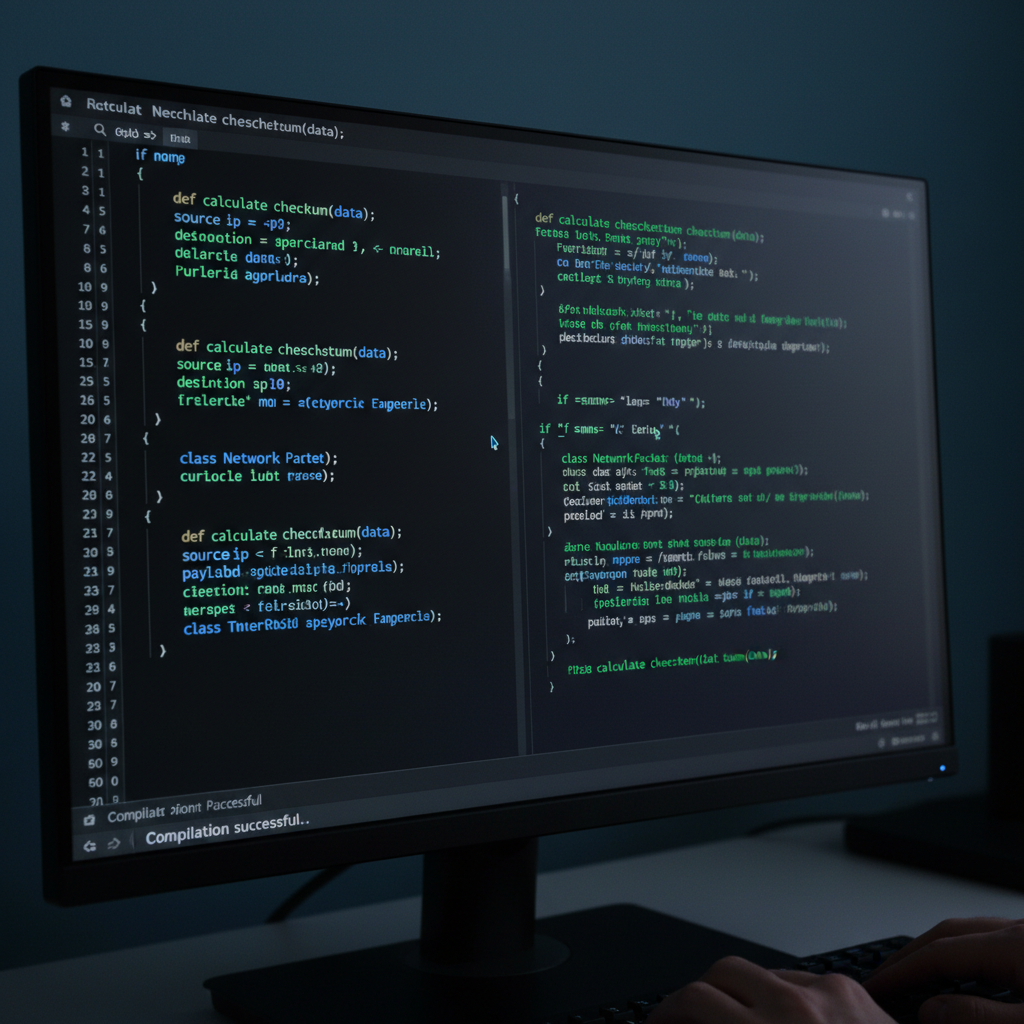 ⚠️ This picture may have spelling mistakes. Trust the words in the lesson.
Programs: A Whole Book of Instructions!
When you put a bunch of coding instructions together, step-by-step, you create a program. A program is just a complete set of instructions that tells the computer how to perform a whole task, like running a video game or an app. So, a video game isn't just one instruction; it's thousands and thousands of instructions all working together!
Imagine you're building a LEGO castle. The entire instruction booklet for building the castle is like a program. Each step in the booklet is a piece of code. When you follow all the steps in order, you end up with a magnificent castle – just like a computer follows all the code in a program to create a magnificent app or game!
Meet the Algorithm: The Master Plan!
Now, let's talk about the brain behind the code – the algorithm! An algorithm is a fancy word for a simple idea: it's a step-by-step plan or set of rules for solving a problem or completing a task. Before you even start writing any code, you need to have a clear algorithm.
Let's use an everyday example: getting ready for school in the morning. What's your algorithm for that?
- Wake up
- Brush your teeth
- Get dressed
- Eat breakfast
- Pack your backpack
- Go to school
That's an algorithm! It's a clear, step-by-step plan that you follow to get ready for school. If you skip a step, like eating breakfast, your plan might not work out so well!
Another great example is making a peanut butter and jelly sandwich:
- Get two slices of bread.
- Get peanut butter and jelly.
- Get a knife.
- Spread peanut butter on one slice of bread.
- Spread jelly on the other slice of bread.
- Put the two slices of bread together.
- Enjoy your sandwich!
See? An algorithm is just a really detailed plan. Computers need these plans to be super clear because they can't guess what you mean. Every single step must be spelled out.
Why Are Algorithms So Important for Computers?
Computers are powerful, but they are also very literal. They will only do *exactly* what you tell them to do. They can't think for themselves or make assumptions. So, if your algorithm isn't clear, complete, and in the right order, the computer will get confused or do something you didn't expect.
Imagine you tell a robot to make your bed. If your algorithm is just "Make the bed!" the robot wouldn't know what to do. Does it smooth the sheets? Pull up the blanket? Arrange the pillows? It needs a detailed algorithm, like:
- Pull the fitted sheet tight.
- Smooth the top sheet over the fitted sheet.
- Pull the blanket over the top sheet.
- Place the pillows at the head of the bed.
This detailed plan is what allows the robot (or computer) to complete the task successfully. That's why coders spend a lot of time designing their algorithms *before* they even start writing the actual code. The better the algorithm, the better the program will be!
Coding is Writing Algorithms for Computers!
So, here's the big connection: An algorithm is the plan, and coding is how you write that plan down for the computer to follow.
- First, you think about the problem you want to solve or the task you want the computer to do.
- Next, you create a step-by-step algorithm – your master plan!
- Finally, you translate that algorithm into a computer language (code) so the computer can understand and execute it.
When you play a game, an algorithm determines how your character moves. When you search for something online, an algorithm helps find the best results. When you use a drawing app, an algorithm processes your brush strokes. Algorithms are everywhere in the digital world, working behind the scenes to make everything run smoothly.
Time to Be a Coder!
Now you know that coding isn't just magic; it's about giving clear instructions to computers. And the best instructions come from well-thought-out algorithms! Even simple tasks have algorithms. Start noticing the step-by-step processes around you. You're already thinking like a coder!
Keep exploring, keep questioning, and maybe one day you'll be writing the next amazing game or app that everyone loves, all thanks to your awesome coding skills and clever algorithms!
Keep learning, free
Create a free Syllabax account to unlock practice questions and games for this topic.
Visual Learning Enhanced! 🚀
To help you master this topic, we use Advanced Syllabax AI to generate detailed diagrams and visual models.
Note on Visuals: The AI sometimes makes spelling errors in image labels. Please refer to the lesson text for the correct terminology.