Classification (domestic/wild, land/water/air animals) (Animals)
Watch this topic in 60 seconds
Free preview · Lesson 1
Understanding Classification (domestic/wild, land/water/air animals) (Animals)
Let's Sort Animals! An Adventure in Classification for 4th Graders
Hey there, young explorers! Have you ever had a big box of LEGOs or a pile of your favorite books that needed sorting? Maybe you put all the red bricks together, or all the adventure stories on one shelf and fairy tales on another. That's exactly what we're going to do today with animals! Just like you organize your toys or books to make them easier to find and understand, scientists (and us!) classify animals to learn more about them and how they live in our amazing world.
Think of it like sorting your clothes. You wouldn't put your socks with your t-shirts, right? You have a special drawer for socks, a hanger for shirts, and a shelf for pants. Animals are similar! We can put them into different 'drawers' or 'shelves' based on how they live and where they like to be. Today, we're going to learn two big ways to sort animals: first, if they live with people or in the wild, and second, if they live on land, in water, or in the air.
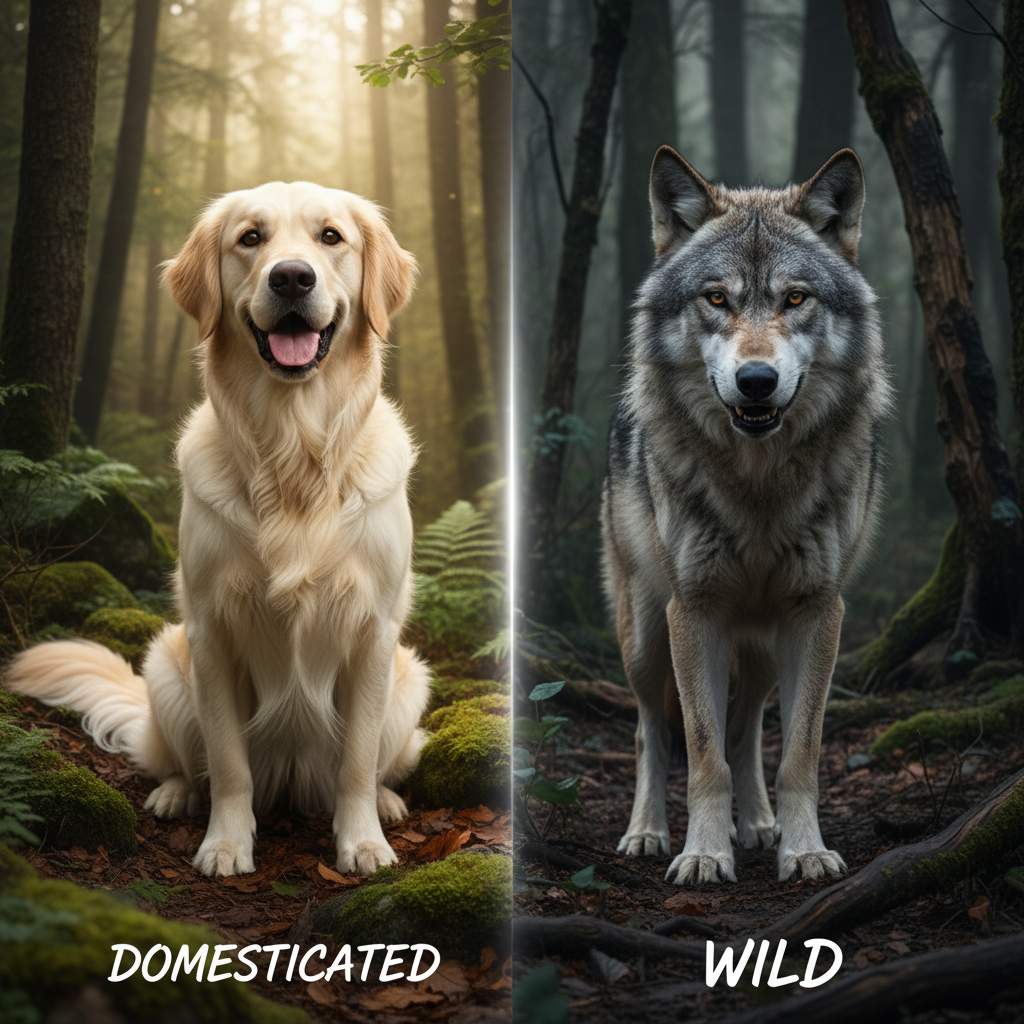
Drawer 1: Domestic Animals vs. Wild Animals
This is one of the easiest ways to start sorting animals. It's like deciding if a toy belongs inside your house or if it's a toy you'd only use outside, far away from people!
Domestic Animals: Our Animal Friends and Helpers
Imagine your pet dog or cat curled up on the couch. Or perhaps you've seen cows grazing peacefully on a farm, or horses pulling a cart. These are all examples of domestic animals. What makes an animal domestic?
- They live with or near humans.
- Humans take care of them, providing food, water, and shelter.
- They are often friendly and used to being around people.
- Many help humans with jobs (like dogs herding sheep) or provide things like milk (cows) or eggs (chickens).
- They've been tamed over many, many years to live alongside us.
Think of domestic animals like members of a big family who all live together in a cozy house. They depend on each other, and the humans provide for the animals, just like parents take care of their children. Examples include dogs, cats, cows, chickens, horses, sheep, and even pet hamsters or fish!
Wild Animals: Nature's Free Spirits
Now, picture a mighty lion roaring in the African savanna, a graceful deer leaping through a forest, or a colorful fish swimming in the deep ocean. These are wild animals. They live a very different life from domestic animals.
- They live in nature, like forests, jungles, deserts, mountains, or oceans.
- They find their own food, water, and shelter (like building their own nests or dens).
- They are not usually tamed and can be dangerous if approached.
- They live independently, without much help from humans.
Wild animals are like adventurous explorers who live independently in the vast wilderness. They hunt for their own food, find their own homes, and raise their babies without human interference. They are an important part of the natural world, and we must respect their space. Examples include lions, tigers, elephants, wolves, bears, sharks, and eagles.
It's important to remember that while a domestic animal like a dog might have ancestors who were wild wolves, they have changed over time to be good companions for humans. A wild wolf is very different from your pet dog!
Drawer 2: Land, Water, and Air Animals
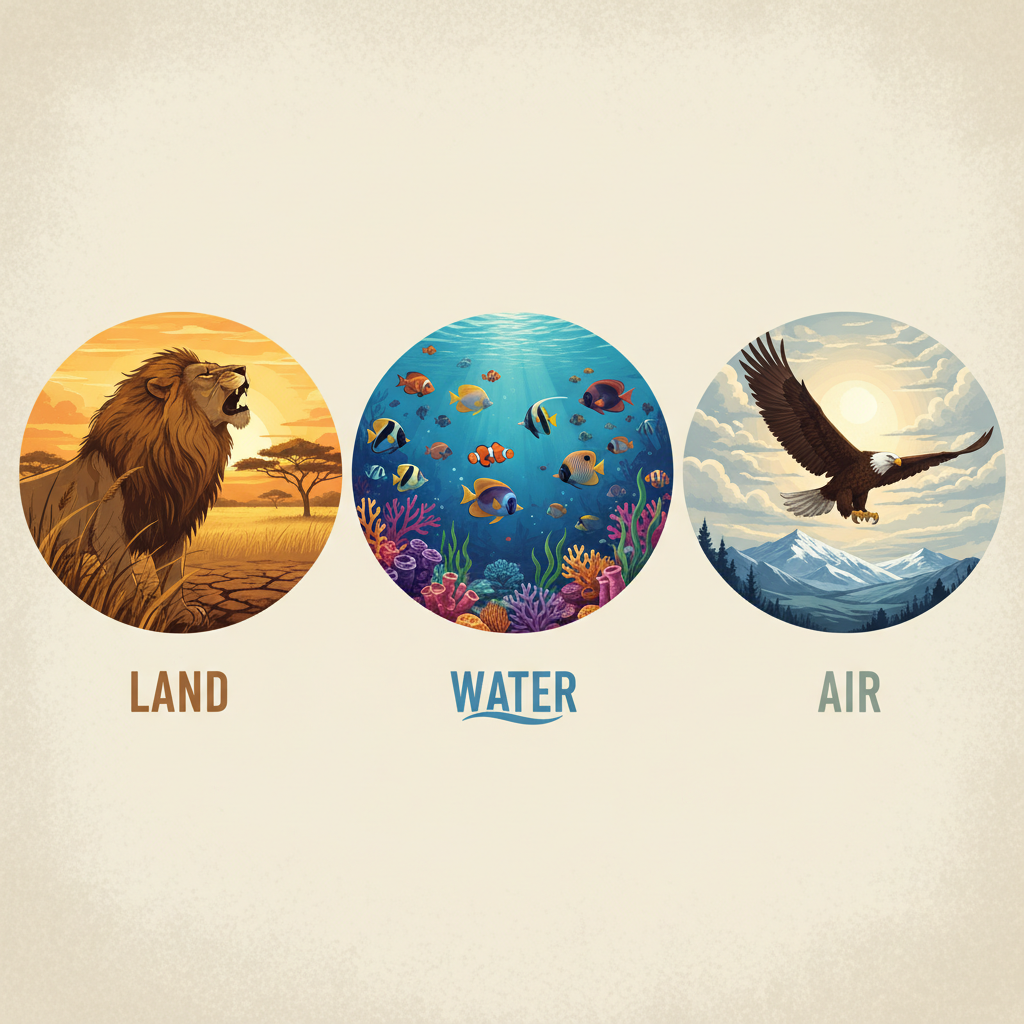
Now let's sort animals based on where they primarily like to hang out and live! This is like deciding if a toy is for playing on the ground, in a swimming pool, or if it's a flying toy. Each place has special features, and animals have amazing body parts that help them live best in their chosen home.
Land Animals (Terrestrial Animals)
Most of the animals you see every day, like squirrels scampering up trees, ants marching on the sidewalk, or even you and your friends, are land animals. They spend most of their lives on the ground.
- They usually have legs to walk, run, or jump.
- They breathe air using lungs, just like us.
- Their bodies are designed for living on solid ground, sometimes with fur or skin to protect them from weather.
Think of land animals like cars or bicycles. They are built for moving around on roads and paths. From tiny insects to gigantic elephants, most animals you'd encounter in a forest, desert, or even your backyard are land animals. Snakes, although they don't have legs, still move on land!
Water Animals (Aquatic Animals)
Dive deep into an ocean, river, or lake, and you'll find a whole different world filled with water animals! These incredible creatures have special adaptations that help them survive underwater.
- They typically have fins or flippers to help them swim.
- Many breathe underwater using gills (like fish), which are special organs that take oxygen out of the water.
- Their bodies are often streamlined (smooth and sleek) to help them move easily through water.
Imagine water animals like boats or submarines. They are designed to move through water with ease. Fish, sharks, whales, dolphins, octopuses, and crabs are all fantastic examples of water animals. Even animals like frogs and turtles, who can live both on land and in water, spend a significant amount of their lives in water!
Air Animals (Aerial Animals)
Look up into the sky! What do you see? Birds soaring high above, tiny buzzing bees, or maybe a swift bat flying at dusk. These are air animals, meaning they spend a lot of their time flying!
- They have wings to help them fly.
- Their bodies are often lightweight, and they have strong muscles for flapping their wings.
- They breathe air with lungs, just like land animals, but they use the air for flight!
Think of air animals like airplanes or kites. They are built to move through the sky! Birds of all shapes and sizes, bats (which are mammals, not birds!), and most insects like butterflies, bees, and dragonflies are great examples of air animals.
Some animals are tricky! Like a frog that lives both in water and on land, or a bird that flies but also walks on the ground to find food. When we classify them, we usually think about where they spend MOST of their time or where their main home is.
Why Do We Classify Animals?
Just like sorting your LEGOs helps you find the right piece for your spaceship, classifying animals helps us understand the natural world better. It helps us:
- Understand their lives: Knowing if an animal is wild or domestic tells us how it gets food and interacts with humans. Knowing if it lives on land, water, or air tells us about its special body parts and challenges.
- Protect them: If we know where an animal lives and how it lives, we can do a better job of protecting their homes and ensuring they have what they need to survive.
- Learn new things: It helps scientists study animals around the world and discover new facts about them.
So, the next time you see an animal, whether it's your pet or a bird flying outside, take a moment to think: Is it domestic or wild? Does it live on land, in water, or in the air? You're already becoming an expert animal classifier!
Keep learning, free
Create a free Syllabax account to unlock practice questions and games for this topic.
Visual Learning Enhanced! 🚀
To help you master this topic, we use Advanced Syllabax AI to generate detailed diagrams and visual models.
Note on Visuals: The AI sometimes makes spelling errors in image labels. Please refer to the lesson text for the correct terminology.