Corrosion[CHEMISTRY]
Watch this topic in 60 seconds
Free preview · Lesson 1
Understanding Corrosion[CHEMISTRY]
Welcome, future chemists! Today, we're going to unravel a common mystery that happens all around us – something that makes metal bridges weaken, bicycles rust, and even your grandma's silver jewelry lose its sparkle. This phenomenon is called Corrosion. Don't worry, we'll break it down into simple terms, like solving a puzzle piece by piece!
What is Corrosion? Imagine Metal Getting "Sick"!
Think of corrosion as a slow, silent enemy that attacks metals. Just like how you might get sick if you're exposed to bad weather without protection, metals can "get sick" when exposed to certain elements in their environment. When a metal gets "sick" in this way, it slowly degrades, breaks down, and turns into something else – often weaker or less useful.
Definition: In chemistry terms, Corrosion is the gradual destruction of materials (usually metals) by chemical reactions with their environment. It's a natural process where a refined metal converts to a more stable form, such as its oxide, hydroxide, or sulfide. Essentially, metals are trying to go back to their natural, unrefined state, like how they are found in rocks in the ground!
The "Why" Behind the Sickness: Metals Longing for Stability
To understand why corrosion happens, we need to peek into the secret life of metals. Most metals we use every day – like iron for bridges, copper for wires, or silver for jewelry – don't naturally exist in their pure metallic form on Earth. They are usually found combined with other elements in rocks, called ores. For example, iron is found as iron oxide (rust) in its ore.
When we extract pure metal from these ores, we put a lot of energy into them. It's like forcing a round peg into a square hole – it wants to go back to its natural, stable state. Corrosion is the metal's way of "relaxing" and returning to a more stable form, often by combining with oxygen and water from the air. This process is essentially a chemical reaction where the metal loses electrons (we call this oxidation) and reacts with its surroundings.
Different Ways Metals "Get Sick": Common Types of Corrosion
Corrosion isn't just one type of "sickness." Different metals can react differently and show different symptoms. Here are some common examples:
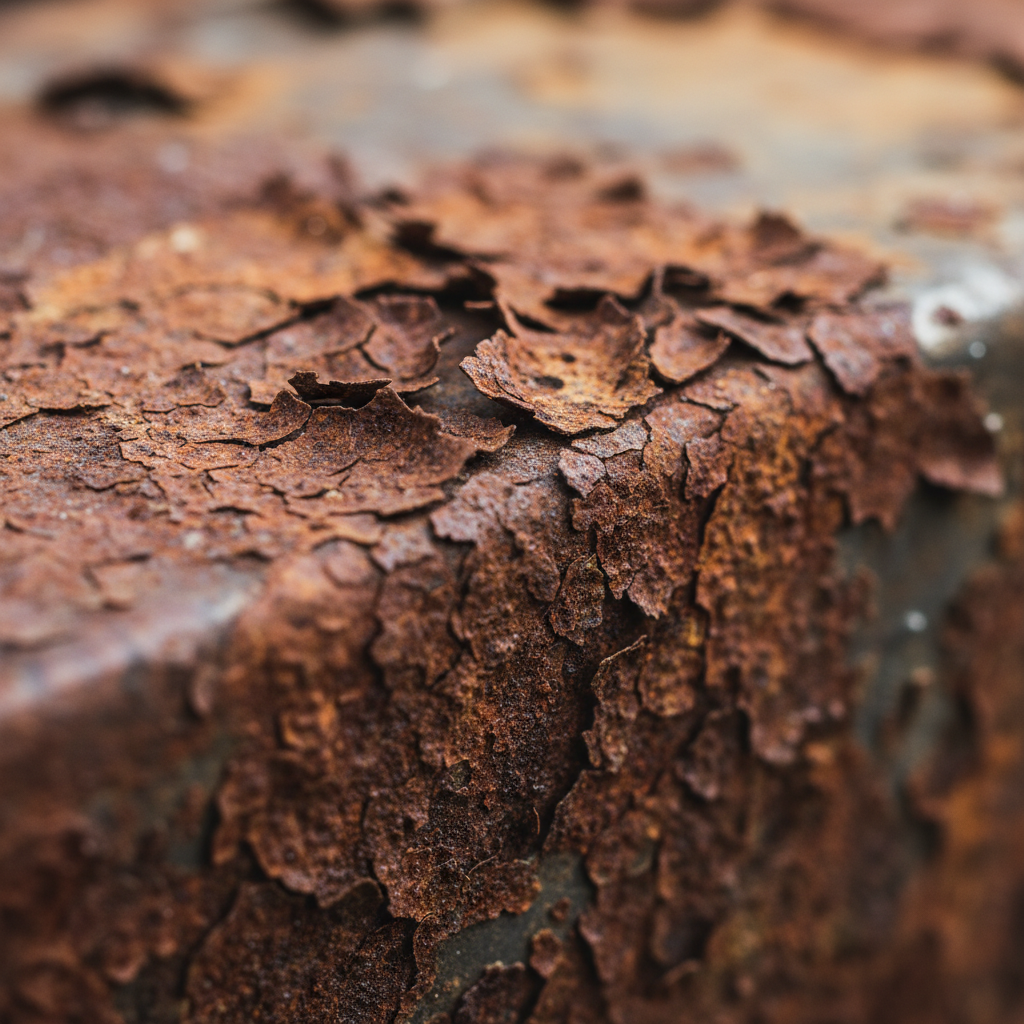
1. Rusting (The Most Famous "Sickness" of Iron)
When we talk about corrosion, the first thing most people think of is rust. Rust is the common name for the corrosion of iron and its alloys, like steel. It's a reddish-brown, flaky substance.
- What happens? Iron reacts with oxygen in the air and water (or moisture) to form iron oxides (specifically, hydrated iron(III) oxide).
- Analogy: Imagine your iron bicycle chain is like a superhero that needs to stay strong. If you leave it out in the rain without protection, the oxygen and water are like tiny villains that chip away at its strength, turning it into crumbly, reddish dust. This dust is rust!
- Key Ingredients for Rust: Iron, Oxygen, and Water. Take any one away, and rusting slows down or stops.
2. Tarnishing (Silver Losing its Sparkle)
Have you ever noticed your silver spoon or jewelry turning dull and blackish over time? That's tarnishing!
- What happens? Silver reacts with sulfur compounds (like hydrogen sulfide gas, which is naturally present in small amounts in the air, especially from polluted environments or even some foods like eggs). This forms a thin, dark layer of silver sulfide on the surface.
- Analogy: Think of your shiny silver ring as a mirror. Over time, tiny invisible dust particles (sulfur compounds) settle on it and react, creating a dark, hazy film that makes the mirror lose its reflection.
3. Verdigris (Copper's Green "Jacket")
Look at old copper statues or even old copper roofs – they often have a beautiful greenish-blue coating. This coating is called verdigris.
- What happens? Copper reacts with oxygen, carbon dioxide, and water in the air to form copper carbonates. This protective layer is actually quite stable and helps prevent further corrosion of the copper underneath!
- Analogy: Imagine copper as a person who, when exposed to the elements, grows a special green "jacket." This jacket might change its appearance, but it actually helps keep the person warm and safe from further cold!
What Makes Metals "Sick" Faster? Factors Affecting Corrosion
Just like some conditions make people more prone to getting sick, certain factors can speed up the process of corrosion:
- Presence of Water/Moisture: Water is often a crucial ingredient for corrosive reactions. The more humid the environment, the faster corrosion can occur. Think of how quickly a wet iron nail rusts compared to a dry one.
- Presence of Oxygen: Most corrosive reactions, especially rusting, require oxygen. Metals react with oxygen to form oxides.
- Presence of Impurities and Electrolytes (like Salts): Saltwater makes metals corrode much faster than fresh water. This is because salts dissolve in water to form ions, creating an electrolyte solution. Electrolytes are like superhighways for the chemical reactions involved in corrosion, making electrons move faster. That's why cars near the ocean or roads treated with salt in winter often rust quicker.
- Temperature: Generally, higher temperatures speed up chemical reactions, including corrosion.
- Acidity (pH): Acidic environments (low pH) tend to accelerate corrosion.
The Damage Done: Consequences of Corrosion
Corrosion isn't just about things looking old or dull; it has serious consequences:
- Structural Damage: Corroded bridges, pipelines, and buildings become weak and can collapse, posing huge safety risks.
- Economic Loss: Billions of dollars are spent worldwide every year to repair or replace corroded structures and products. Think of replacing rusted car parts or repairing corroded pipes.
- Safety Hazards: Leaking pipelines (due to corrosion) can cause environmental damage or even explosions. Corroded medical implants can be dangerous.
- Waste of Resources: Metals that corrode are essentially wasted, requiring more mining and processing to replace them.
Fighting Back: How to Prevent Corrosion
Good news! We're not helpless against corrosion. There are many clever ways to protect metals and keep them "healthy":
- 1. Painting, Greasing, or Oiling (The "Raincoat" Method):
- How it works: Applying a layer of paint, grease, or oil creates a physical barrier between the metal and the corrosive environment (oxygen and water). It's like putting a raincoat on the metal!
- Examples: Painting car bodies, greasing bicycle chains, oiling tools.
- 2. Galvanizing (The "Bodyguard" Method):
- How it works: This is a special method where a layer of zinc is applied to iron or steel. Zinc is more reactive than iron, meaning it will corrode first, "sacrificing" itself to protect the iron underneath. Even if the zinc coating gets scratched, it will still protect the iron.
- Analogy: Imagine zinc as a loyal bodyguard for iron. When the "villains" (oxygen and water) attack, the zinc bodyguard steps in and takes all the hits, keeping the iron safe!
- Examples: Galvanized buckets, corrugated iron sheets for roofing.
- 3. Electroplating (The "Thin Armor" Method):
- How it works: A thin layer of a less reactive metal (like chromium, nickel, or tin) is deposited onto a more reactive metal using electricity. This creates a protective, often shiny, coating.
- Examples: Chrome-plated car bumpers, tin cans (steel coated with tin).
- 4. Alloying (The "Strong Team" Method):
- How it works: Mixing two or more metals (or a metal and a non-metal) to create an alloy can significantly improve corrosion resistance.
- Example: Stainless steel is an alloy of iron with chromium and nickel. The chromium forms a very thin, invisible, and protective oxide layer on the surface, making stainless steel highly resistant to rust. It's like building a super-strong, united team that's harder for corrosion to defeat!
Wrapping Up: Corrosion in a Nutshell
Corrosion is a natural chemical process where metals react with their environment, primarily oxygen and water, to return to a more stable state. It weakens structures, causes economic loss, and poses safety risks. However, by understanding how it works, we can employ various strategies like painting, galvanizing, electroplating, and alloying to protect our precious metals and extend their useful life. So, the next time you see a rusty nail or a shiny new car, you'll know a little more about the silent battle against corrosion!
Keep learning, free
Create a free Syllabax account to unlock practice questions and games for this topic.
Visual Learning Enhanced! 🚀
To help you master this topic, we use Advanced Syllabax AI to generate detailed diagrams and visual models.
Note on Visuals: The AI sometimes makes spelling errors in image labels. Please refer to the lesson text for the correct terminology.