Light helps us see (Light-Intro)
Watch this topic in 60 seconds
Free preview · Lesson 1
Understanding Light helps us see (Light-Intro)
Light Helps Us See! A Bright Idea for 2nd Graders!
Hello, super scientists! Have you ever wondered how you can see your favorite toys, read a book, or watch a butterfly fly by? The secret is something amazing called light! Let's go on an adventure to discover how light helps our eyes and our brain understand the wonderful world around us.
What is Light? (It's Like a Super-Fast Helper!)
Imagine you want to send a secret message across the room to your friend. You might write it down and throw it, or maybe whisper it. Well, light is kind of like a super-fast messenger! It's a type of energy that travels really, really quickly. We can't touch light, but we can definitely see its effects!
Think about when you turn on a flashlight in a dark room. BOOM! Suddenly, you can see things! That's light doing its job, zooming around and showing you what's there. It's not a thing you can hold, but it makes seeing possible.
How Light Helps Our Eyes See (It's a Team Effort!)
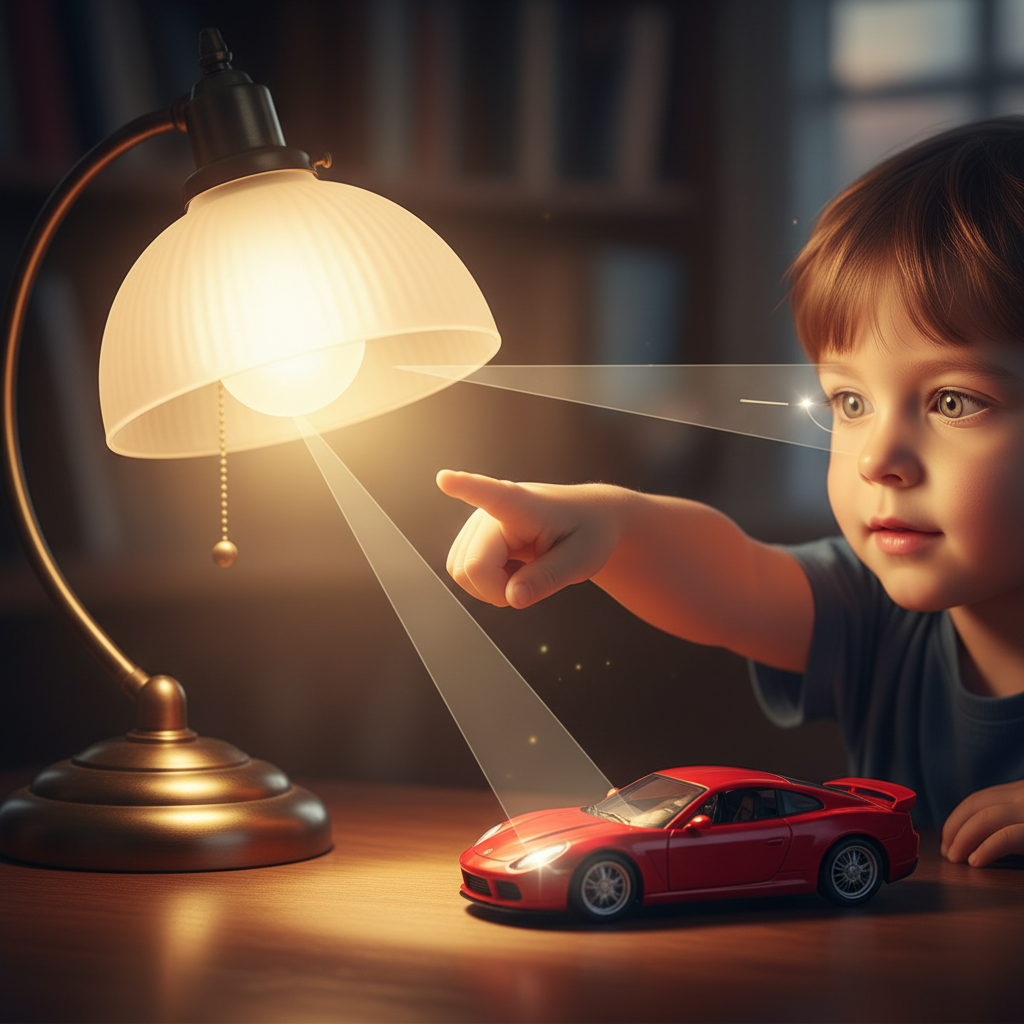
Seeing isn't just about your eyes; it's a team effort with light! Here's how it works, step-by-step:
- Step 1: Light Comes From a Source. First, we need light! Light comes from different places, called light sources. The biggest and most important light source for us is the Sun! But we also get light from lamps, flashlights, and even fireflies at night.
- Step 2: Light Bounces Off Objects. Now, here's the cool part! When light hits something, like your red ball or a green tree, it doesn't just stop there. It bounces off, just like a bouncy ball hitting a wall and springing back! This is called reflection. So, the light from the sun bounces off your red ball.
- Step 3: Light Travels to Your Eyes. After bouncing off the object, that light then travels straight to your eyes! Your eyes are like super-special cameras that can catch this bouncing light.
- Step 4: Your Brain Understands! Once the light enters your eyes, your eyes send a message to your brain. Your brain is like the super smart boss! It takes all the messages from your eyes and figures out what you're looking at. It tells you, "Hey, that's a red ball!" or "Look, it's a green tree!"
So, without light, there's nothing for your eyes to catch and nothing for your brain to understand. It's like trying to watch a movie when the TV is turned off!
Natural vs. Artificial Light Sources
We talked about light sources. Did you know there are two main kinds?
- Natural Light Sources: These are light sources that happen all on their own in nature. The most important one is the Sun! The sun gives us bright daylight. Stars also give off light, but they are so far away they look like tiny twinkles. Even fireflies make their own light!
- Artificial Light Sources: These are light sources that people make. Think about the lamp in your room, a flashlight, or the lights on a car. People invent these things to give us light when there isn't natural light, like at night or inside a building.
Both natural and artificial light help us see, but the sun is the strongest natural light source we have!
What Happens Without Light? (Hello, Darkness!)
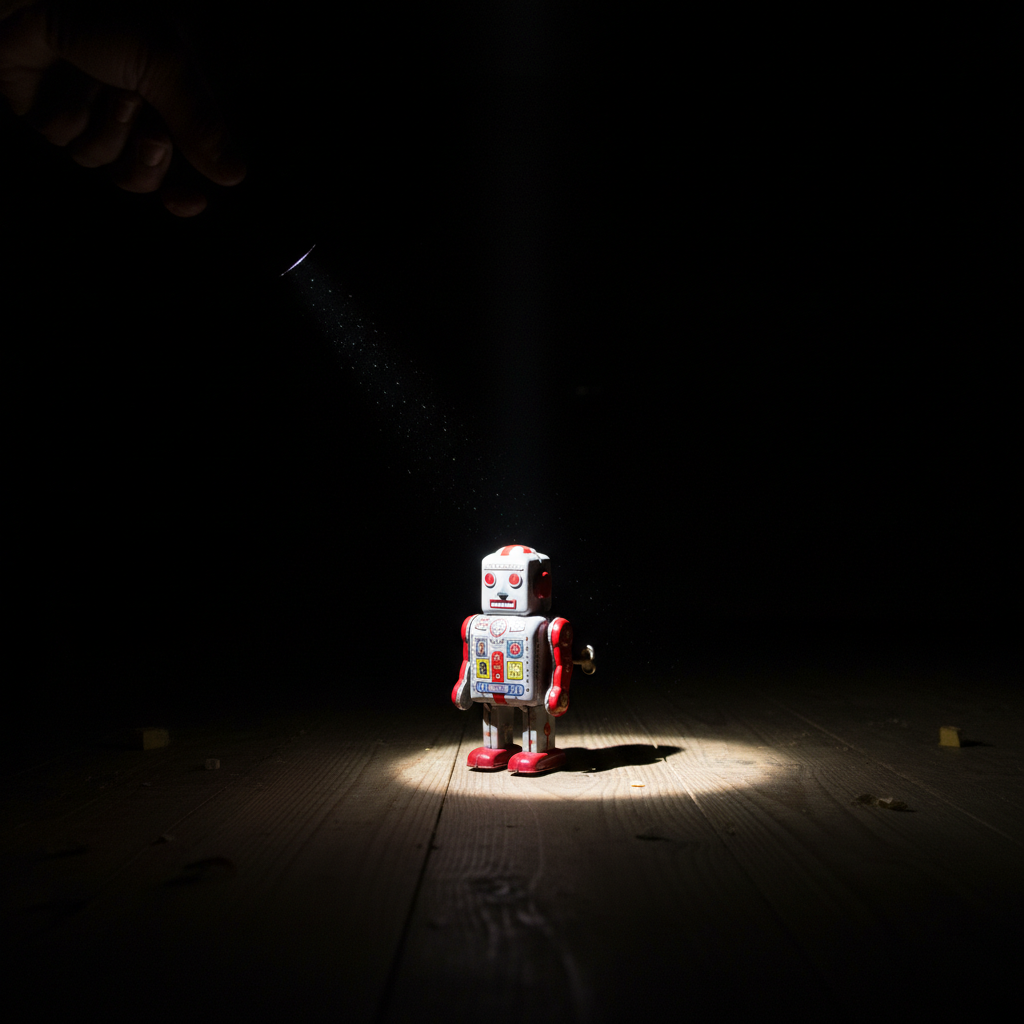
Have you ever been in a really, really dark room? What happens? You can't see anything, can you? It's like everything disappears! That's because without light to bounce off objects and travel to your eyes, your brain has no messages to read. It's like putting a big, dark blanket over everything.
This is why we need lights at night or in caves. Our eyes need light to work their magic! It helps us find our way and know where things are.
 ⚠️ This picture may have spelling mistakes. Trust the words in the lesson.
Fun Facts About Light!
- Light travels super fast! So fast that it could go around the Earth about 7 times in just one second!
- Some animals, like owls, can see much better than humans in very low light because their eyes are specially made to catch tiny bits of light.
- We use light for many things besides just seeing, like growing plants, taking pictures, and even sending messages through wires!
Keeping Safe with Light
Light is wonderful, but it's important to be safe! Never look directly at the sun. The sun's light is super strong and can hurt your eyes. Just like you wouldn't stare at a super bright lamp up close, be careful with very bright lights!
Time to Shine!
Now you know that light is a special kind of energy that bounces off things and travels to your eyes, helping your brain understand everything you see. It's like magic, but it's really science! Next time you look around, remember to thank light for helping you see all the beautiful colors and shapes in your world!
Keep learning, free
Create a free Syllabax account to unlock practice questions and games for this topic.
Visual Learning Enhanced! 🚀
To help you master this topic, we use Advanced Syllabax AI to generate detailed diagrams and visual models.
Note on Visuals: The AI sometimes makes spelling errors in image labels. Please refer to the lesson text for the correct terminology.