Identification of herbs/shrubs/trees/climbers[BIOLOGY]
Watch this topic in 60 seconds
Free preview · Lesson 1
Understanding Identification of herbs/shrubs/trees/climbers[BIOLOGY]
Discovering Our Green Neighbors: Herbs, Shrubs, Trees, and Climbers
Welcome, young explorers, to the amazing world of plants! Imagine your backyard, a local park, or even a sidewalk crack. What do you see? You likely see plants of all shapes and sizes. Today, we're going to become plant detectives and learn how to tell the difference between four main types of plants: herbs, shrubs, trees, and climbers.
Why Does It Matter?
Knowing the difference helps us understand how plants grow, what kind of support they need, and even what they can be used for. Think of it like sorting your toys: you have dolls, building blocks, cars, and puzzles. Each is different and has its own special way of being played with. Plants are similar!
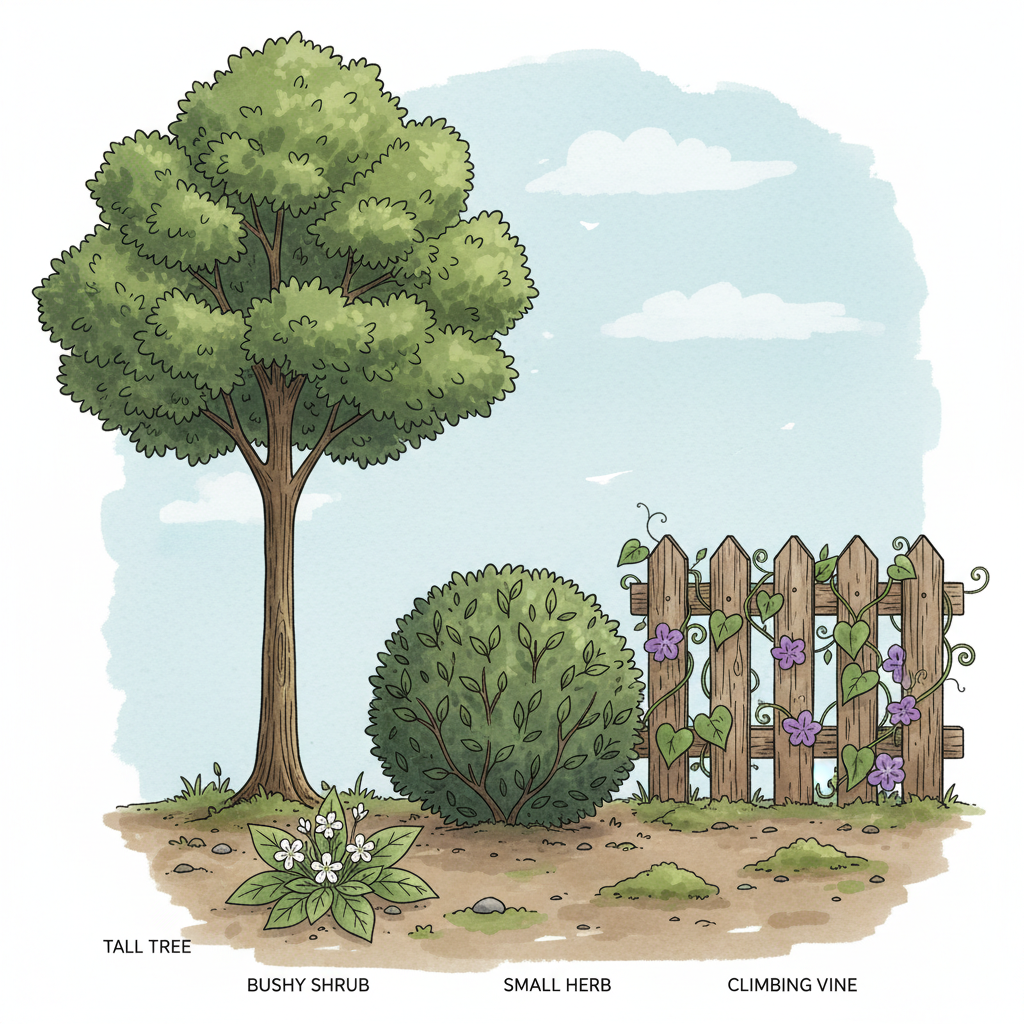
1. Herbs: The Tiny, Tender Wonders
Let's start with the smallest and often the most fragrant members of our plant family: herbs.
What are herbs? Herbs are plants that have soft, green, and often flexible stems. They usually don't grow very tall, often staying close to the ground. Their stems don't become woody or hard as they age. Think of them as the delicate flowers or the leafy greens in your salad.
Analogy Time! Imagine herbs are like the soft, colorful scarves you wear. They are flexible, don't stand up on their own very strongly, and often add a beautiful touch or a pleasant smell (like basil or mint!).
Key Features of Herbs:
- Soft Stems: Their stems are green and bendable, not hard and woody.
- Short Growth: They usually don't grow taller than a few feet.
- Seasonal Lives: Many herbs live for only one or two seasons (called annuals or biennials) and then die back, sometimes returning from their roots the next year.
- Fragrant Leaves: Many herbs have aromatic leaves that we use for cooking or making teas (like rosemary, parsley, cilantro).
Examples: Mint, basil, parsley, chives, dill, lavender (the flowering part, though the base can get a bit woody over time).
2. Shrubs: The Bushy, Multi-Stemmed Friends
Next up are shrubs. These are like the busy, medium-sized plants in our green neighborhood.
What are shrubs? Shrubs are plants that have multiple stems growing from the base. These stems are usually woody, meaning they are harder and tougher than herb stems. Shrubs are typically shorter than trees but taller and bushier than herbs.
Analogy Time! Think of shrubs like a fluffy, well-behaved poodle. They have many branches (like the poodle's fur) coming from the bottom, and they keep a generally rounded shape. They are sturdy enough to stand on their own but don't reach the sky like a big oak tree.
Key Features of Shrubs:
- Multiple Woody Stems: They grow many main stems from near the ground.
- Bushy Appearance: They tend to be wider than they are tall and look full of branches.
- Moderate Height: They usually range from a few feet to about 15-20 feet tall.
- Persistent Woodiness: Their stems stay woody year after year.
Examples: Rose bushes, hydrangeas, lilacs, blueberry bushes, boxwood.
3. Trees: The Tall, Strong Giants
Now, let's look up! We're talking about trees, the majestic giants of the plant world.
What are trees? Trees are large, woody plants that typically have a single, main trunk that supports branches and leaves. This trunk is usually thick and strong, allowing the tree to grow very tall.
Analogy Time! A tree is like a superhero with a very strong, single pillar (the trunk) holding up a large cape (the branches and leaves). It stands tall and proud, providing shade and a home for many creatures. Unlike shrubs, most trees have that one dominant trunk.
Key Features of Trees:
- Single Main Trunk: Most trees have one clear, dominant trunk.
- Woody Structure: The trunk and branches are made of hard, woody material.
- Significant Height: Trees can grow very tall, often exceeding 20 feet and sometimes reaching hundreds of feet!
- Long Lifespan: Many trees live for many years, even centuries.
Examples: Oak trees, maple trees, pine trees, apple trees, palm trees.
4. Climbers (Vines): The Adventurous Reachers
Finally, let's meet the plants that love to climb: climbers, also known as vines.
What are climbers? Climbers are plants that need support to grow upwards or outwards. They don't have strong, woody stems that can hold them up on their own. Instead, they have special ways of attaching themselves to other plants, walls, fences, or trellises.
Analogy Time! Think of climbers like tiny acrobats or very determined hikers. They have flexible bodies (stems) and use their hands (tendrils, twining stems, or sticky pads) to hold onto anything they can find to reach higher places. They can't stand up by themselves, so they need a structure to help them.
Key Features of Climbers:
- Weak Stems: Their stems are not strong enough to stand upright.
- Support Needed: They require external structures to grow upwards.
- Attachment Methods: They use tendrils (like curly fingers), twining stems (wrapping around things), or adhesive pads to cling.
- Varying Growth: They can grow rapidly and cover large areas.
Examples: Ivy, morning glories, grapes, beans, peas, cucumbers.
Putting It All Together: A Quick Recap
Let's do a quick check to see if we've understood the main differences:
- Herbs: Small, soft green stems, usually short-lived. (Like a delicate scarf)
- Shrubs: Multiple woody stems from the base, bushy, medium height. (Like a well-groomed poodle)
- Trees: Single main woody trunk, tall, strong. (Like a superhero pillar)
- Climbers: Need support, weak stems, reach upwards. (Like a determined climber)
Now you are ready to go outside and identify the amazing plants around you! Happy exploring!
Keep learning, free
Create a free Syllabax account to unlock practice questions and games for this topic.
Visual Learning Enhanced! 🚀
To help you master this topic, we use Advanced Syllabax AI to generate detailed diagrams and visual models.
Note on Visuals: The AI sometimes makes spelling errors in image labels. Please refer to the lesson text for the correct terminology.