Basic water cycle (CHEMISTRY)
Watch this topic in 60 seconds
Free preview · Lesson 1
Understanding Basic water cycle (CHEMISTRY)
The Amazing Journey of Water: A Basic Chemistry Exploration
Welcome, young scientists, to an exciting adventure into the world of water! You see water every day – in your drinking glass, in puddles, in clouds. But have you ever wondered where it comes from and where it goes? Water is always on the move, and its journey is called the **Water Cycle**. Today, we'll explore this amazing process from a simple chemistry perspective, understanding how water changes its form but never truly disappears.
What is Water? A Tiny Molecule's Tale
Before we dive into the cycle, let's talk about water itself. Water isn't just a liquid; it's made of tiny building blocks called molecules. Each water molecule is like a super-tiny team of atoms: two hydrogen atoms (let's call them H) and one oxygen atom (let's call it O). They bond together to form H₂O. Think of it like LEGO bricks: two small bricks (hydrogen) holding onto one larger brick (oxygen).
The Water Molecule (H₂O)
This H₂O molecule is the star of our show. Water can exist in three different forms, or states, depending on how much energy (like heat) it has.
- Solid: Ice - When water gets very cold, the H₂O molecules slow down and lock into a rigid structure. It's like a group of friends holding hands very tightly and standing still.
- Liquid: Water - As water warms up, the molecules have a bit more energy. They can slide past each other, but they still stick together. Imagine the friends holding hands loosely and shuffling around a bit.
- Gas: Water Vapor - When water gets really hot, the molecules have so much energy they break free from each other and float around independently. This is invisible steam or mist. It's like the friends letting go of hands and running all over the playground!
The Water Cycle: Earth's Giant Recycling System
The Water Cycle is like a giant, natural recycling system for Earth's water. It describes how water moves from the land and oceans into the atmosphere and back again. It's a continuous loop, powered mainly by the Sun!
1. Evaporation: Water Takes Flight!
This is where the journey really begins for much of the water on Earth. The Sun's energy heats up water in oceans, lakes, rivers, and even puddles. When water gets warm enough, it changes from a liquid into an invisible gas called water vapor. This process is called evaporation.
Think of evaporation like leaving a wet towel out in the sun. Slowly, the water disappears from the towel. Where did it go? It turned into water vapor and floated up into the air!
Even plants release water vapor through their leaves in a process called transpiration. It's like plants sweating!
2. Condensation: Clouds are Born!
As the invisible water vapor rises higher into the atmosphere, it starts to cool down. When water vapor cools, it changes back into tiny liquid water droplets or ice crystals. This process is called condensation. These tiny droplets and crystals gather together to form clouds!
Imagine breathing onto a cold window. You see a foggy patch appear. That's condensation! Your warm, moist breath (containing water vapor) hit the cold glass, and the water vapor turned back into tiny liquid water droplets, making the glass foggy.
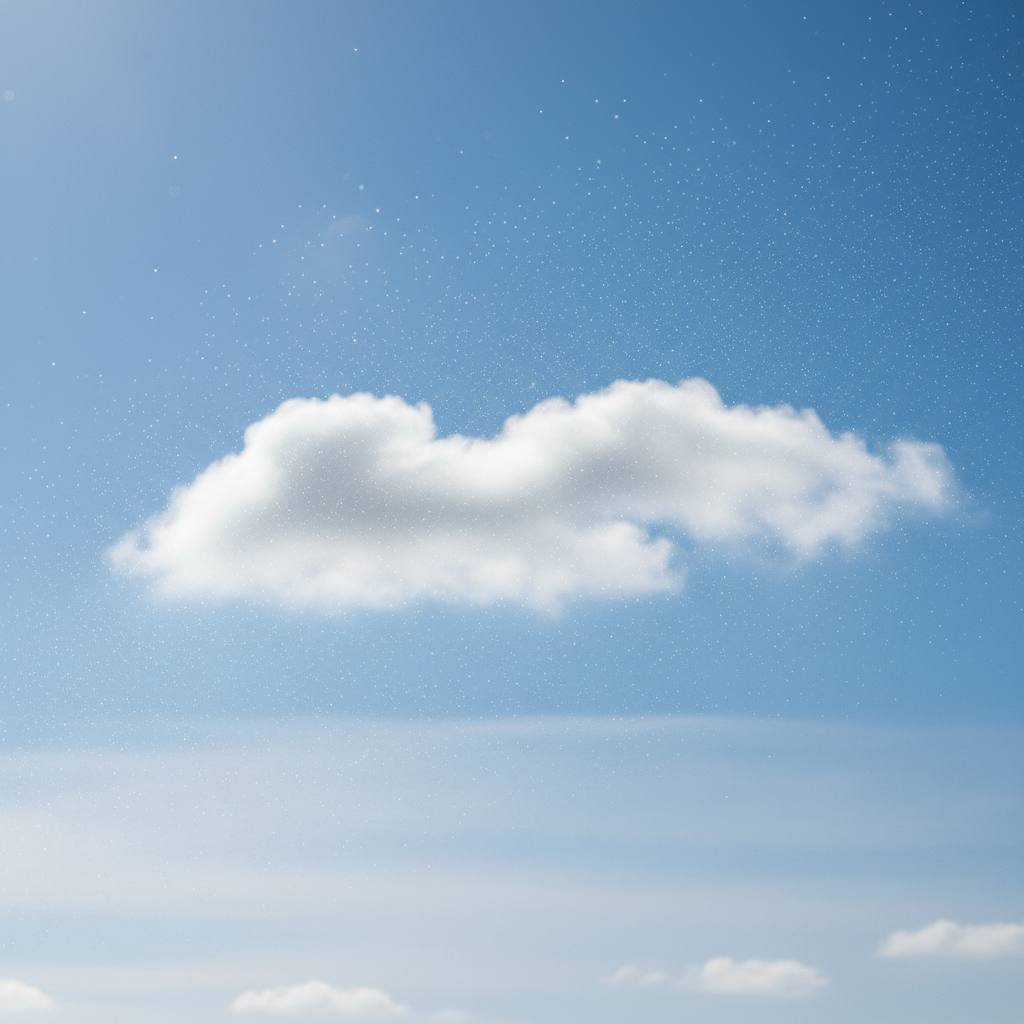 ⚠️ This picture may have spelling mistakes. Trust the words in the lesson.
3. Precipitation: Water Returns to Earth!
When the water droplets or ice crystals in the clouds become too heavy, they fall back to Earth. This is called precipitation. Precipitation can take many forms:
- Rain: If the air is warm enough, the water falls as liquid drops.
- Snow: If the air is very cold, the water falls as ice crystals.
- Sleet: Raindrops that freeze as they fall.
- Hail: Lumps of ice formed in strong storm clouds.
Think of a sponge soaked with water. When the sponge gets too full and heavy, the water starts to drip out. Clouds are like giant sponges in the sky!
4. Collection: Gathering the Water
Once the water falls back to Earth as precipitation, it needs to go somewhere! It collects in oceans, lakes, rivers, and streams. Some water soaks into the ground, becoming groundwater. This collected water is then ready to be heated by the Sun and start the cycle all over again!
Imagine a bathtub filling up with water from the faucet (precipitation). The water gathers in the tub (collection). Eventually, the water in the tub might evaporate and go back up into the air, starting the process again!
Why is the Water Cycle Important?
The water cycle is essential for all life on Earth. It provides fresh water for drinking, helps plants grow, and shapes our planet's weather. It's a constant, reliable system that keeps our planet alive and well.
So, the next time you drink a glass of water, remember the incredible journey that water molecule might have taken – from the ocean to a cloud, and back down as rain!
Keep learning, free
Create a free Syllabax account to unlock practice questions and games for this topic.
Visual Learning Enhanced! 🚀
To help you master this topic, we use Advanced Syllabax AI to generate detailed diagrams and visual models.
Note on Visuals: The AI sometimes makes spelling errors in image labels. Please refer to the lesson text for the correct terminology.