Matching pairs (Logical Reasoning)
Watch this topic in 60 seconds
Free preview · Lesson 1
Understanding Matching pairs (Logical Reasoning)
Matching Pairs: A Fun Way to Use Your Brain!
Hello amazing learners! Today, we're going on an exciting adventure to explore something super cool called Matching Pairs. It's like a treasure hunt for your brain, where you look for things that belong together. This helps us get really good at thinking and solving puzzles!
What are Matching Pairs?
Imagine you have a big box of toys. Some are cars, some are dolls, and some are building blocks. If I asked you to put all the cars together, you'd know exactly what to do, right? You'd look for all the things that are cars and put them in one pile. That's exactly what matching pairs is all about – finding two (or more!) things that have something in common and putting them together.
Think about your socks. You always want to find the *pair* of socks that match, don't you? One blue sock needs its matching blue sock friend. Or maybe you have a red sock with little white polka dots. You need to find the other red sock with the *same* little white polka dots. That's a perfect example of matching pairs!
Why is Matching Pairs Important?
Using your brain to find matching pairs is like giving your brain a super workout! It helps you in many ways:
- It makes you a great detective! Just like a detective looks for clues to solve a mystery, you look for clues (what things look like, what they do, or what they are used for) to find the matches.
- It helps you organize things. When you can match things, you can sort them easily. Imagine sorting all your crayons by color – you're matching colors together!
- It makes learning easier. When you learn new words, you might match a word to its picture. Or when you learn about animals, you match a baby animal to its grown-up animal (like a kitten to a cat!).
- It's fun! Games like 'Memory' or 'Go Fish' use matching pairs to make learning and playing exciting.
Types of Matching Pairs
We can find matching pairs in lots of different ways. Let's look at some common types:
1. Matching by Appearance (Looks the Same)
This is the easiest kind! You look for things that look exactly alike, or almost alike. Like finding two identical puzzle pieces, or two pictures of the same flower.
Analogy: Think about your classmates. You can easily tell Sarah apart from John because they look different. But if you had twin sisters, it would be harder to tell them apart because they look so similar! You are matching their faces.
2. Matching by Function (What They Do)
Sometimes, things don't look exactly the same, but they have the same job or purpose. They *do* the same thing!
Analogy: Imagine you have a hammer and a nail. They don't look like each other, but they work together to hang a picture. The hammer's job is to hit the nail. They are a matching pair because of their jobs.
Another example: A key and a lock. The key's job is to open the lock. They are a matching pair because of their function.
3. Matching by Category (Belong to the Same Group)
This is about putting things into groups. If you see an apple, a banana, and an orange, you can match them because they are all fruits. They belong to the 'fruit' group.
Analogy: Think about your classroom. You have a group of students, a group of desks, and a group of books. You match the desks together because they are all furniture for the classroom. You match the books together because they are all for reading.
4. Matching by Sound (Sounds the Same)
Sometimes, words or sounds can be matched.
Analogy: If I say the word 'cat', you might think of the word 'hat' because they rhyme. They sound alike at the end. This is matching by sound.
5. Matching by Cause and Effect (What Happened Because of Something Else)
This is a bit trickier, but it's like finding a reason for something happening. If you see a puddle on the ground, and you remember it was raining, the rain is the 'cause' and the puddle is the 'effect'. They are matched because one happened because of the other.
Analogy: If you eat too much candy (cause), you might get a tummy ache (effect). The tummy ache is matched to the candy because the candy made it happen.
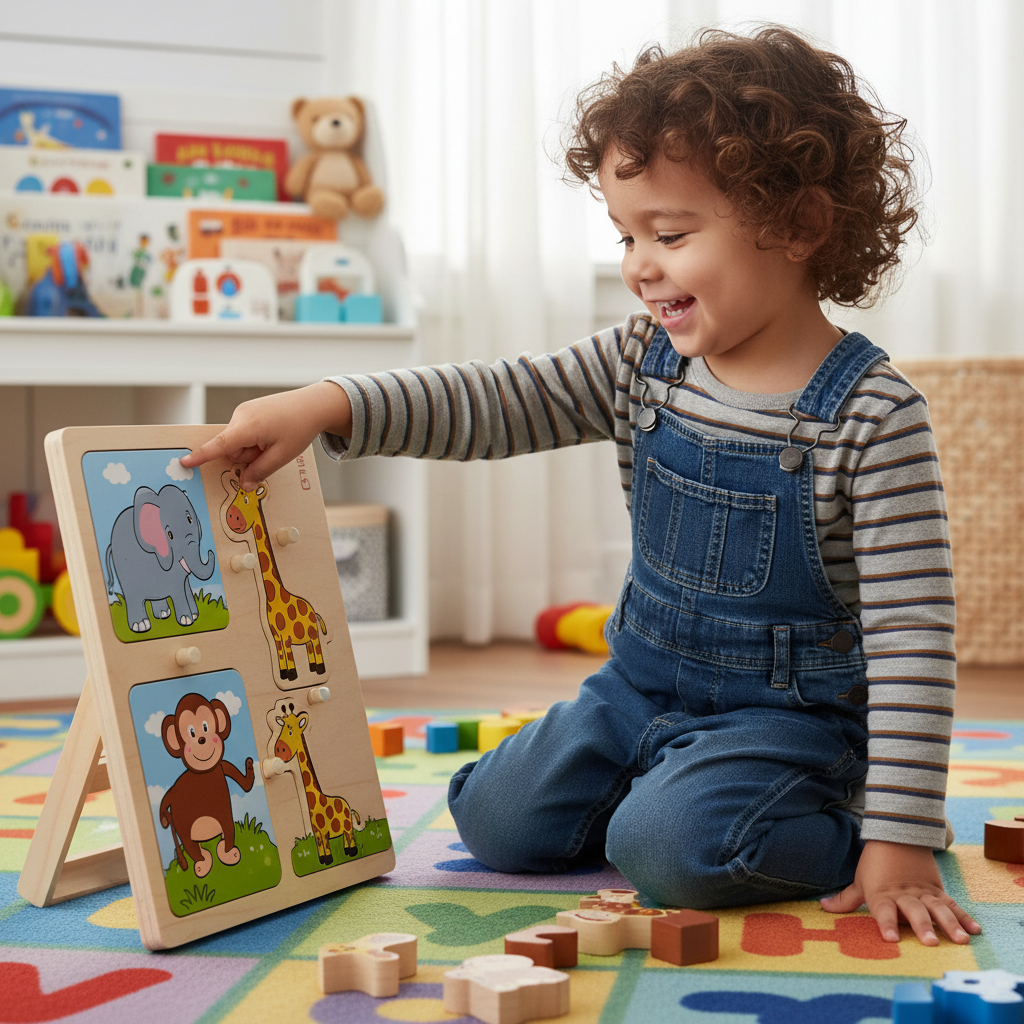 ⚠️ This picture may have spelling mistakes. Trust the words in the lesson.
Let's Practice!
Now that we know about matching pairs, let's try some fun exercises to make our brains even stronger!
Activity: Find the Pairs!
Look at the pictures below. Can you find the two pictures that are a matching pair? What makes them match?
(Imagine here there are several sets of pictures: e.g., a cat and a dog, a cat and a mouse, a cat and another cat. The student would be asked to pick the two cats because they are both cats (category) or look similar (appearance).)
Activity: What Goes Together?
Think about these items. Which two items belong together as a pair and why?
- A shoe
- A pencil
- A sock
(Answer: A shoe and a sock are a matching pair because they are both worn on your foot, or because a sock goes inside a shoe.)
Activity: Story Time Match-Up!
Read the short story below. Can you find the matching pair of words or ideas?
"Lily was very thirsty. She saw a big, red apple on the table. She decided to eat the apple. It was juicy and sweet. Then, she went to the kitchen and drank a big glass of water."
(Answer: 'thirsty' and 'drank water' are a matching pair because drinking water is how you quench thirst.)
You are all doing a fantastic job! Keep practicing your matching skills, and you'll become super thinkers!
Keep learning, free
Create a free Syllabax account to unlock practice questions and games for this topic.
Visual Learning Enhanced! 🚀
To help you master this topic, we use Advanced Syllabax AI to generate detailed diagrams and visual models.
Note on Visuals: The AI sometimes makes spelling errors in image labels. Please refer to the lesson text for the correct terminology.