Shapes in environment (Spatial Reasoning)
Watch this topic in 60 seconds
Free preview · Lesson 1
Understanding Shapes in environment (Spatial Reasoning)
Discovering Shapes All Around Us!
Welcome, young explorers, to a super exciting adventure where we'll discover the amazing world of shapes! Did you know that shapes are everywhere? Look around you right now. What do you see? Maybe a table, a book, a window, or even a slice of pizza! All these things are made up of different shapes. Learning about shapes is like learning a secret code that helps you understand the world better. It’s a skill called spatial reasoning, which means understanding how objects fit together in space. Let's start by meeting some of the most common shapes!
The Basic Shapes
Circles: Perfectly Round Friends
Imagine a pizza, a happy sun, or the wheels on a bicycle. What do they all have in common? They are all circles! A circle is a shape that is perfectly round. It has no corners and no straight sides. Think of it like a smooth, unbroken path. If you were to roll a ball, it would roll in a circular path. Sometimes, we see things that are almost circles, like a slightly squashed ball or an oval. An oval is like a stretched-out circle, but a true circle is always perfectly round!
Squares: The Four-Cornered Wonders
Now, let's think about a window pane, a cracker, or a square block. These are examples of squares. A square is a shape with four straight sides that are all the exact same length. Not only are the sides the same length, but they also meet at perfect corners, called right angles. Think of the corner of a book – it’s a perfect square corner. If you have four building blocks and they all have the same size sides and perfect corners, you can arrange them to make a square. A square is like a very neat and tidy shape!
Rectangles: Long and Lean
What about a door, a soccer field, or a chocolate bar? These are often rectangles! A rectangle is very similar to a square because it also has four straight sides and four perfect corners (right angles). The main difference is that in a rectangle, opposite sides are the same length, but the sides next to each other might be different lengths. So, a rectangle can be long and skinny, or it can be shorter and wider. Think of a ruler – it's long and has straight sides and corners. A rectangle is like a stretched-out square!
Triangles: The Pointy Pals
Have you ever seen a slice of pizza, a yield sign on the road, or the roof of a house? These are often triangles! A triangle is a shape that has three straight sides and three pointy corners. It’s like a little mountain peak. There are many different kinds of triangles. Some have sides that are all the same length, some have two sides the same, and some have all different sides. But no matter what, a triangle always has exactly three sides and three corners.
Putting Shapes Together
Shapes aren't just flat things we see on paper. They are the building blocks of everything around us! Think about a house. It might have a square base, rectangular walls, and a triangular roof. A car has round wheels, a rectangular body, and maybe even some triangular windows. Even a simple toy block is a shape! Understanding how these shapes fit together helps us understand how things are built and how they work.
Analogy Time! Imagine you have a box of LEGO bricks. Some are square, some are rectangular, and some might even be triangular. When you build a castle or a car, you are using your spatial reasoning skills to figure out which shapes fit together and where they should go. You’re looking at the flat sides, the corners, and how they connect. That’s exactly what we do when we look at the world around us!
Let’s look at an example. Think about a stop sign. It has eight sides and eight angles. What shape is that? It's an octagon! It's like a square that has had its corners cut off and replaced with two new sides each. While we're focusing on circles, squares, rectangles, and triangles today, the world is full of even more amazing shapes!
So, the next time you're out and about, play a game of “Shape Spotting”! See how many circles, squares, rectangles, and triangles you can find in buildings, toys, nature, and even food. You'll be amazed at how much you can see once you know what to look for!
Here's a picture to help you visualize some of these shapes:
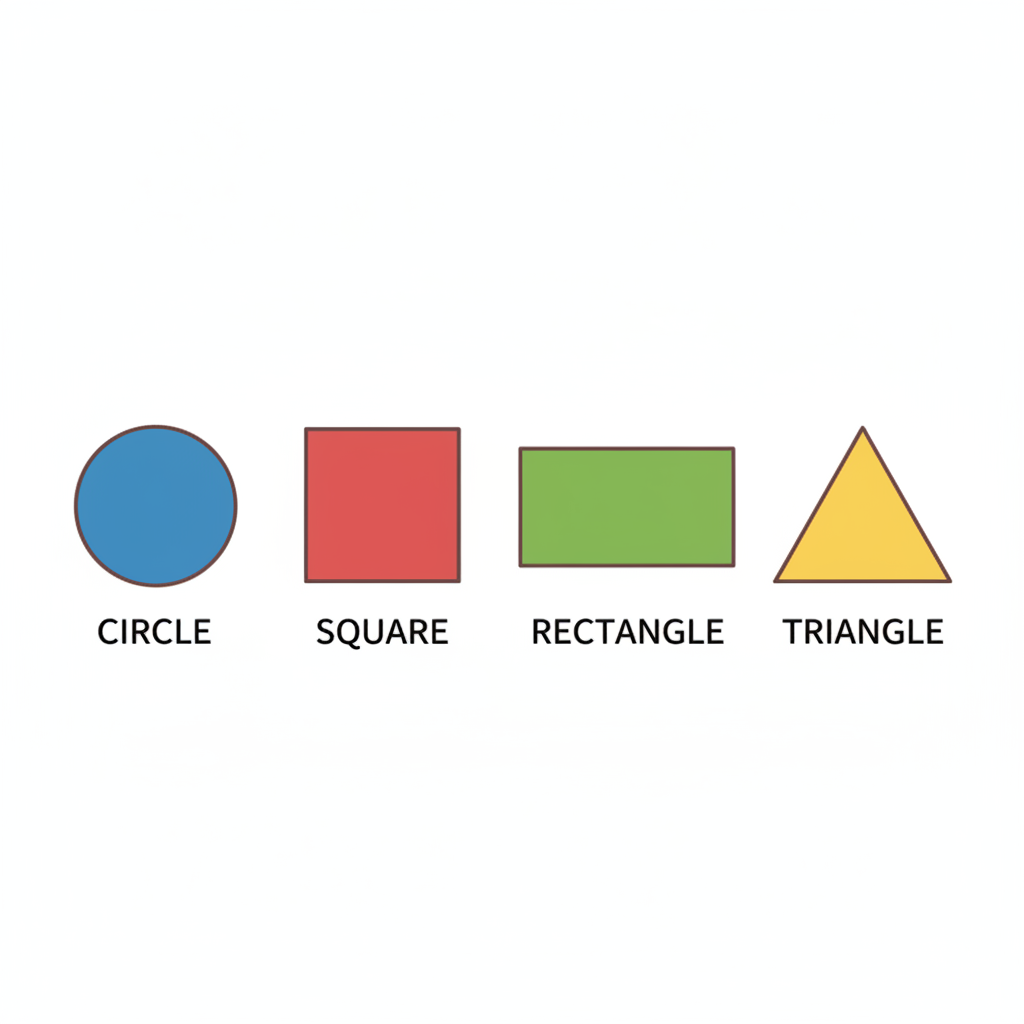
Remember, shapes are the fundamental building blocks of our world. By understanding them, we develop our ability to understand space and how objects relate to each other. Keep practicing your shape spotting, and you'll become a spatial reasoning superstar!
Let's try another visual aid to help solidify our understanding of how shapes make up bigger objects:
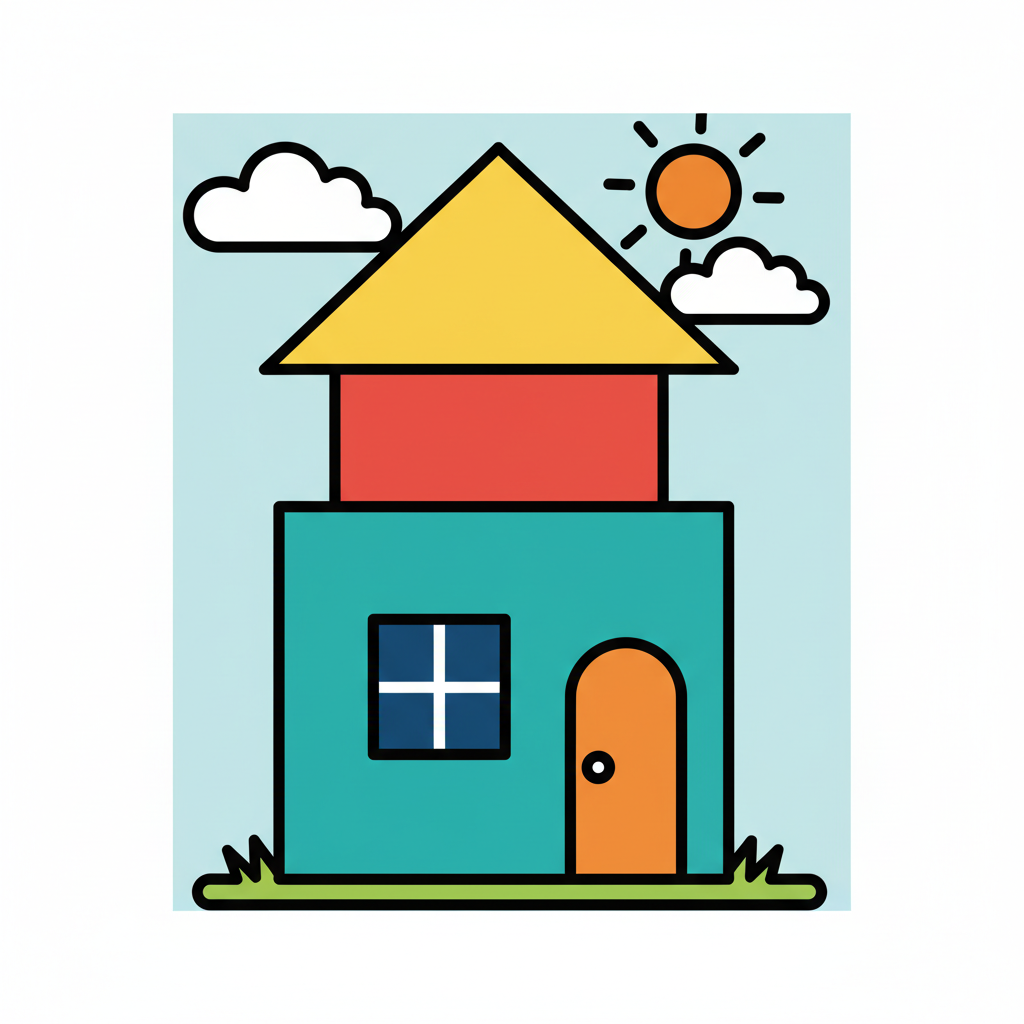 ⚠️ This picture may have spelling mistakes. Trust the words in the lesson.
Keep learning, free
Create a free Syllabax account to unlock practice questions and games for this topic.
Visual Learning Enhanced! 🚀
To help you master this topic, we use Advanced Syllabax AI to generate detailed diagrams and visual models.
Note on Visuals: The AI sometimes makes spelling errors in image labels. Please refer to the lesson text for the correct terminology.