Making a Sequence (Unplugged)
Watch this topic in 60 seconds
Free preview · Lesson 1
Understanding Making a Sequence (Unplugged)
Making a Sequence (Unplugged): Discovering Order!
Hello, young adventurers! Today we're going on an exciting journey to explore something super special called a sequence. Don't worry, we don't need any fancy computers or plugs for this adventure – that's why we call it 'unplugged'! We'll use our clever minds, our amazing bodies, and everyday things around us.
What is a Sequence? Imagine a Line of Friends!
Have you ever stood in a line, like at the playground slide or for story time? A sequence is a lot like that! It's when things happen or are arranged in a special order, one after the other, just like friends waiting in a line. They don't just jump in anywhere; they follow a specific path.
Think about getting ready for school in the morning. What's the very first thing you do? Maybe wake up! Then what? Brush your teeth, eat breakfast, get dressed, and then it's time to go! You wouldn't try to eat breakfast before waking up, right? That's because getting ready for school is a sequence of events – a series of steps that happen in a particular order.
Another way to think about it is like a recipe for your favorite cookies. First, you mix the flour. Then, you add the sugar. Next, the eggs, and so on. If you mix them in the wrong order, your cookies might not turn out yummy! The recipe is a sequence of instructions.
Sequences Are Everywhere! Let's Be Detectives!
Once you know what to look for, you'll see sequences all around you! Let's play a game and find some together:
- Traffic Lights: Have you ever noticed the colors of a traffic light? It goes Red (STOP!), then Yellow (GET READY!), then Green (GO!). After Green, what comes next? Red again! It's a repeating sequence: Red, Yellow, Green, Red, Yellow, Green...
- Days of the Week: Every week follows a sequence: Monday, Tuesday, Wednesday, Thursday, Friday, Saturday, Sunday. After Sunday, it's Monday again!
- Getting Dressed: Think about putting on your clothes. Do you put your shoes on before your socks? Probably not! It's usually: underwear, shirt, pants, socks, then shoes. That's a very helpful sequence!
- A Story: Every good story has a beginning, a middle, and an end. They don't just mix everything up! This helps us understand what's happening.
 ⚠️ This picture may have spelling mistakes. Trust the words in the lesson.
Making Our Own Sequences: Time to Create!
Now that we've found some sequences, let's make our own! This is where the 'unplugged' fun really begins. We can use our bodies, our voices, and simple objects to create cool patterns and orders.
Activity 1: Body Movement Sequences
Your body is an amazing tool for making sequences! Let's try one:
- Clap!
- Stomp!
- Wiggle!
Now, let's make it a sequence! We'll repeat that exact same order:
Clap, Stomp, Wiggle! Clap, Stomp, Wiggle! Clap, Stomp, Wiggle!
See? It's the same three actions, happening over and over again in the exact same order. You've just made a body movement sequence!
Can you think of another one? Maybe: Jump, Turn, Freeze! Jump, Turn, Freeze! Jump, Turn, Freeze!
Activity 2: Object Sequences
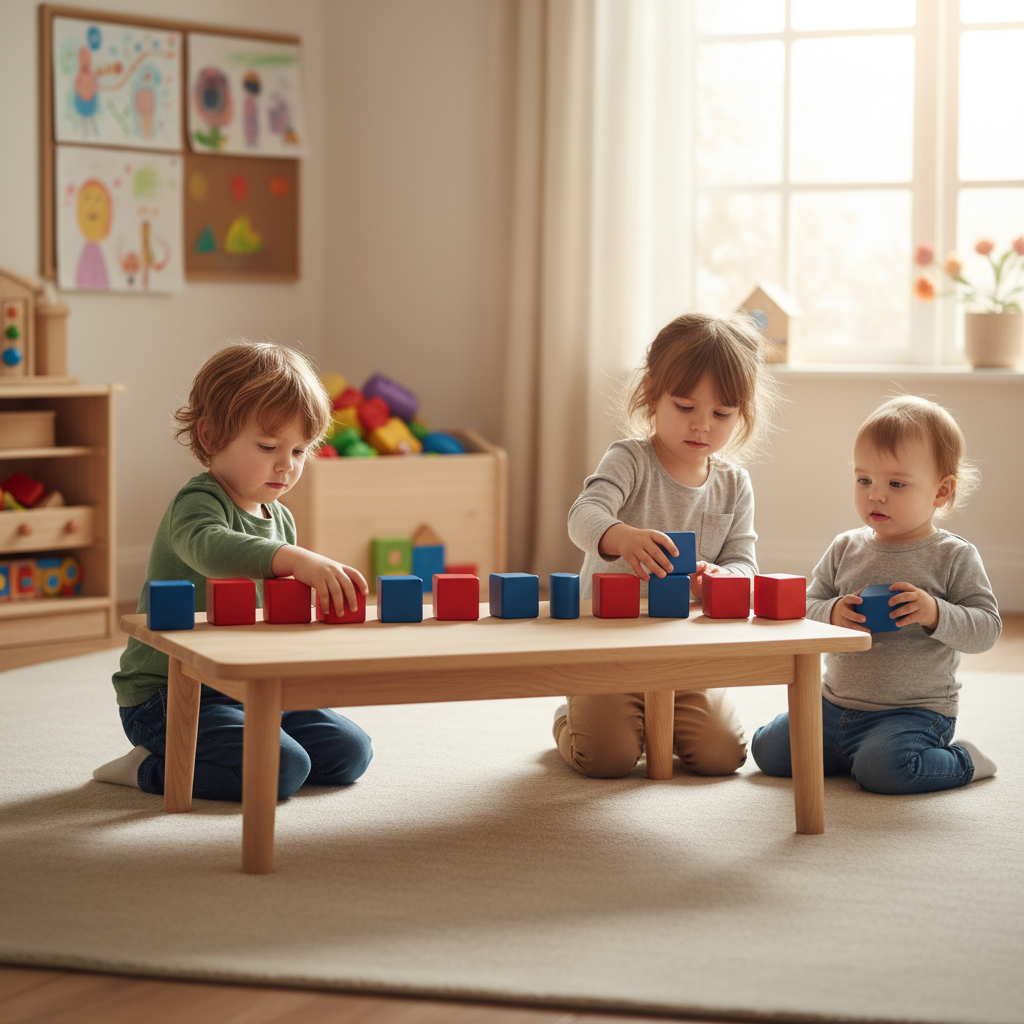
Let's use some objects! Grab a few different colored blocks, crayons, or even small toys. For example, let's use a red block, a blue block, and a yellow block.
Let's arrange them in a line:
Red Block, Blue Block, Yellow Block.
To make it a sequence, we just repeat that pattern:
Red Block, Blue Block, Yellow Block, Red Block, Blue Block, Yellow Block, Red Block, Blue Block, Yellow Block...
You can make sequences with anything! Try with fruit: Apple, Banana, Orange, Apple, Banana, Orange. Or even animal sounds: Woof, Meow, Squeak! Woof, Meow, Squeak!
The Big Question: What Comes Next?
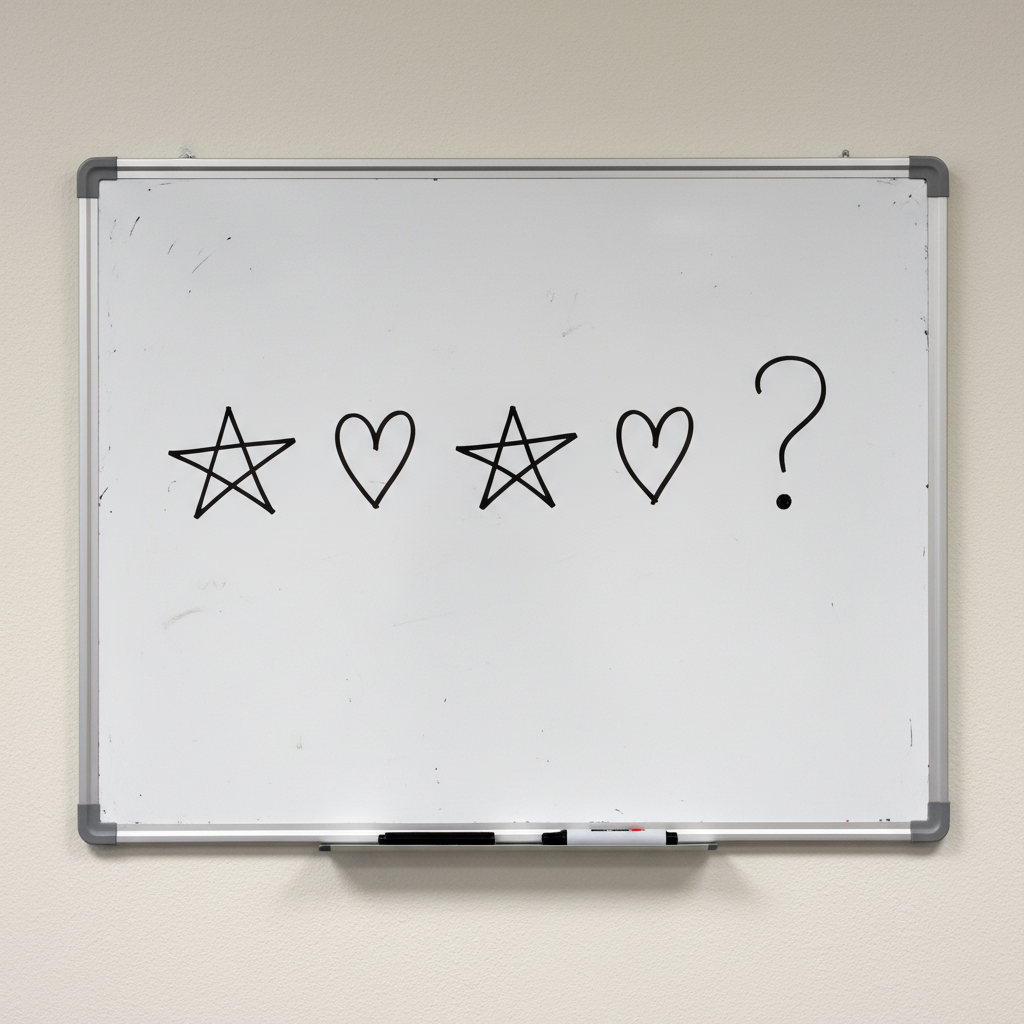
The really cool thing about sequences is that once you know the pattern, you can guess what comes next! It's like being a super-smart detective who can predict the future!
Let's try one:
If the sequence is: Square, Circle, Triangle, Square, Circle, Triangle, Square, Circle, __________?
What shape do you think comes next? If you said Triangle, you are absolutely right! You've found the pattern!
 ⚠️ This picture may have spelling mistakes. Trust the words in the lesson.
Why Are Sequences So Important?
Learning about sequences might seem like a simple game, but it's super important for many reasons:
- Helps us Understand: Sequences help us make sense of the world. When things happen in order, it's easier to follow along and learn.
- Helps us Plan: When you know the steps (the sequence) for a task, it's easier to plan how to do it. Like planning to build a tall tower with blocks!
- Builds Smart Brains: Thinking about patterns and order helps your brain get stronger at solving problems. This is a very important skill called computational thinking, which is how computers 'think' and solve problems, too!
- It's the Start of Bigger Ideas: Sequences are like the ABCs of bigger ideas in math (like counting and patterns) and even computer science (like telling a computer what to do step-by-step).
So, next time you brush your teeth, or see a traffic light, or even read a story, remember you are seeing a sequence in action! Keep an eye out for them – they are everywhere!
Keep learning, free
Create a free Syllabax account to unlock practice questions and games for this topic.
Visual Learning Enhanced! 🚀
To help you master this topic, we use Advanced Syllabax AI to generate detailed diagrams and visual models.
Note on Visuals: The AI sometimes makes spelling errors in image labels. Please refer to the lesson text for the correct terminology.