River Systems (Indus, Ganga, Brahmaputra) – Indian Geography
Watch this topic in 60 seconds
Free preview · Lesson 1
River Systems (Indus, Ganga, Brahmaputra) – Indian Geography (Foundational)
River Systems of India: Indus, Ganga, and Brahmaputra
This lesson will introduce you to three major river systems in India: the Indus, Ganga, and Brahmaputra. These rivers are vital sources of water, transportation, and fertile land, playing a crucial role in the lives of millions of people.
What is a River System?
A river system is a network of waterways that includes a main river and all of its tributaries. Tributaries are smaller streams or rivers that flow into a larger river. The area drained by a river system is called its drainage basin or watershed.
The Indus River System
The Indus River originates in the Tibetan Plateau, near Lake Mansarovar. It flows westward through India and Pakistan before emptying into the Arabian Sea. The main tributaries of the Indus River are the Jhelum, Chenab, Ravi, Beas, and Sutlej rivers.
- Origin: Tibetan Plateau
- Flows through: India and Pakistan
- Empties into: Arabian Sea
- Major Tributaries: Jhelum, Chenab, Ravi, Beas, Sutlej
The Ganga River System
The Ganga River is considered the most sacred river in India. It originates in the Gangotri Glacier in the Himalayas. The Ganga flows eastward through India and Bangladesh before emptying into the Bay of Bengal. Its major tributaries include the Yamuna, Son, Gomti, Ghaghara, and Kosi rivers.
- Origin: Gangotri Glacier (Himalayas)
- Flows through: India and Bangladesh
- Empties into: Bay of Bengal
- Major Tributaries: Yamuna, Son, Gomti, Ghaghara, Kosi
The Brahmaputra River System
The Brahmaputra River also originates in the Tibetan Plateau, near Lake Mansarovar. It flows eastward through Tibet (where it is known as the Yarlung Tsangpo), then enters India through Arunachal Pradesh and Assam. In Bangladesh, it merges with the Ganga and is known as the Jamuna before flowing into the Bay of Bengal. Major tributaries include the Lohit, Teesta, and Manas rivers.
- Origin: Tibetan Plateau
- Flows through: Tibet, India, and Bangladesh
- Empties into: Bay of Bengal
- Major Tributaries: Lohit, Teesta, Manas
Importance of these River Systems
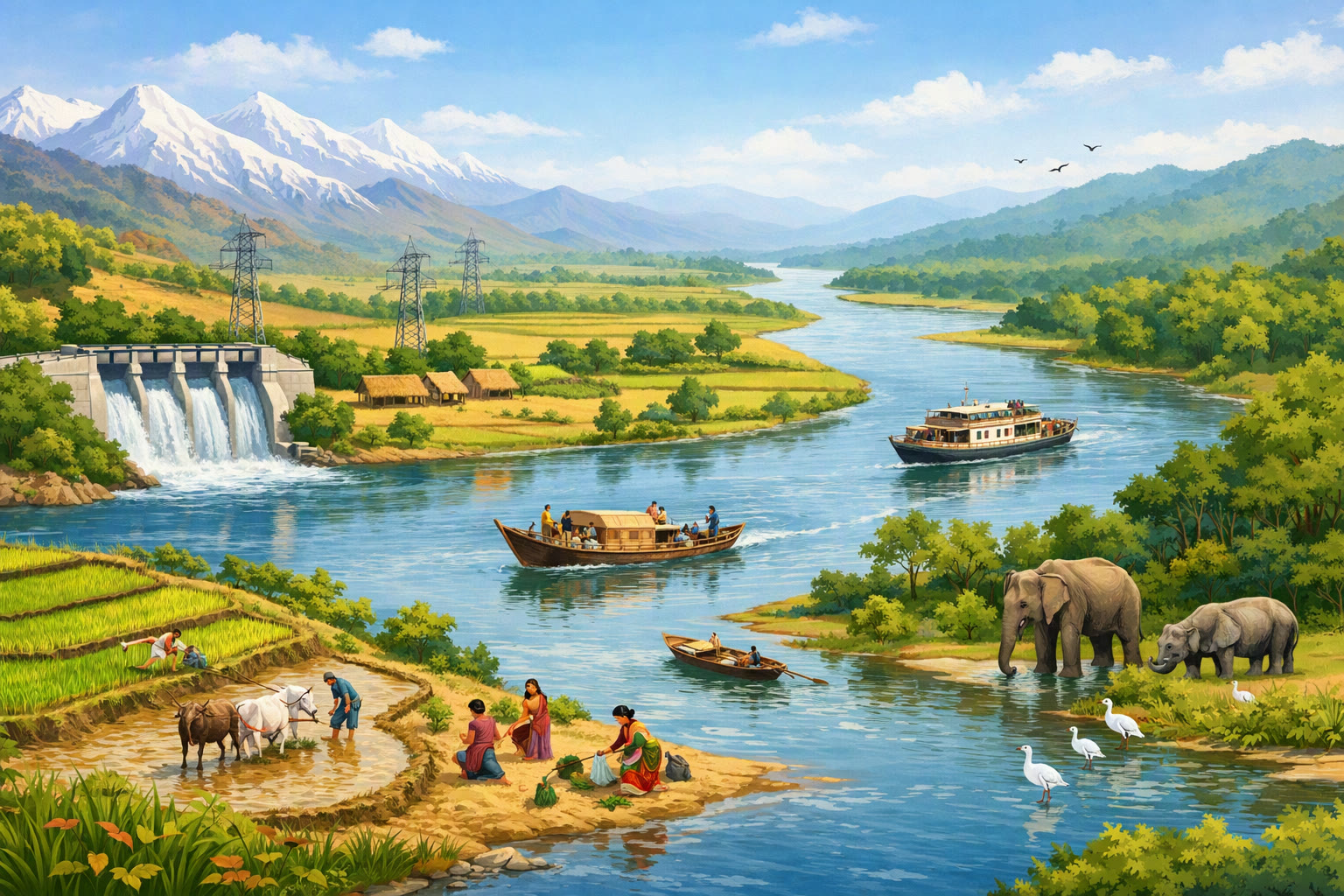
These river systems are incredibly important for India because:
- Water Source: They provide water for drinking, irrigation, and industry.
- Fertile Land: The rivers deposit fertile silt, making the land suitable for agriculture.
- Transportation: They are used for transportation and trade.
- Hydropower: They are a source of hydropower generation.
Keep learning, free
Create a free Syllabax account to unlock practice questions and games for this topic.
Visual Learning Enhanced! 🚀
To help you master this topic, we use Advanced Syllabax AI to generate detailed diagrams and visual models.
Note on Visuals: The AI sometimes makes spelling errors in image labels. Please refer to the lesson text for the correct terminology.