Types of plants: trees, shrubs, herbs (Plants)
Watch this topic in 60 seconds
Free preview · Lesson 1
Understanding Types of plants: trees, shrubs, herbs (Plants)
Exploring the Wonderful World of Plants!
Hello, young explorers! Have you ever looked around your neighborhood or visited a park? What's the first thing you usually see? Lots and lots of green things growing everywhere! These green things are called plants. Plants are amazing living things that help make our world beautiful and healthy. Just like there are different types of animals (like birds, fish, and mammals), there are also different types of plants!
Why are Plants Important?
Imagine your favorite toy box. It has different kinds of toys for different kinds of fun, right? Some are big, some are small, some are soft, some are hard. Plants are a bit like that! Each type of plant has a special job to do in our world. They give us the air we breathe, food to eat, and even homes for animals. Today, we're going to learn about three main types of plants: trees, shrubs, and herbs.
1. Trees: The Giants of the Plant Kingdom!
Let's start with trees! Think about the tallest person you know, maybe a parent or a teacher. Trees are like the very tall grown-ups of the plant world. They can grow very, very high!
- How to Spot a Tree:
- One Big, Strong Trunk: The easiest way to know a tree is by its stem. Instead of many thin stems, a tree has one main, thick, strong, woody stem called a trunk. Imagine a giant pillar holding up a roof – that's what a tree trunk is like!
- Woody and Hard: Touch a tree trunk. It feels hard and rough, right? That's because it's made of wood.
- Branches High Up: A tree's branches usually start growing quite high off the ground, like arms waving in the sky.
- Super Tall: Trees are the tallest type of plant we're talking about today.
- Examples: Think of a big oak tree with acorns, a tall pine tree that stays green all winter, or an apple tree in an orchard. These are all trees! They give us shade on a sunny day, yummy fruits, and even wood to build houses.
- Analogy: Imagine a huge skyscraper building! It has one very strong, central structure (the trunk) that goes way up into the sky before the different floors (branches) start.
2. Shrubs: The Bushy Friends!
Next up are shrubs. If trees are the tall grown-ups, then shrubs are like the older kids or teenagers in the plant family. They are shorter than trees but still have woody stems.
- How to Spot a Shrub:
- Many Stems from the Ground: Unlike a tree with one main trunk, a shrub usually has several woody stems that branch out right from the ground, or very close to it. Imagine a bunch of strong straws all growing together from one spot.
- Still Woody, but Shorter: These stems are still hard and woody, just like a tree's trunk, but they are thinner and don't grow as tall.
- Bushy Shape: Shrubs often look "bushy" or "fluffy" because they have so many branches and leaves growing close together.
- Medium Height: Most shrubs are shorter than you or just a little taller than you, but they are definitely not as tall as a tree.
- Examples: Think of a rose bush with its beautiful flowers, a lavender bush with its sweet smell, or the bushes that grow along the side of a building. They make our gardens pretty and provide hiding spots for small animals.
- Analogy: Think of a bushy haircut! Instead of one main long ponytail (like a tree), a bushy haircut has many strands of hair all around, giving it a full, rounded shape.
 ⚠️ This picture may have spelling mistakes. Trust the words in the lesson.
3. Herbs: The Little Green Helpers!
Finally, we have herbs. If trees are the grown-ups and shrubs are the teenagers, then herbs are like the cute little babies or toddlers of the plant family. They are the smallest of the three types.
- How to Spot an Herb:
- Soft, Green Stems: The biggest difference is their stems. Herbs have soft, flexible, green stems that you can easily bend or break. They are NOT woody like trees or shrubs. Imagine a soft spaghetti noodle compared to a hard stick.
- Small and Short: Herbs are usually much shorter than shrubs and trees. They often grow close to the ground.
- Often Used for Food or Medicine: Many herbs are the plants we use in cooking, like mint for tea or basil for pizza! Some are also used to make medicines.
- Can Be Annuals or Perennials: Some herbs grow for one year and then die (like many flowers), while others can grow back year after year.
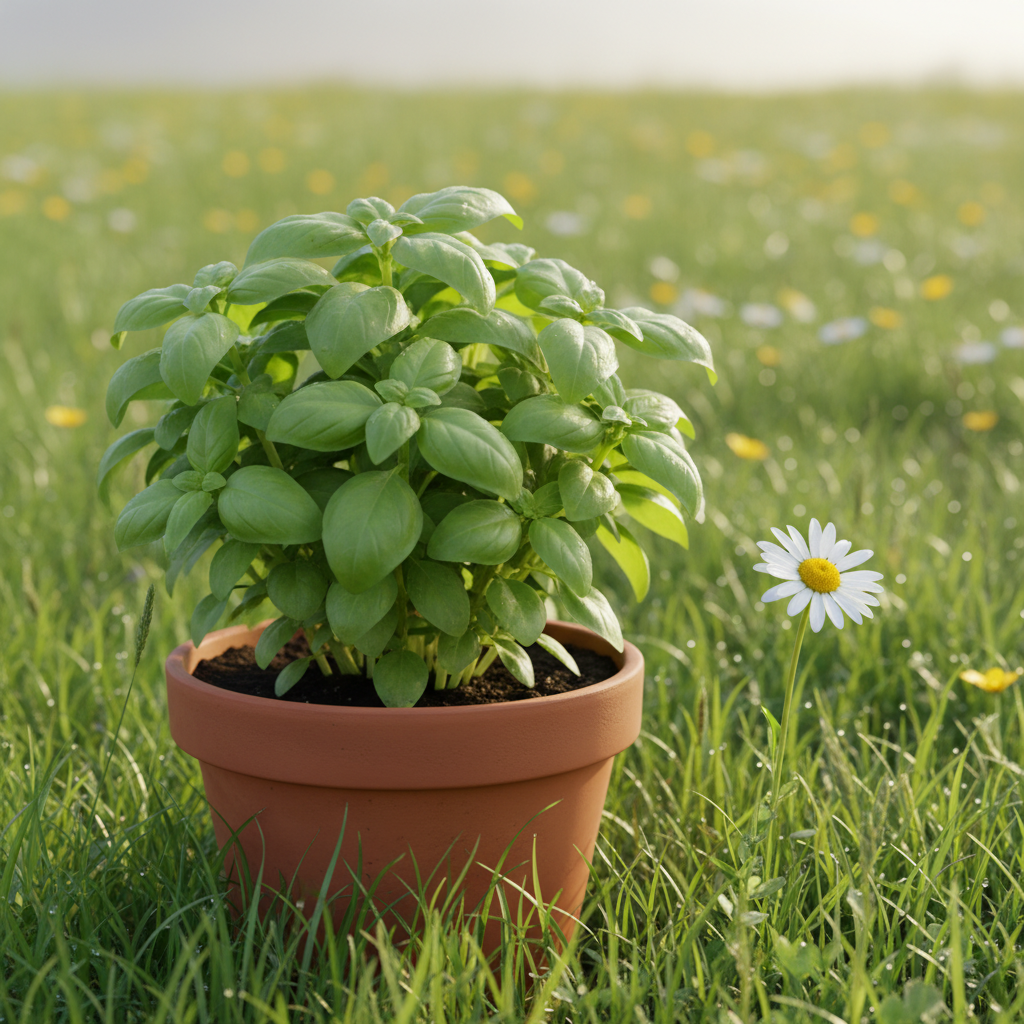
- Examples: Think of the grass in your lawn, a pretty daisy flower, a mint plant that smells fresh, or a basil plant that you might grow in a small pot.
- Analogy: Imagine a soft, cuddly blanket! It's flexible, not hard, and often covers a smaller area. That's a bit like an herb with its soft stems and smaller size.
How to Remember the Differences: A Family Story!
Let's pretend plants are like a family trying to reach a cookie jar on a high shelf:
- The Tree is like the grown-up who is super tall and can easily reach the top shelf without even trying. They have one strong, tall body (trunk).
- The Shrub is like the older child who is pretty tall but needs to stand on tiptoes or maybe use a small stool to reach the cookie jar. They have many strong, woody arms (stems) reaching up from the ground.
- The Herb is like the tiny baby who can't reach the cookie jar at all! They are small and soft and grow close to the ground. Their body (stem) is soft and bendy.
See? Each plant type is unique and important in its own way!
Quick Review Chart!
| Plant Type | Stem Type | Height | How it looks |
|---|---|---|---|
| Tree | One main, thick, woody trunk | Very Tall (like a grown-up) | Branches usually high up |
| Shrub | Many woody stems from the ground | Medium (like an older kid) | Bushy, branches start low |
| Herb | Soft, green, flexible stems | Small (like a baby) | Often close to the ground |
Now you're an expert at telling the difference between trees, shrubs, and herbs! Keep an eye out for them next time you're outside!
Keep learning, free
Create a free Syllabax account to unlock practice questions and games for this topic.
Visual Learning Enhanced! 🚀
To help you master this topic, we use Advanced Syllabax AI to generate detailed diagrams and visual models.
Note on Visuals: The AI sometimes makes spelling errors in image labels. Please refer to the lesson text for the correct terminology.