Learning Journey
Free preview · Lesson 1
Understanding Units of length, mass & capacity [Measurement Basics]
Measurement Basics: Units of Length, Mass, and Capacity
Welcome, young explorers, to the exciting world of measurement! Have you ever wondered how we know how tall someone is, how heavy a pumpkin is, or how much juice fits in a carton? That's where measurement comes in! Measurement helps us describe and compare things around us using numbers and special units. Today, we're going to learn about three important types of measurements: length, mass, and capacity. Think of them as superpowers for understanding the size, weight, and volume of everything!
Measuring Length: How Long is it?
Length tells us how long, short, tall, or wide something is. Imagine you're building a LEGO tower. You need to know how tall it is, right? Or when you're drawing a line, you need to know how long to make it. That's measuring length!
Common Units of Length
We use different tools and units to measure length, depending on how big or small the thing is. It's like using a ruler for a pencil but a measuring tape for a room!
- Centimeters (cm): These are small units, perfect for measuring things like the length of your finger, a crayon, or the width of a book. Imagine a tiny ant crawling along your ruler – it would probably move a few centimeters!
- Meters (m): Meters are bigger than centimeters. Think about the height of a door, the length of a classroom, or the size of a small car. A meter is about the length of three rulers laid end-to-end. If you stretched your arms out wide, it would be roughly a meter!
- Kilometers (km): Kilometers are super big units, used for measuring long distances, like the distance between cities or how far you might run in a race. If you walked for about 15-20 minutes, you might cover a kilometer. It's like a giant leap across the land!
Analogy: Think of measuring length like using different sized steps. A centimeter is like a tiny baby step. A meter is like a normal walking step. A kilometer is like a giant stride you take when you're running!
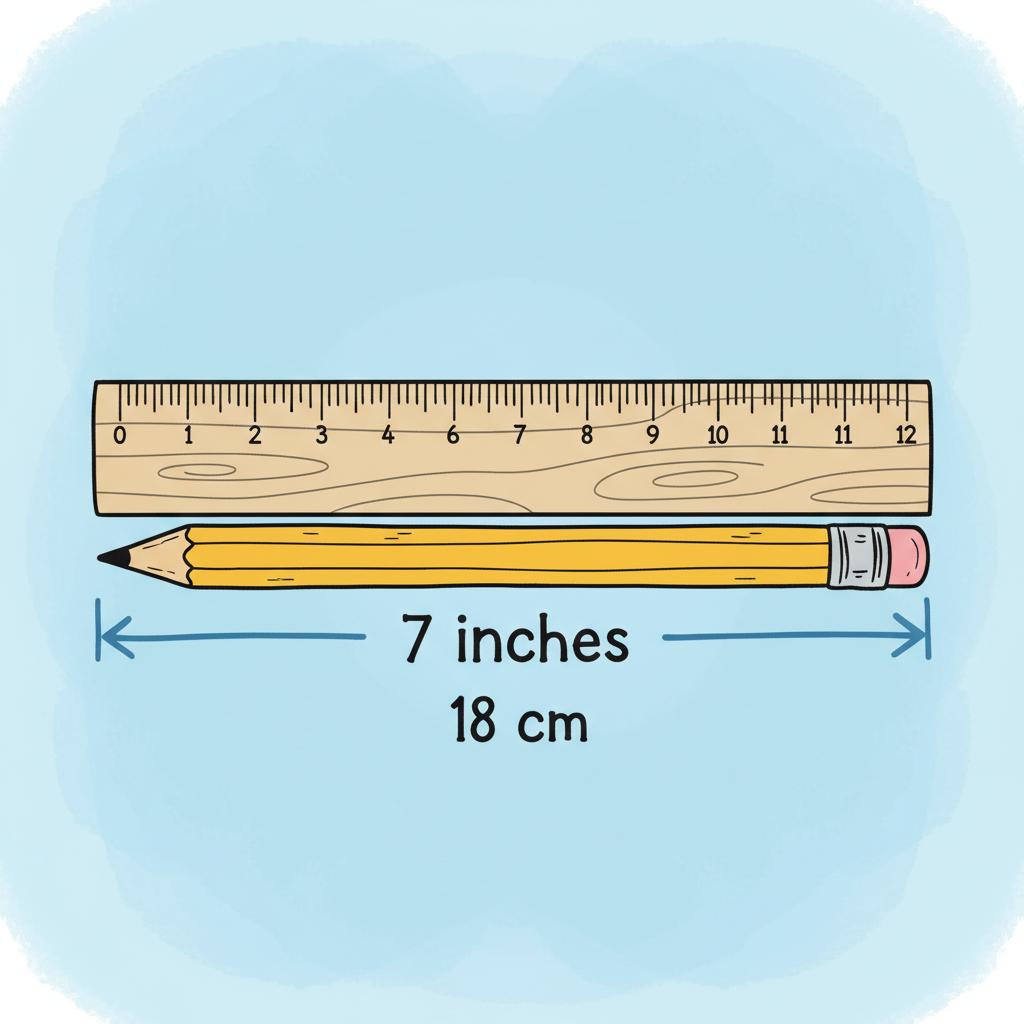
Tools for Measuring Length
- Rulers: Great for small things, usually marked in centimeters and millimeters.
- Measuring Tapes: Flexible and longer, good for measuring furniture, rooms, or even your height.
- Yardsticks/Meter Sticks: Sturdy sticks, useful for measuring longer, straight lines.
Measuring Mass: How Heavy is it?
Mass tells us how much "stuff" is in an object. It's basically how heavy something is. Imagine picking up a fluffy feather versus a big rock. The rock has more "stuff" in it, so it has more mass and feels heavier.
Common Units of Mass
Just like with length, we use different units for mass depending on how heavy the object is.
- Grams (g): Grams are very small units, used for light things. Think of a paperclip, a coin, or a single grain of rice. A slice of bread is about 30 grams.
- Kilograms (kg): Kilograms are much bigger and used for heavier things. A bag of sugar, a bowling ball, or a medium-sized dog are measured in kilograms. 1 kilogram is equal to 1000 grams. So, if you have 1000 paperclips, they might weigh about a kilogram!
Analogy: Measuring mass is like feeling how many marshmallows you'd need to balance something. A gram is like a single marshmallow – good for very light things. A kilogram is like a whole bag of marshmallows – needed for heavier items!
Tools for Measuring Mass
- Scales (like kitchen scales or bathroom scales): These tools show you the mass of an object in grams or kilograms.
Measuring Capacity: How Much Can it Hold?
Capacity tells us how much liquid (or other pourable substance) a container can hold. Think about a juice box, a swimming pool, or a bathtub. Capacity helps us know how much they can be filled.
Common Units of Capacity
We use special units to talk about how much something can hold.
- Milliliters (mL): Milliliters are small units, good for tiny amounts of liquid. Think of a teaspoon of medicine, a few drops of water, or the ink in a pen. A small water bottle might hold 500 mL.
- Liters (L): Liters are bigger units, used for larger amounts of liquid. A milk carton, a soda bottle, or a bucket are measured in liters. A large soda bottle is usually 2 liters. A bathtub might hold hundreds of liters!
Analogy: Measuring capacity is like comparing how many different sized cups it would take to fill something. Milliliters are like tiny shot glasses – good for small sips. Liters are like big juice jugs – good for a whole drink!
Tools for Measuring Capacity
- Measuring Cups and Spoons (often used in cooking): These have markings for milliliters and liters.
- Graduated Cylinders (in science labs): Tall containers with clear markings to measure liquids accurately.
Putting it all Together!
Understanding units of length, mass, and capacity is like learning a new language to describe the world. You can now tell your friends how tall your new plant is (in centimeters or meters), how heavy your backpack feels (in kilograms), and how much water you need to fill your pet's bowl (in liters)! Keep practicing, and you'll become a measurement master in no time!
Keep learning, free
Create a free Syllabax account to unlock practice questions and games for this topic.
Visual Learning Enhanced! 🚀
To help you master this topic, we use Advanced Syllabax AI to generate detailed diagrams and visual models.
Note on Visuals: The AI sometimes makes spelling errors in image labels. Please refer to the lesson text for the correct terminology.