Independence & Partition – Indian History (Foundation + Higher Classes Prep)
Watch this topic in 60 seconds
Free preview · Lesson 1
Independence & Partition – Indian History (Foundation + Higher Classes Prep) (Foundational)
Independence and Partition of India: A Foundation
This lesson provides a foundational understanding of the events leading to India's independence and the subsequent partition. We will explore the key concepts and definitions necessary to grasp this pivotal moment in history.
What is Independence?
Independence means freedom from control by another country. For India, it meant gaining freedom from British rule, which had lasted for nearly two centuries.
What is Partition?
Partition refers to the division of British India into two separate nations: India and Pakistan. This division was primarily based on religious lines, with areas having a Muslim majority becoming Pakistan and the rest forming India.
Why did India want Independence?
- British Rule: Many Indians felt that British rule was unfair and exploitative.
- Economic Drain: India's resources were being used to benefit Britain, leading to economic hardship.
- Lack of Representation: Indians had limited say in their own governance.
- Nationalism: A growing sense of national identity and the desire for self-rule fueled the independence movement.
Key Figures in the Independence Movement
Several leaders played crucial roles in India's struggle for independence. Some prominent figures include:
- Mahatma Gandhi: Advocated for non-violent resistance.
- Jawaharlal Nehru: A key leader in the Indian National Congress.
- Sardar Vallabhbhai Patel: Played a vital role in integrating princely states into India.
- Muhammad Ali Jinnah: Leader of the Muslim League, advocated for the creation of Pakistan.
Why was Partition decided upon?
The decision to partition India was complex and controversial. The main reasons include:
- Religious Differences: Growing tensions between Hindus and Muslims.
- Political Demands: The Muslim League, led by Muhammad Ali Jinnah, demanded a separate nation for Muslims.
- British Policy: The British government ultimately decided that partition was the best way to avoid widespread civil war.
The Impact of Partition
The partition of India had devastating consequences:
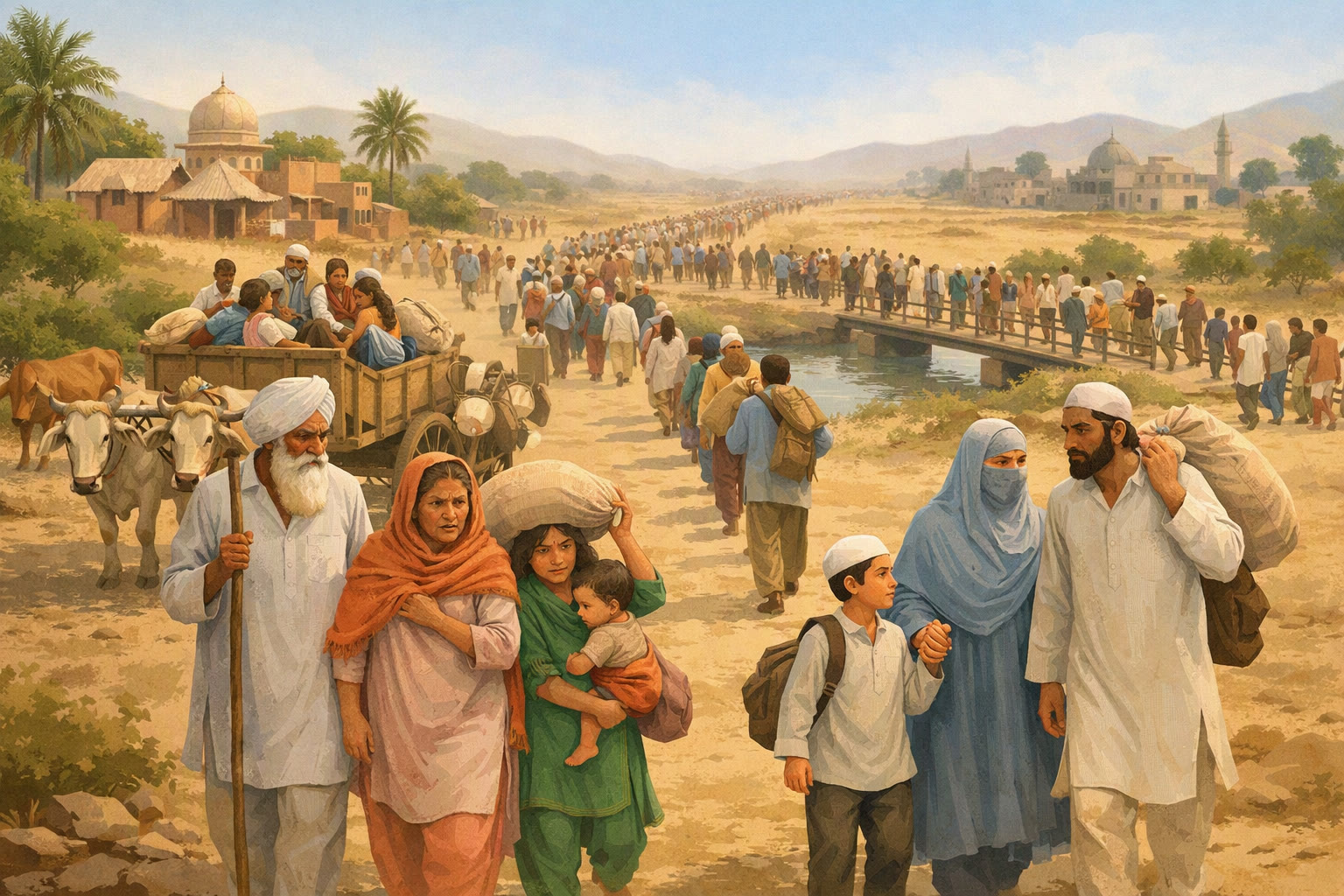
- Mass Migration: Millions of people were displaced as they moved to their respective countries.
- Violence: Widespread communal violence led to the deaths of hundreds of thousands of people.
- Refugee Crisis: Both India and Pakistan faced the challenge of resettling millions of refugees.
- Lasting Tensions: The partition created lasting tensions between India and Pakistan, which continue to this day.
Conclusion
India's independence was a momentous achievement, but it was also accompanied by the tragedy of partition. Understanding these events is crucial for comprehending the history and ongoing challenges faced by the Indian subcontinent.
Keep learning, free
Create a free Syllabax account to unlock practice questions and games for this topic.
Visual Learning Enhanced! 🚀
To help you master this topic, we use Advanced Syllabax AI to generate detailed diagrams and visual models.
Note on Visuals: The AI sometimes makes spelling errors in image labels. Please refer to the lesson text for the correct terminology.