Revolt of 1857 (causes & leaders) – Indian History
Watch this topic in 60 seconds
Free preview · Lesson 1
Revolt of 1857 (causes & leaders) – Indian History (Foundational)
The Revolt of 1857: A First Look
Hello, young historians! Today, we're going to explore a big event in Indian history called the Revolt of 1857. Think of it as a giant disagreement between the Indian people and the British East India Company.
What was the Revolt of 1857?
The Revolt of 1857 was a big uprising against the British East India Company's rule in India. People were unhappy with the company for many reasons. Let's find out why!
Causes of the Revolt
There were many reasons why the revolt happened:
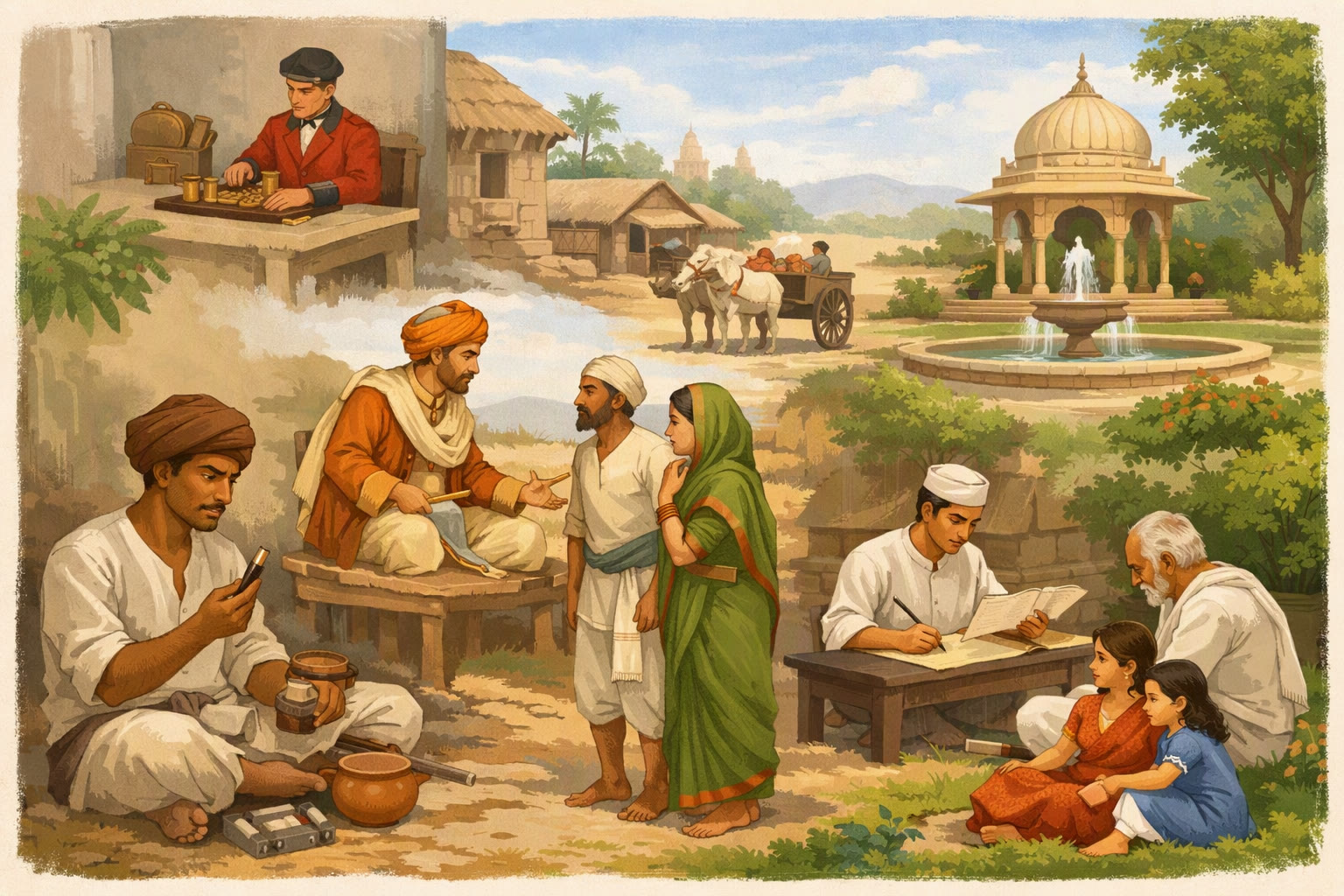
- Economic Reasons: The British East India Company made Indian farmers grow crops that helped Britain, not India. This made many farmers poor.
- Political Reasons: The British took over many kingdoms and lands of Indian rulers. This made the rulers angry.
- Social Reasons: The British tried to change some Indian customs and traditions, which made many people unhappy. They felt their way of life was being threatened.
- Military Reasons: Indian soldiers (called sepoys) in the British army were treated unfairly. They were paid less than British soldiers and had fewer opportunities for promotion.
The Spark: The Greased Cartridges
The final spark that started the revolt was a new type of rifle cartridge. Rumors spread that the cartridges were greased with animal fat (beef and pork). This was offensive to both Hindu and Muslim soldiers, as cows are sacred to Hindus and pigs are forbidden to Muslims.
Important Leaders of the Revolt
Many brave leaders stepped up to fight against the British. Here are a few important ones:
- Mangal Pandey: A sepoy who protested against the greased cartridges and started the initial rebellion.
- Rani Lakshmibai of Jhansi: A brave queen who fought fiercely to protect her kingdom.
- Bahadur Shah Zafar: The last Mughal emperor, who became a symbol of the revolt.
- Nana Sahib: A Maratha aristocrat who led the revolt in Kanpur.
- Tatya Tope: A general and close associate of Nana Sahib, known for his guerilla warfare tactics.
What happened in the end?
The revolt lasted for over a year. The British eventually suppressed the revolt, but it was a turning point in Indian history. It showed the British that the Indian people were not happy with their rule.
Key Vocabulary
- Revolt: An uprising or rebellion against authority.
- Sepoy: An Indian soldier serving in the British army.
- Cartridge: A container holding a bullet and gunpowder for a gun.
Keep learning, free
Create a free Syllabax account to unlock practice questions and games for this topic.
Visual Learning Enhanced! 🚀
To help you master this topic, we use Advanced Syllabax AI to generate detailed diagrams and visual models.
Note on Visuals: The AI sometimes makes spelling errors in image labels. Please refer to the lesson text for the correct terminology.