Forests, wildlife, water, coal, petroleum[BIOLOGY]
Watch this topic in 60 seconds
Free preview · Lesson 1
Understanding Forests, wildlife, water, coal, petroleum[BIOLOGY]
Understanding Earth's Precious Resources: Forests, Wildlife, Water, Coal, and Petroleum
Welcome, 10th graders, to an exciting journey into the heart of our planet's most vital resources! Imagine our Earth as a giant, incredibly complex machine, and these resources are its essential parts and fuel. Without them, this machine—our planet and all life on it—simply wouldn't function. We're going to explore what these resources are, why they're so important, and how we can protect them.
1. Forests: Earth's Lungs and Natural Air Conditioners
Think of forests as the Earth's giant green lungs, constantly breathing in carbon dioxide (a gas we exhale and that pollutes our air) and breathing out life-giving oxygen. They are vast areas covered by trees and other plants, creating complex ecosystems. But they're more than just oxygen factories!
- The Oxygen Factory: Just like a factory produces goods, trees produce oxygen through a process called photosynthesis. This is the air we all breathe to survive.
- Home Sweet Home: Forests are like bustling cities for countless animals, insects, and microorganisms. They provide shelter, food, and a safe place to raise their young.
- Water Regulators: Imagine a giant sponge. Forests act similarly, absorbing rainwater, slowing its flow, and preventing soil erosion. This helps keep our rivers clean and prevents floods.
- Climate Control: Ever noticed how much cooler it is under a tree's shade on a hot day? Forests help regulate local and global temperatures, acting like the Earth's natural air conditioners.
- Essential Products: We get timber for building, paper, medicines, fruits, and many other useful products from forests.
Threats: The biggest threat to forests is deforestation, which is like tearing down a vital part of our Earth's machine. This happens due to logging, agriculture, urbanization, and forest fires. When forests disappear, so does the oxygen, the homes for wildlife, and the natural regulation of water and climate.
Conservation: Planting more trees (afforestation), protecting existing forests, and using forest products responsibly are key steps.
2. Wildlife: The Intricate Puzzle Pieces of Nature
Wildlife refers to all undomesticated animal species. Think of an ecosystem as a giant, beautiful jigsaw puzzle. Every single animal, no matter how small or large, is a crucial puzzle piece. If even one piece is missing, the picture isn't complete, and the whole puzzle might fall apart.
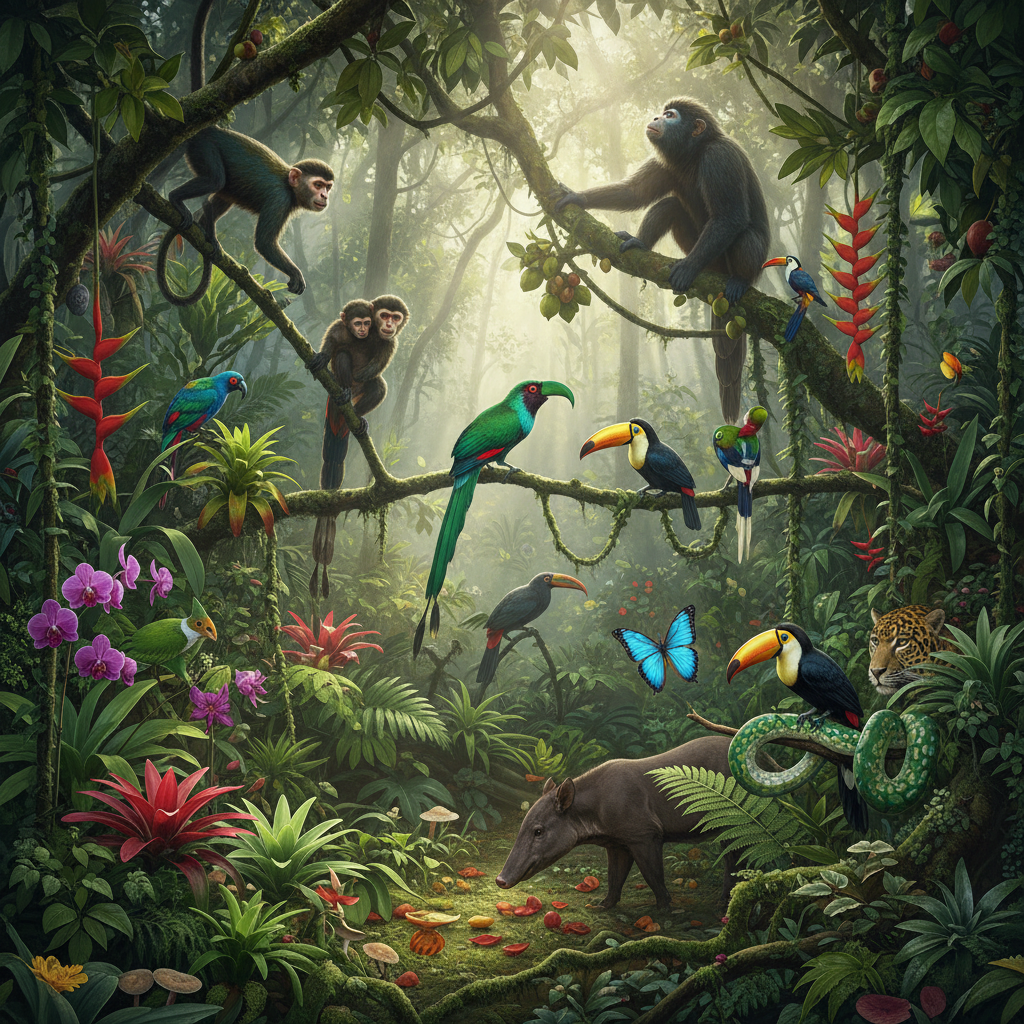
- Balancing Act: Animals play vital roles in maintaining ecological balance. For example, predators keep prey populations in check, preventing overgrazing.
- Pollinators and Seed Dispersers: Bees, butterflies, birds, and bats are like tiny gardeners, helping plants reproduce by carrying pollen and spreading seeds. Without them, many of our food crops wouldn't exist!
- Food Chains and Webs: Every animal is a link in a complex food chain. If one species disappears, it affects all the species that depend on it for food, and those it was a food source for.
- Clean-up Crew: Scavengers and decomposers (like vultures and certain insects) are nature's clean-up crew, removing dead animals and waste, preventing the spread of disease.
Threats: Wildlife faces numerous threats, including habitat loss (when forests are cut down or wetlands are drained), poaching (illegal hunting), pollution (plastics, chemicals), and climate change. When a species goes extinct, that puzzle piece is lost forever.
Conservation: Establishing national parks and wildlife sanctuaries, enforcing anti-poaching laws, controlling pollution, and raising awareness are crucial for protecting wildlife.
3. Water: Life's Essential Ingredient and Earth's Blood
Water, water everywhere, but not a drop to waste! Water is arguably the most precious resource on Earth. Just as blood flows through our veins, carrying nutrients and oxygen, water flows through the Earth, sustaining all life. It covers about 71% of our planet, but most of it is saltwater, unsuitable for drinking or agriculture without costly treatment.
- The Source of Life: All living organisms, from the smallest bacteria to the largest whales, need water to survive. Our bodies are about 60% water!
- Agriculture's Best Friend: Most of the food we eat requires water to grow. Farmers depend on water for irrigation.
- Industry's Helper: Many industries use water for manufacturing, cooling, and transport.
- Nature's Transport System: Water bodies like rivers and oceans are home to countless species and serve as major transportation routes.
- Climate Regulator: Oceans play a massive role in regulating global temperatures and weather patterns.
The Water Cycle (Briefly): Water is constantly recycled through evaporation (water turning into vapor), condensation (vapor forming clouds), precipitation (rain, snow), and collection (rivers, lakes, oceans). This is like Earth's natural purification and distribution system.
Threats: The main threats are water pollution (from industrial waste, sewage, and agricultural runoff), overuse (especially in agriculture), and climate change impacting rainfall patterns, leading to droughts or floods.
Conservation: Saving water at home, practicing rainwater harvesting, treating wastewater before release, and using efficient irrigation techniques are vital.
4. Coal: Earth's Ancient Energy Battery
Imagine the energy from sunlight that fell on plants millions of years ago, stored away deep underground like a giant, ancient battery. That's essentially what coal is! It's a black or brownish-black sedimentary rock that can be burned for energy.
- Formation: Coal formed over millions of years from the remains of ancient plants that were buried under layers of sediment, heat, and pressure. It's a fossil fuel, meaning it formed from once-living organisms.
- Primary Use: Coal is primarily used to generate electricity in power plants. It's heated to boil water, creating steam that turns turbines to produce electricity.
- Other Uses: It's also used in some industrial processes, like making steel.
Disadvantages: Burning coal releases large amounts of carbon dioxide, a greenhouse gas that contributes to climate change. It also releases other pollutants like sulfur dioxide, which causes acid rain, and particulate matter, which can harm respiratory health. Plus, it's a non-renewable resource, meaning once it's used up, it's gone forever.
5. Petroleum (Oil and Natural Gas): Liquid Gold and Earth's Ancient Soup
Petroleum, which includes crude oil and natural gas, is often called 'liquid gold' because of its immense economic value and versatility. Like coal, it's a fossil fuel, formed from the remains of ancient marine organisms.
- Formation: Millions of years ago, tiny marine plants and animals died and sank to the bottom of oceans. They were covered by layers of mud and sand. Over time, heat and pressure transformed these remains into oil and natural gas.
- Crude Oil: This is a thick, black, sticky liquid found deep underground. It's refined (processed) into many products we use daily.
- Natural Gas: Often found alongside oil, natural gas is a clean-burning fossil fuel, primarily composed of methane.
Uses:
- Fuels: Crude oil is refined into gasoline (petrol) for cars, diesel for trucks, kerosene for jet fuel and heating, and fuel oils for ships and power plants.
- Plastics and Chemicals: Petroleum is a key ingredient in making plastics, synthetic fibers (like polyester), fertilizers, pesticides, and many other chemicals. Think of all the plastic items around you – they likely started as petroleum!
- Heating: Natural gas is commonly used for heating homes and cooking.
- Electricity: Both oil and natural gas are used in power plants to generate electricity.
Disadvantages: Like coal, burning petroleum releases greenhouse gases and other air pollutants. Oil spills during transport can cause devastating environmental damage to oceans and coastlines. Petroleum is also a non-renewable resource, and its extraction can be environmentally disruptive.
Looking Ahead: The Importance of Conservation
All these resources are crucial for our survival and way of life. However, they are either limited (non-renewable like coal and petroleum) or can be overused and degraded (renewable like forests and water). Our generation has a responsibility to use these resources wisely, reduce waste, embrace renewable energy sources (like solar and wind), and protect our planet's natural systems. Conservation isn't just a good idea; it's essential for a healthy future for all life on Earth.
Keep learning, free
Create a free Syllabax account to unlock practice questions and games for this topic.
Visual Learning Enhanced! 🚀
To help you master this topic, we use Advanced Syllabax AI to generate detailed diagrams and visual models.
Note on Visuals: The AI sometimes makes spelling errors in image labels. Please refer to the lesson text for the correct terminology.