Recognizing Cyberbullying
Watch this topic in 60 seconds
Free preview · Lesson 1
Understanding Recognizing Cyberbullying
Spotting Cyberbullying: Be a Digital Super Friend!
Hey there, future digital super friends! Have you ever heard someone talk about 'bullying'? Bullying is when someone is mean to another person again and again. It can be saying mean words, pushing, or leaving someone out on purpose. Think of it like someone being grumpy and unkind to you on the playground, right there in front of everyone.
What is Cyberbullying?
Now, let's talk about something called cyberbullying. The word 'cyber' means anything to do with computers, phones, or the internet. So, cyberbullying is just like regular bullying, but it happens online! It's when someone is mean to another person using their computer, phone, tablet, or any other device that connects to the internet.
Imagine someone passing a mean note in class. With cyberbullying, it's like that mean note can instantly be sent to *everyone's* phone, and it might even stay there for a long, long time, like a message written with a permanent marker. It’s not just a whisper; it can feel like a shout to the whole world!
Where Does Cyberbullying Happen?
Cyberbullying can happen in many places online where you play, talk, and learn. Think of the internet as a giant park or playground where everyone can connect. Here are some common places:
- Online Games: Like when someone is mean in the chatbox of your favorite game (Roblox, Minecraft, etc.).
- Messaging Apps: Sending mean texts, pictures, or videos through apps like Kids Messenger, or other family-approved chat apps.
- Social Media: If you use kid-friendly social media, someone might post unkind comments or pictures there.
- Emails: Sending mean emails.
How is Cyberbullying Different from Regular Bullying?
Cyberbullying is tricky because it has some special differences:
- It can happen anytime, anywhere: Unlike bullying at school that stops when you go home, cyberbullying can happen 24 hours a day, 7 days a week. Even when you're in your own room, a mean message can pop up. It's like someone can throw a mean ball at you even if you're not on the playground.
- It can reach many people very quickly: A mean post or message can be seen by lots and lots of people in a flash. It's like shouting something mean through a megaphone instead of just saying it to one person. The words can spread like ripples in a pond, going far and wide.
- It can be hidden: Sometimes, the person being mean might not use their real name or show their face. This can make them feel brave enough to say things they wouldn't say in person. It's like wearing a mask online.
- It can stay online: Once something is posted online, it can be very hard to take down completely. Those words or pictures can stay on the internet for a very long time, like a digital footprint.
What Does Cyberbullying Look Like? (Examples!)
Cyberbullying isn't always easy to spot, but here are some examples of what it might look like:
- Sending Mean Messages: Someone sending you or a friend unkind, rude, or threatening text messages, emails, or messages in game chats.
- Posting Embarrassing Things: Sharing embarrassing photos, videos, or secrets about someone online without their permission.
- Spreading Rumors: Making up untrue stories about someone and sharing them on social media or in group chats. It’s like gossiping, but online for many more people to see.
- Leaving Someone Out: Purposely excluding someone from an online game, a group chat, or an online club, and then making fun of them for being left out.
- Making Fun of Someone: Posting mean comments or memes about how someone looks, what they like, or how they play a game.
No matter what, if someone is being mean to you or someone else using technology, it's cyberbullying, and it's NOT okay!
How Can You Spot Cyberbullying?
Being a cyber super friend means knowing how to recognize cyberbullying. Here’s how:
If it happens to YOU:
- Are people sending *you* mean messages, comments, or pictures online?
- Are *you* being left out of online games, groups, or activities on purpose, and then made fun of for it?
- Does something someone posted or sent *you* online make you feel sad, scared, angry, or worried?
If you see it happening to SOMEONE ELSE:
- Do you see mean comments about a friend in a game chat, on a kid-friendly social media post, or in a group message?
- Is someone posting embarrassing pictures or videos of another person online without their permission?
- Does another friend seem very sad, quiet, or worried after being online, especially if it's connected to something they saw or received?
How Does Cyberbullying Make People Feel?
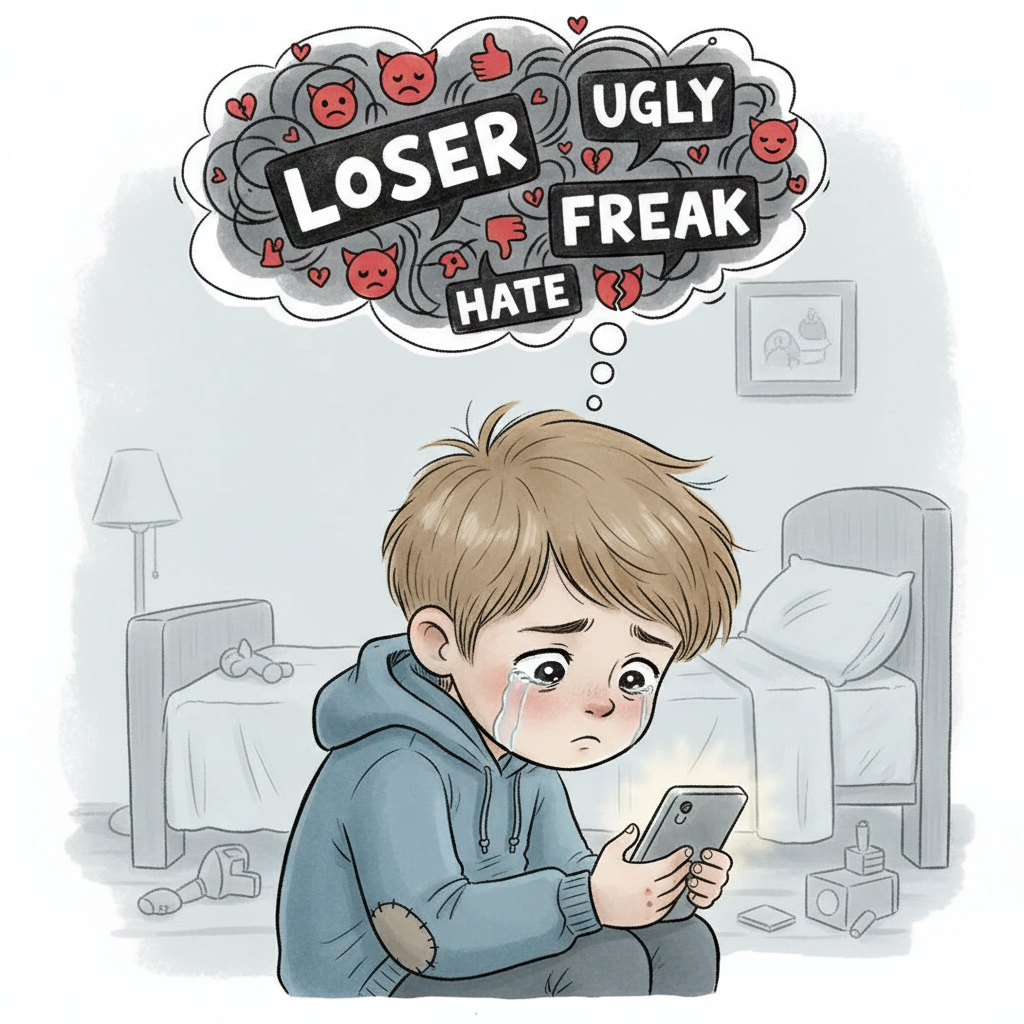
Cyberbullying makes people feel really bad. It can make them feel:
- Sad or Lonely: Like no one likes them.
- Scared or Anxious: Worried about what might happen next online.
- Angry or Frustrated: Upset that someone is being mean to them.
- Ashamed or Embarrassed: Especially if mean things are posted for many people to see.
It’s like a big, dark cloud hanging over their head, even when they’re not looking at a screen.
What Can You Do? Be a Cyber Super Friend!
If you see cyberbullying or if it happens to you, remember these important steps:
- STOP: Don't join in, respond, or forward mean messages. Doing nothing is better than making it worse.
- BLOCK: Most games and apps let you block people who are being mean. This is like putting up a shield so they can't bother you anymore.
- SAVE: If you can, take a screenshot of the mean message or post. This is like taking a picture of what happened, so you have proof.
- TELL: This is the MOST important step! Always, always tell a trusted adult. This could be your parent, guardian, teacher, school counselor, or an older sibling. They are like your superheroes and can help you figure out what to do. Telling an adult is not tattling; it's being brave and staying safe. It's like telling a lifeguard if someone is being unsafe in the pool – they are there to help everyone stay safe!
Remember: Kindness Matters, Everywhere!
The internet is a wonderful place for connecting with friends, playing games, and learning new things. But just like in real life, we need to be kind, respectful, and safe online. Always think before you post or send something. Would you say it to someone's face? If not, don't say it online! Your words online are like seeds – they can grow into something beautiful and friendly, or something thorny and hurtful. Let's choose kindness and make the internet a happy place for everyone!
Keep learning, free
Create a free Syllabax account to unlock practice questions and games for this topic.
Visual Learning Enhanced! 🚀
To help you master this topic, we use Advanced Syllabax AI to generate detailed diagrams and visual models.
Note on Visuals: The AI sometimes makes spelling errors in image labels. Please refer to the lesson text for the correct terminology.