Nets of cube & cuboid (intro) [Visual Understanding]
Watch this topic in 60 seconds
Free preview · Lesson 1
Understanding Nets of cube & cuboid (intro) [Visual Understanding]
Understanding Nets of Cubes and Cuboids: Building Blocks of 3D Shapes!
Hello, super mathematicians! Today, we're going on an exciting adventure into the world of shapes. We're going to learn about something called 'nets'. Don't worry, it's not about fishing nets or bedtime nets! In math, a 'net' is like a special flat pattern that you can fold up to create a 3D shape, like a cube or a cuboid.
What is a 3D Shape?
Before we talk about nets, let's quickly remember what 3D shapes are. Think about your favorite toy box, a cereal box, or even a die you use for games. These are all 3D shapes! They have length, width, and height. They are not flat like a drawing on a piece of paper. They have volume, meaning they can hold things inside them.
What is a Cube?
A cube is a very special 3D shape. Imagine a perfectly square box where every single side is the same size. Think of a dice, a sugar cube, or even a Rubik's cube. A cube has:
- 6 Faces: These are the flat surfaces of the cube. For a cube, all 6 faces are squares and they are all the same size.
- 12 Edges: These are the lines where two faces meet.
- 8 Vertices (Corners): These are the points where three edges meet.
Every face on a cube is a perfect square, and all these squares are identical. It's like having 6 identical square photos that you glue together to make a box!
What is a Cuboid?
A cuboid is very similar to a cube, but it's a bit more flexible! Think of a rectangular box, like a shoebox, a brick, or a book. A cuboid also has 6 faces, 12 edges, and 8 vertices. The big difference is that the faces of a cuboid are rectangles, and they don't all have to be the same size. Some faces can be longer than they are wide. Imagine a box where the top and bottom are squares, but the sides are long rectangles. Or a box where all the sides are rectangles, but some are long and thin, and others are short and wide.
A cube is actually a special type of cuboid where all the rectangular faces happen to be squares!
Introducing the Net: The Flat Superhero!
Now, let's get to the star of our show: the net! A net is like the flattened-out version of a 3D shape. Imagine you have a cardboard box. If you carefully cut along some of the edges and unfold it, you'll get a flat shape. This flat shape is the net of the box!
Think of it like this:
- For a Cube: Imagine you have a cube made of playdough. You want to cut it up and lay it flat. You'd cut along some edges, and then flatten it out. The pattern you get would be the net of the cube. It will always be made up of 6 squares.
- For a Cuboid: It's the same idea! If you have a shoebox and unfold it, you get the net of the cuboid. The net of a cuboid will be made up of 6 rectangles (some might be squares if it's a cube).
Visualizing the Net of a Cube
The most common net for a cube looks like a cross shape. It has one square in the middle, with four squares attached to its sides (top, bottom, left, right), and one more square attached to one of those four. Let's break it down:
- Imagine the middle square is the bottom of your box.
- The four squares attached to its sides become the four walls of your box.
- The last square, attached to one of the walls, becomes the top of your box.
When you fold this flat pattern up, the edges meet to form the cube. It's like a puzzle piece that folds perfectly into a cube!
Here's what a common cube net might look like when unfolded:
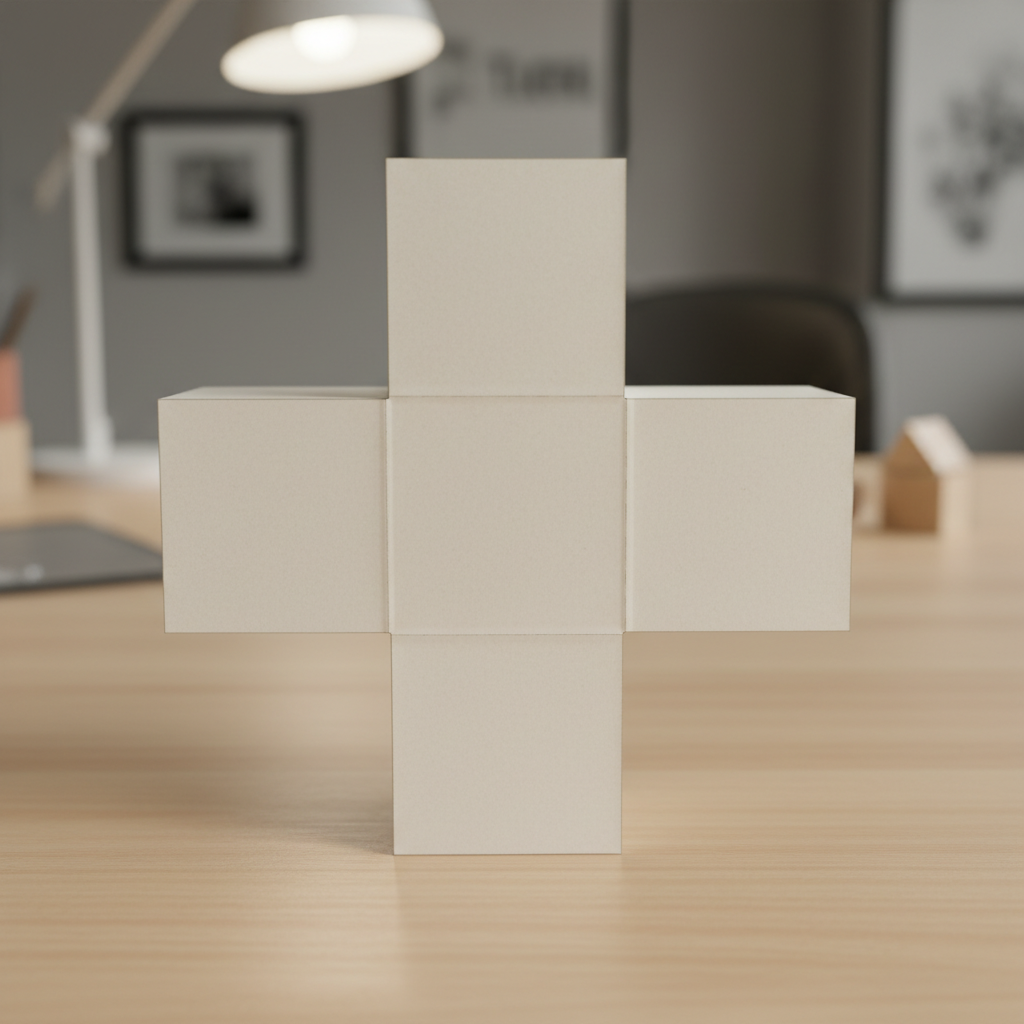
See? It's just 6 squares connected! When you fold along the lines, they magically form a cube.
Visualizing the Net of a Cuboid
The net of a cuboid is very similar, but instead of squares, it's made of rectangles. Again, the most common shape looks like a cross. There's a central rectangle (let's say the bottom), four rectangles attached to its sides (the walls), and one more rectangle attached to one of the walls (the top).
Think of a juice box. If you could unfold it, you would see the net. It would have a bottom, a top, and four sides. These would all be rectangles. The two opposite sides would be identical, the other two opposite sides would be identical, and the top and bottom would be identical.
Here’s an example of a cuboid net. Notice how the rectangles might not all be the same size, but opposite ones are!
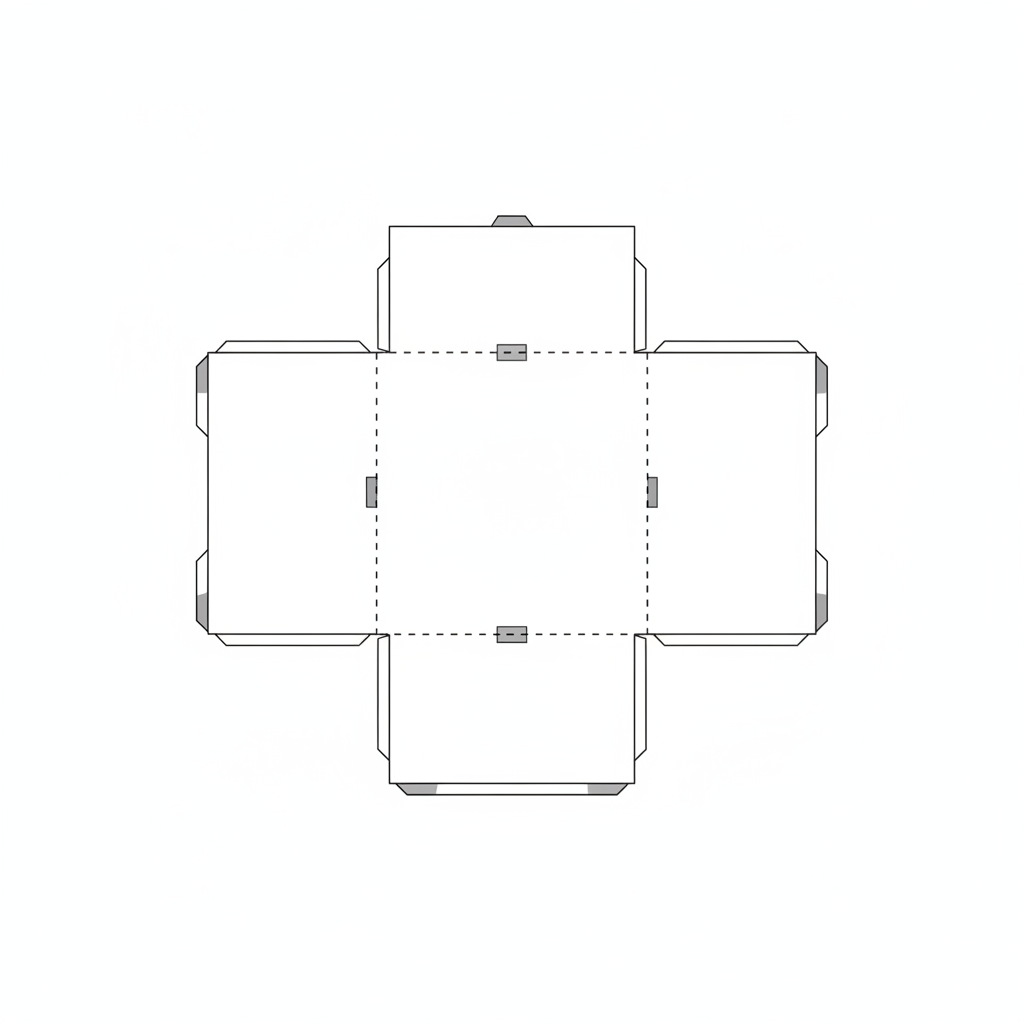
This flat pattern, made of 6 rectangles, can be folded to create a cuboid. It’s like a blueprint for building your box!
Why are Nets Important?
Nets are super useful! They help us:
- Understand 3D Shapes: By seeing the flat pattern, we can really understand how a 3D shape is put together. We can count the faces, edges, and see how they connect.
- Visualize Folding: Nets help us imagine folding and building shapes. It’s like learning to build with LEGOs – you see the individual bricks and how they fit together.
- Design and Build: If you ever want to make a box or a package, you need to know its net! Box factories use nets to cut out the cardboard efficiently.
Key Ideas to Remember
A net is a flat pattern that can be folded to form a 3D shape.
A cube has 6 identical square faces. Its net is made of 6 identical squares.
A cuboid has 6 rectangular faces. Its net is made of 6 rectangles. A cube is a special cuboid.
Nets help us see all the faces of a 3D shape laid out flat.
Keep learning, free
Create a free Syllabax account to unlock practice questions and games for this topic.
Visual Learning Enhanced! 🚀
To help you master this topic, we use Advanced Syllabax AI to generate detailed diagrams and visual models.
Note on Visuals: The AI sometimes makes spelling errors in image labels. Please refer to the lesson text for the correct terminology.