Mughal Empire (Akbar, Aurangzeb, Administration) – Indian History
Watch this topic in 60 seconds
Free preview · Lesson 1
Mughal Empire (Akbar, Aurangzeb, Administration) – Indian History (Foundational)
The Mughal Empire: A Journey Through History
Hello, young historians! Get ready to explore the magnificent Mughal Empire, a powerful dynasty that ruled a large part of India for centuries. We'll learn about some key figures and how they governed.
What is an Empire?
An empire is a large territory ruled by a single leader (usually an emperor or empress). Think of it as a really, really big kingdom!
Meet Two Important Emperors: Akbar and Aurangzeb
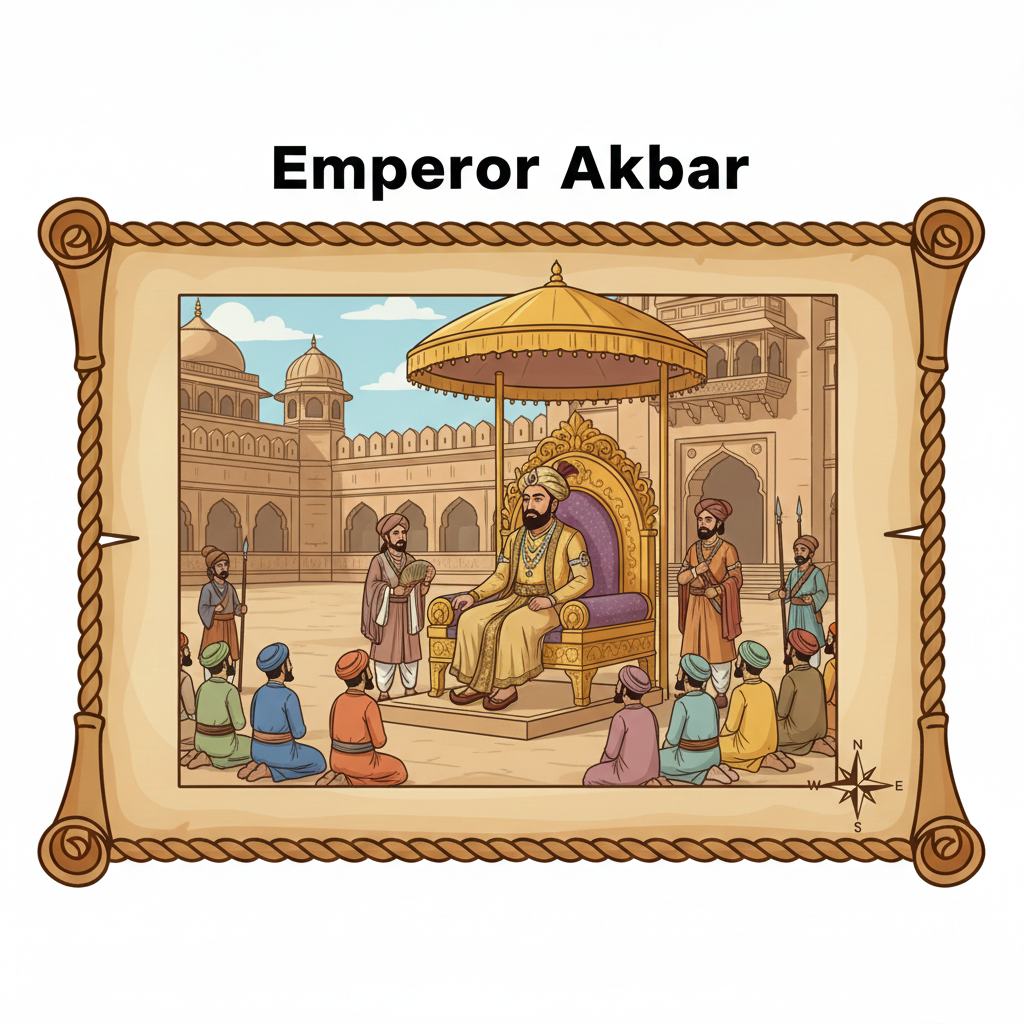
Akbar: The Great
Akbar, who ruled from 1556 to 1605, was one of the most famous Mughal emperors. He was known for his wisdom, tolerance, and strong leadership.
- Religious Tolerance: Akbar believed that all religions should be respected. He even created a new faith called Din-i-Ilahi, which combined elements from different religions.
- Land Revenue System: Akbar introduced a fair system for collecting taxes on land, which helped farmers and the empire.
- Administration: He divided his empire into provinces and appointed capable officers to govern them.
 Aurangzeb: The Strict Ruler
Aurangzeb, who ruled from 1658 to 1707, was very different from Akbar. He was known for his strict adherence to Islamic law.
- Religious Policies: Aurangzeb reversed many of Akbar's tolerant policies. He imposed taxes on non-Muslims and destroyed some temples.
- Expansion: He tried to expand the Mughal Empire further south, but faced many rebellions.
- Administration: His strict policies created discontent among many people, weakening the empire in the long run.
Mughal Administration: How the Empire Was Governed
The Mughals had a well-organized system of administration to rule their vast empire. Here are some key features:
- Central Government: The emperor was the head of the government and had absolute power.
- Provinces: The empire was divided into provinces, each governed by a Subedar (governor).
- Mansabdari System: This was a unique system where officers (Mansabdars) were given ranks based on which they were assigned land and military responsibilities.
- Land Revenue: Taxes on land were a major source of income for the empire.
- Military: The Mughal army was strong and well-organized. It included infantry, cavalry, and elephants.
Key Terms
- Empire: A large territory ruled by a single leader.
- Emperor: The ruler of an empire.
- Subedar: A governor of a province in the Mughal Empire.
- Mansabdar: An officer in the Mughal Empire's Mansabdari system.
Keep learning, free
Create a free Syllabax account to unlock practice questions and games for this topic.
Visual Learning Enhanced! 🚀
To help you master this topic, we use Advanced Syllabax AI to generate detailed diagrams and visual models.
Note on Visuals: The AI sometimes makes spelling errors in image labels. Please refer to the lesson text for the correct terminology.