Sorting & grouping objects (Data Basics)
Watch this topic in 60 seconds
Free preview · Lesson 1
Understanding Sorting & grouping objects (Data Basics)
Sorting and Grouping Objects: Data Basics for Young Learners!
Hello young explorers! Today, we're going on an exciting adventure into the world of data. Don't worry, 'data' is just a fancy word for information! We're going to learn how to sort and group objects. Think of it like being a super detective, organizing clues to solve a mystery!
What is Sorting?
Sorting means putting things into different groups based on how they are alike. Imagine you have a big pile of toys. Some are cars, some are dolls, and some are building blocks. If you sort them, you would put all the cars together, all the dolls together, and all the blocks together. It makes it much easier to find what you want to play with, right?
Analogy Time!
Think about your sock drawer. You probably have socks of different colors: white socks, black socks, maybe even striped socks! When you put all the white socks in one spot, all the black socks in another, and so on, you are sorting your socks. It helps you pick out a matching pair without digging through everything!
We can sort things by many different things:
- Color: Like sorting red apples from green apples.
- Size: Like putting small buttons in one pile and big buttons in another.
- Shape: Like putting all the round balls together and all the square blocks together.
- Type: Like sorting toy animals from toy vehicles.
What is Grouping?
Grouping is very similar to sorting! When we group things, we are also putting them together based on shared characteristics. Sometimes, 'grouping' and 'sorting' are used to mean almost the same thing. The main idea is to organize items so they make sense.
Another Analogy!
Imagine you're packing a lunchbox. You might put all the healthy snacks in one section (like an apple and some carrots), and your yummy main meal in another section (like a sandwich). You are grouping similar food items together so your lunch is organized and easy to eat!
When we group, we are also looking for what makes things the same. For example:
- Grouping by Material: Putting all the wooden toys together and all the plastic toys together.
- Grouping by Function: Putting all the tools you use for drawing together (crayons, markers) and all the tools you use for building together (blocks, LEGOs).
Think of a library. Books are sorted and grouped by topics! All the books about animals are in one section, all the books about space in another, and all the fairy tales together. This makes it super easy to find a book you want to read.
Why is Sorting and Grouping Important?
Sorting and grouping help us understand the world around us. When we organize things, we can:
- See Patterns: We can notice what things are common and what are rare.
- Make Decisions: If we know we have lots of red blocks, we might decide to build a red castle!
- Solve Problems: If you can't find your favorite blue crayon, sorting your crayons by color helps you see if it's mixed in with other colors.
- Understand Data: In the future, you'll use these skills to understand charts and graphs that show information!
Let's Look at an Example!
Imagine we have a collection of fruit:
We have 3 red apples, 2 yellow bananas, 1 green pear, and 4 red strawberries.
How can we sort or group these fruits?
Option 1: By Color
- Red Group: 3 apples + 4 strawberries = 7 red fruits
- Yellow Group: 2 bananas = 2 yellow fruits
- Green Group: 1 pear = 1 green fruit
Option 2: By Type
- Apples: 3
- Bananas: 2
- Pears: 1
- Strawberries: 4
Both ways are correct! Sorting and grouping help us organize information in a way that makes sense to us.
Look at this picture! What do you see?
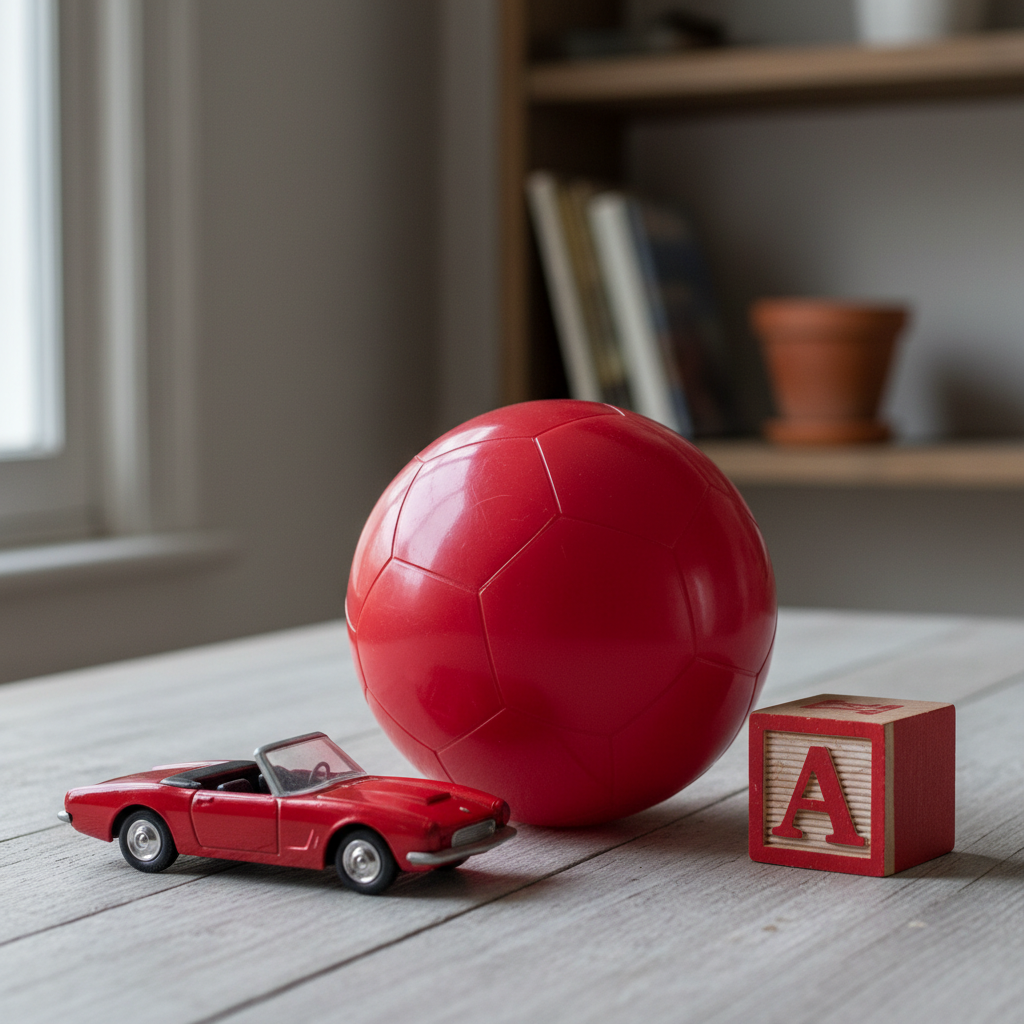 ⚠️ This picture may have spelling mistakes. Trust the words in the lesson.
We see red objects! We could sort them all together because they share the characteristic of being red.
Now look at this next picture:
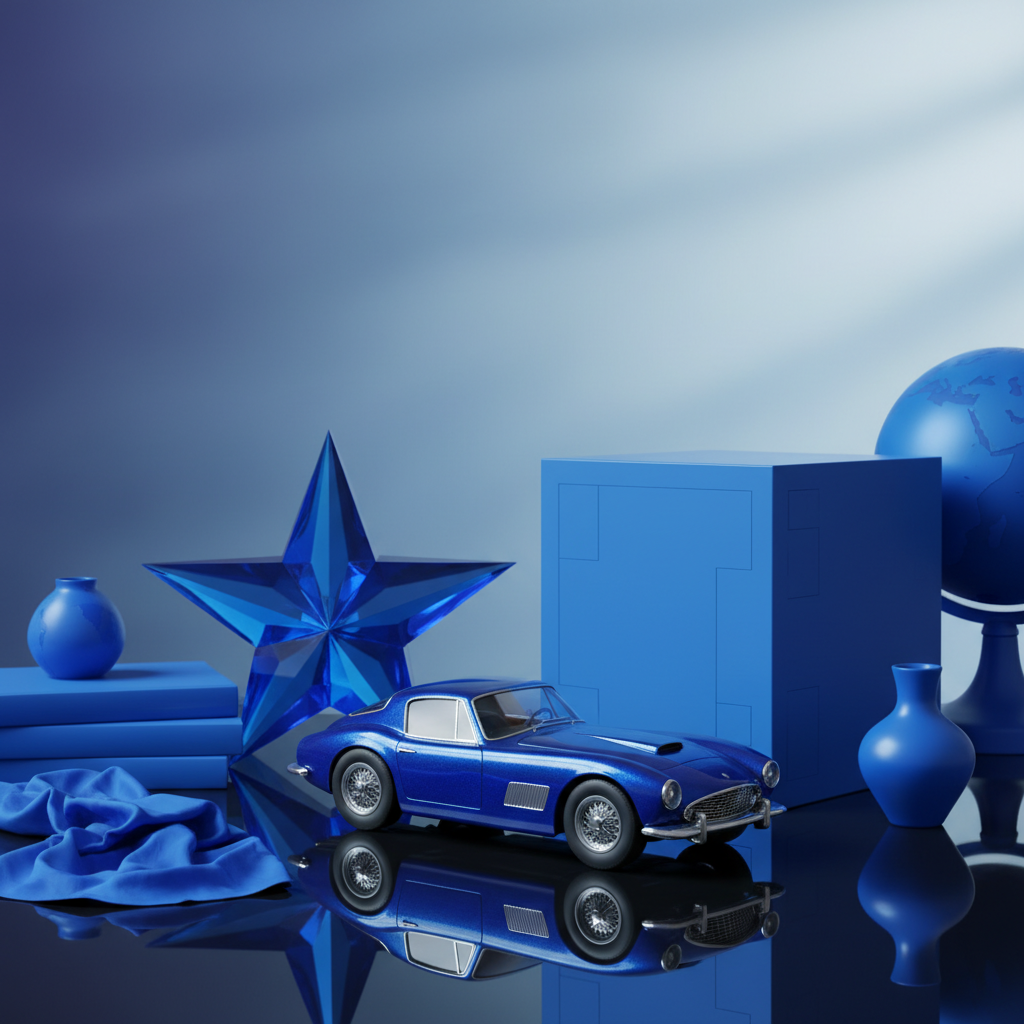
And here we see blue objects! We can group them together because they are all blue.
Remember, sorting and grouping are like being a great organizer. You're making sense of a jumble of things by putting them into neat categories!
Quick Check!
Imagine you have a box of crayons. What are some ways you could sort them?
- By color? (Yes!)
- By size? (Maybe, some crayons are bigger than others!)
- By how many you have? (Not really, that's counting, but you could count how many of *each* color you have after sorting!)
Great job, detectives! You're learning the first steps of understanding data. Keep practicing sorting and grouping everything you see!
Keep learning, free
Create a free Syllabax account to unlock practice questions and games for this topic.
Visual Learning Enhanced! 🚀
To help you master this topic, we use Advanced Syllabax AI to generate detailed diagrams and visual models.
Note on Visuals: The AI sometimes makes spelling errors in image labels. Please refer to the lesson text for the correct terminology.